Monday, May 16, 2011

LESSON 103: HOW TO INTRODUCE A NEW QUEEN AND WE ARE SELLING QUEENS THIS WEEK (217) 427-2678 (www.honeybeesonline.com)

DavidMB
Hi, David and Sheri Burns here from Long Lane Honey Bee Farms in central Illinois.


LESSON 103: How To Introduce A New Queen
It can be a challenge to keep a hive queen-right. Sometimes queens are rejected even after they have been accepted. Perhaps the queen stops laying well, for example. But once the queen is no longer in the hive, the colony is queenless. Several things can happen to a queenless colony:
1) They can raise their own queen from a young larva but it can take up to 30 days for the new queen to begin laying. So you can lose up to a month of brood production.
2) If the colony fails to raise a queen, several laying workers can start laying infertile eggs which will be small drones raised in worker cells. Those laying workers will mimic a queen making it almost impossible to introduce a new queen. Thelytoky can also occur, which basically means that sometimes a colony can raise a queen from an unfertile egg laid by a laying worker. If your hive goes too long without a queen and without brood pheromone, some workers will poorly take over the queen’s job and you’ll see drones everywhere. So requeen fast!
3) They are suppose to raise their own queen and usually do a good job, but sometimes it does fail.
Now, here are several pointers on installing a new queen in an existing hive where the queen cannot be found.
1) Look for eggs. Make sure you do not have a laying queen.
2) If you do not have eggs, you could have a virgin queen or a mated queen that will start laying in a couple of days. Look through your hive after 6pm to spot virgin queens. Before 6pm they might be out on a mating flight.
3) Destroy all queen cells before installing a new queen.
4) Do not remove the candy from the candy plug.
5) Only remove the cork or plastic cap that is covering the candy.
6) Hang the cage in the center of the brood nest area.
7) Do not place the open screen into the comb or the bees cannot feed the queen through the screen nor can the queen’s pheromones spread throughout the colony.
8) Some beekeepers hang the cage so that the opening faces up so that dying attendant bees do not clog the exit hole.
9) Do not remove attendants from the queen cage.
10) Wait 5 days to examine the cage to make sure she has been released. If not, open the screen and release.
Often the queen cage is held in place between frames by sliding pressure between two frames to hold the wooden or plastic cage. However, you can attach a string or thin metal such as a Christmas tree ornament hanger and attach the other end to the top of a frame to suspend the cage. Just don’t kill the queen.
If the queen cage falls to the bottom of the hive, bees will quickly cover the cage. Use your curved in of your hive tool to pick it up, shake the bees off and re-install.

Thanks for joining us for another lesson!
David & Sheri Burns
Long Lane Honey Bee Farms
14556 N 1020 E. Rd
Fairmount, IL 61841
217-427-2678
www.honeybeesonline.com

Friday, May 13, 2011

LESSON 102: Adding Hive Bodies & Supers At The Right Time (217) 427-2678 www.honeybeesonline.com

DavidSheriNew1Hello from Long Lane Honey Bee Farms in Central Illinois. We are David and Sheri Burns. If this is your first time to stop by, welcome and you’ll grow to really like us.

Hi we are David and Sheri Burns at honeybeesonline.com  Please visit our Main Website at: http://www.honeybeesonline.com
 

ADVANCE BEEKEEPING COURSE JUNE 11, 2014 9am-3pm Central Illinois!!

Have you considered the importance of taking our one day Advance Beekeeping Course?  I'll be joined by my good friend and fellow certified master beekeeper Jon Zawislak. Jon and I have written a book on queen rearing and we recently authored a two part articled published in the American Bee Journal on the difference between Northern and Southern bees. Jon and I will be teaching our Advance Beekeeping course June 11, 2014 here in Fairmount, Illinois and we have around 6 seats available. You don't want to miss this opportunity to be around me and Jon and learn about bees for a whole day. Click here for more information.

Check out our entire list of beekeeping classes we offer by clicking here.

Welcome to Long Lane Honey Bee Farms Online Lessons! Visit our MAIN WEBSITE AT: http://www.honeybeesonline.com We have a complete line of hives that we build right here in Illinois. We offer classes, sell queens and much more. Give us a call at: 217-427-2678. Our hours are: M-Th 10am-4pm, Fri 10-Noon Central Time.
We are an everyday, hard working family desiring to make a living from our bees. We are fun natured and likeable. So get to know us more and you’ll be glad you did.
We have such great customers who continue to express their gratefulness for all that we do. Here’s some recent feedback from our customers:
Dear David -
My husband and I would like to thank you for the delivery of the Italian queen for his hive. She arrived today, and she is in the hive. We will be sure to tell our beekeeping friends the great service we received from your company.
Thank you, Pam
Thanks for putting me on the late list and telephoning me personally when you had extra bees.  You are the greatest! Just the few tips you gave me will make all the difference in the world with this new batch. 
Thanks so much for your superior customer service,
Anita

Thank you. Please take this opportunity to support our FREE online beekeeping lessons by placing an order with us. We sell all beekeeping equipment and our big sellers this month are: fully assembled and painted hives, queens, slatted racks, green drone comb (varroa traps) and fully assembled supers. A few years ago we were some of the first to sell fully assembled and painted equipment. Now almost all other companies are doing the same but at a much higher cost; we make ours much more affordable.

Lesson101eThis week was really a special week for us, especially Sheri and Karee. Ann Kaiser, Contributing Editor at Country Woman Magazine spent Monday and Tuesday at Long Lane Honey Bee Farms to do an article on our queen bee operation. Ann writes an article for each edition called Editor in the Country, focusing upon unique agricultural niches.
Lesson101dIt was so fun having Ann here for two days. Sheri has read Country Woman  for a couple of decades so Sheri was so thrilled to have Ann here! Ann even marked someone’s queen that we shipped out. The article will appear in Country Woman in the Aug/Sept issue of Country Woman. It was a fun two days! To read more about those two days, visit Sheri’s Sweet Life blog.
Lesson101cQueen requests are off the charts. We are shipping out queens like I’ve never seen before. Some new customers have identified that there seems to be a shortage of queens and that some companies are sold out. Not us, we are fully stocked, grafting is going well and we are in full swing. The weather has finally improved and finally the bees are working hard to make up for lost time.
Lesson101bWe hope to double our queen production this year and even Sheri is out there helping us graft and taking care of the mating nucs.
Raising queens is so much fun and we’re glad to see the queen rearing season finally here.


Lesson101aIt was a very rough spring for beekeepers here in the Midwest and north. Cold weather lingered on with lots of cold nights and rainy days. Because we are also nuc producers we were forced to work our new nucs in the rain, trying to get food to them during those times when the rain trapped them in the hive for days. Small splits will die if they become too cold. Food in the hive helps them generate heat so we prepared bags of sugar water and placed them in the hive under an umbrella, using a super as a spacer to surround the bag of sugar water.

LESSON 102:Adding Hive Bodies & Supers At The Right Time
Just when is the right time to add the next hive body or super? This is very important in order to control swarming and to hold down the spread of pests. New beekeepers as well as experienced beekeepers can make big mistakes when it comes time to add another box. So let me walk you through some sensible advice.
Lesson1fBees love to be crowded, but not congested. Heavily populated colonies are always healthier colonies. Honey bees function more efficiently when the colony is well populated. Small colonies have an increased likelihood of struggling with pests and diseases.
For example, if you have a typical hive that consist of two deep hive bodies and a medium super, and you shook your package into those three boxes with 10 frames each, the bees would have too large of an area to protect. Wax moth and small hive beetle could gain access to the hive and lay eggs in unprotected corners.
I have found that it works best for me to make my splits in small 3 frame nuc boxes, and then when those frames are full, move them to a 5 frame nuc, then finally to a 10 frame nuc. But I do not add my 2nd deep box on until at least all 10 frames have some wax being drawn out. This allows the bees to work in a heavily populated environment but still have plenty of open cells in frames so as not to become congested and swarm.
FullhiveIn this picture, a second hive body could have been added weeks earlier. Although I will push my bees harder and wait till all 10 frames are started, I tell new beekeepers to add their second hive body on when 6-7 frames in the first deep are drawn out and full of bees. By “drawn out” I mean the bees have added their comb to the foundation and have extended out their comb on both sides of the frames.
Let’s talk about adding the third box, the honey super. Lots of mistakes are made here. First, add your super when 6 or 7 frames have been drawn out in the 2nd deep box. DO NOT use a queen excluder just yet. Place your super on, but without the excluder. This allows ease of access for bees to find and move up into the super to begin drawing out the comb. Once you see a minimum of 2 frames that are being worked by the bees add your queen excluder, but do so carefully.
ExcluderWhen adding the queen excluder below a super after the bees have started drawing out the comb, make sure to inspect each frame of the super to ensure the queen is not in that super. This is very important or else you will trap your queen in your honey super and you will have  a super of brood not honey. If you find that she is in your super, simply pick her up by her wings or thorax and place her in one of the deep hive bodies below.
Now place your queen excluder below your honey super (usually the third box from the bottom). When placing on your queen excluder, be sure to place the excluder with the cross wires facing down. Otherwise, queens might try to slide along the metal and slip in. Plastic excluders do not have this problem and can be place on either way.
Lesson101gOne final tip: When placing on your second deep hive body, remove one frame from the bottom deep, preferably a frame of nectar with bees on it and place it in the new deep hive box on the top and place the undrawn frame from the top into the box below where you removed the frame of nectar. With this frame of bees and nectar now above the lower deep, the bees will more quickly get the idea to move up.
There you go, now you know when and how to add your other boxes to your hive.

Thanks for joining us again today for another great lesson in beekeeping!
David and Sheri Burns
Long Lane Honey Bee Farms
14556 N. 1020 E. Rd
Fairmount, IL 61841
(217) 427-2678
www.honeybeesonline.com


Wednesday, May 4, 2011

LESSON 101: The Inside Scoop On Feeding Bees (www.honeybeesonline.com 217-427-2678)

DavidMB
Hey there beekeepers and beekeeper wanna-bes. We’re David and Sheri Burns of Long Lane Honey Bee Farms with another lesson, and what a great lesson. Finally, answers to frequently asked question about feeding bees.
I have lots of information to share with you on feeding bees, but before we do, let me tell you of some upcoming events.

Packages Karee And SethWe working our way through sending out our packages. This has consumed so much of our time. We work very hard to ensure all packages are strong, healthy and fresh before we send them out. We also have a few valuable techniques that we use to ensure our packages do well in shipment. Three of our children are out package team, our oldest son David (25), middle son Seth(17) and our youngest daughter Karee (20). They do a great job.
annNext week Sheri and Karee will be hosting Ann Kaiser, editor of Country Woman Magazine. She’ll be featuring out queen rearing operation and even trying her hand at raising some of our outstanding queens. We’ll keep you posted on when the article if finally posted.
We have lots to do to spruce up the place for some great photos, and if it EVER warms up, we’ll get to work!


LESSON 101: The Inside Scoop On Feeding Bees
I’ve written lessons on feeding bees but for some reason I’ve received enough email to know that some people do not understand how to feed bees. So, let me break it down to where it is easy to understand.
First, there are several ways to feed bees such as: entrance feeders, top feeders, division feeders(frame feeders), pail feeders and several others probably.
EntrancefeederWhich feeder to use depends on what you want to accomplish and what time of the year it is. For example, entrance feeders are great for spring and early summer but cannot be used in the fall or they will excite robbing. And, entrance feeders will freeze in the winter and when the bees cluster at temperatures below 50, the bees cannot go down to the entrance feeder.
Lesson80cTop feeders work well during the spring and summer and early fall, but are not to be used in cold weather as the syrup will freeze or crystalize and the bees can freeze while eating and fail to re-cluster if the temperature drops fast.
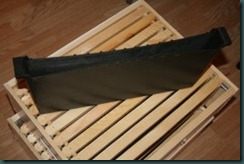
frame feederDivision or Frame feeders are simply a reservoir that takes the place of a frame. They work well year round because the syrup can remain warm in the nest area. However, it requires opening the hive and exposing the bees in order to refill.
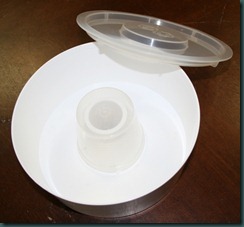
Top FeederA pail feeder is a pail, it can be a purchased pre-drilled pail or you can make your own, such as the same jar and lid that is used for an entrance feeder can become a pail feeder. Here’s how it works. Simply place the pail feeder above the cluster. It can either sit on the top of frames or it can be placed above the hole on the inner cover, that oval shaped hole. Pail feeders can be used year round, but in the winter it is best to use an inner cover to hold the heat in the cluster and place the pail above the hole on the inner cover. We sell a premium inner cover that has the small mouth hole pre-cut into the inner cover to feed during the winter. Since the jar is above the cluster it usually does not freeze, but it can if really cold or the cluster is really small.
pail feederNext, a common question is how long to feed bees after installing a package. Some say that as long as bees are pulling out wax on new foundation, it is good to feed them. There is wisdom in this approach as bees do need sugar to produce wax. 6-8 pounds of honey are needed for the bees to produce a pound of wax. And it takes 500000 flakes of wax to make one pound. As the young bees consume sugar/nectar/honey, they produce wax in their wax glands under their abdomen. However, sugar is expensive and most sugar is GMO beet sugar and so we prefer to only feed new packages about two weeks. Once dandelions are in full bloom we slow down or entirely stop feeding our bees. It seems to us, that if bees are fed too long in the spring and summer they do not forage as much.
pack6When a new package is first installed, there can still be cold spells in the north which can kill packages on undrawn comb. Drawn comb seems to provide a better way for the new colony to stay warm on a cold night. Bees produce heat by eating syrup or sugar. This year, on our small divides which we did in mid April, we made up a sugar patty and placed it on the top frames of our splits. This is made with powdered sugar mixed with just a little water to bring it to a dough consistency. These sugar patties saved the small splits.
How to mix the sugar syrup. Syrup should be mixed 1:1 in the spring and 2:1 in the fall. So in the spring, use one part water and one part sugar. No need to boil, just mix well with warm or hot water. 2:1 is 2 parts sugar and 1 part water. This is good to feed weak hives in the fall because they can store the 2:1 mixture sooner before the weather turns cold.

For winter feeding, we recommend our Winter-Bee-Kinds.
Winter-Bee-Kind For Winter Feed For Bees
In The summer of 2011 we introduced our Winter-Bee-Kind after several years of studying overwintering hives. We could barely keep up with production they were in such demand. We still make them right here at Long Lane Honey Bee Farms but we've expanded our production methods to keep up with demand. So many beekeepers told us that these were the only thing that got their hives through the winter. This year, it's time for the 2014 production year. We even mix the sugar and pollen and right here and pour the candy into the Winter-Bee-Kinds. WHAT IS A WINTER-BEE-KIND? It is a one piece candy board that provides food, ventilation, upper insulation and an upper exit/entrance to help bees remain healthier during the winter. Someone said it insulates, ventilates and feed-i-lates. With the built in upper vent, you don't have to worry about snow covering up your hive's lower entrance. The bees can still go in and out through the top vent spacing. We avoid shipping Winter-Bee-Kinds in hot weather and start shipping each September-March. You can place our Winter-Bee-Kinds on your hive anytime, even in the winter. Because it goes on top of the hive in place of the inner cover, and you are NOT removing any frames, it can be placed on the hive in cold weather. Just do it fast. Open the top, remove the inner cover and place the candy side down and the vent slot toward the front of the hive and you're done. Click here to order your Winter-Bee-Kinds Some form of a candy board has been around for a long time. Beekeepers of long ago placed candy in their hives to provide enough food for their bees to survive the long months of winter. There are various mixtures and receipts for candy boards. Some are made with soft candy and some with hard candy. The end result is still the same. The bees will consume the sugar as they need it. We've always been concerned about the amount of condensation that can develop in the hive during the winter. The bees produce heat within their hive and as the temperature is very cold outside the hive, condensation will develop on the warm side, just above the bees on the inner cover or top cover. This condensation can accumulate and drop down onto the winter cluster of bees below. Bees can stay warm in the winter but they must remain dry. If this cold water drips down onto the bees, it can reduce their ability to keep their cluster warm. The insulation on our Winter-Bee-Kind helps reduce the excessive moisture and even puts some of that moisture to work, as it accumulates on the candy and makes it easy for the bees to consume the sugar. Thus, a Winter-Bee-Kind can help lessen two winter stresses, the lack of food and excessive moisture. We make our Winter-Bee-Kinds with sugar and a healthy amount of pollen powder. Many beekeepers make the mistake of only feeding their bees sugar in the winter, but the bees also need protein which they obtain from pollen. Our Winter-Bee-Kinds come with pollen mixed in with the sugar.. Click here to order your Winter-Bee-Kind today. We recommend that you place candy boards on your hive any time between Oct-March.


Commonly Asked Questions
Q: Which way does the candy face in the hive?
A: The candy faces down just above the winter cluster. Normally, this means that the Winter-Bee-Kind would be placed on the brood box that contains the cluster. For example, if you overwinter your bees in a single deep hive body, the Winter-Bee-Kind would be placed on this deep hive body with the candy facing down toward the cluster. If you are using two deep hive bodies to overwinter, then the Winter-Bee-Kind would be placed on the top deep hive body. It is best to disregard the use of an inner cover, and simply place your top cover over the Winter-Bee-Kind.

Q: What about winter moisture?
A: Moisture can develop in the winter from condensation, a contrast of the heat the bees produce in the hive and the extreme cold temperature outside the hive. Condensation accumulates on the warm side, which means moistures collects on the inner cover or top cover above the hive. This can drip down on the bees and chill them during the winter. A Winter-Bee-Kind takes the place of an inner cover and any moisture that develops from condensation aids the bees in consuming the candy.

Q: How long will a Winter-Bee-Kind last on a hive?
A: On average about 3 weeks. However, a colony that has ample stored honey may not consume the candy board as fast or not at all until they need it. A colony close to starvation may consume a Winter-Bee-Kind within a week or two.

Q: Since Winter-Bee-Kinds are placed or replaced on the hive in the winter, can I open the hive up on a cold day?
A: It is best to place the candy boards on a hive when the temperature is above freezing and try to place the candy board on and have the hive sealed back up within 1-2 minutes. It should not take over 1 minute. Do not remove any frames in cold temperatures, only place your Winter-Bee-Kind on and off quickly. If you can choose the warmest day during the winter, that would be best. Try to avoid very cold, windy or rainy days.

Q: How do I refill a candy board?
A: It is best to send back your candy board and we will refill it for $7 plus shipping. If you are a good candy maker, you can do it yourself.

Q: How do I get one with a pollen?
A: Our Winter-Bee-Kinds contain pollen as well.

Q: Can I make my own?
A: You can, but you must experiment, because you do not want the candy to be too hard or too runny. The exact mix depends on your altitude, heat source and other conditions so it will be different from one location to another.

Q: Why was some liquid sugar dripping out of my Winter-Bee-Kind when I received it?
A: It is the nature of candy boards to be a bit on the dripping side even though the top may be hard. Do not be concerned if you see liquid sugar dripping out of your boards when you receive it. It usually means it was left on end during shipment for a prolong period of time. The bees will clean everything up and enjoy this soft liquid.

Q: How much sugar is in one Winter-Bee-Kind?
A: Approximately 5 pounds

Q: When do I put a Winter-Bee-Kind on my hive?
A: Any time! Nov, Dec, Jan, Feb are good months to place on the boards.

Q How often should I check my Winter-Bee-Kind?
A: Every three weeks, take a peek.

Q: Do you make Winter-Bee-Kind for 5 frame nucs or 8 frame hives?
A: Yes, check out our website to order, but carefully read the description to make sure you are ordering the correct size and type.

Q: Can the candy break loose from the board on the hive?
A: It rarely happens, but during extreme winter weather, the candy and separate from the board while on the hive. This is not a problem. The bees will continue to consume the sugar.

Q: When I place it on the hive, do I use my inner cover. Just how does it go on?
A: Winter-Bee-Kind takes the place of your inner cover. Simply place the Winter-Bee-Kind on the top of your upper hive body or super with the candy facing down, then place your top cover on top of the Winter-Bee-Kind. Be sure to use a rock or brick to make sure the wind does not blow your top cover off. There is overwhelming enthusiasm about our Winter-Bee-Kinds. Click here to order now.

Thanks for joining us today. Call us today to order all your beekeeping equipment, hives, suits, woodenware, queens and more!
217-427-2678. Or visit us online at: www.honeybeesonline.com
Please be patient when calling as this is a busy time of the year for beekeeping questions and orders.

David & Sheri Burns
Long Lane Honey Bee Farms
(217)427-2678

Wednesday, April 20, 2011

LESSON 100: What 17 Years In Beekeeping Has Taught Me

dns
Hello, we are David & Sheri Burns from Long Lane Honey Bee Farms, sharing a passion to help save the honey bee by encouraging more people to become beekeepers. This year, we surpassed all our goals and hopes. It is wonderful to see the thousands of people who have decided to keep bees.
Sheri and I are so thankful for all our customers who have become like family to us. I’m not sure why we have such loyal and supportive customers other than our customers see that we are honest, hard working and knowledgeable beekeepers. You’re the best!
Today, I want to share what I’ve learned over the last 17 years in beekeeping. But before I start our monumental 100th lesson, let me share with you what we’ve been doing and what’s coming up.

classdanville
100fEvery April, we make up our packages for pickup. Our package bee pick up day was a huge success, with folks coming from states away to pick up packages. We shake packages for pick up from our friend’s hives, Larry Bergman. We’ve worked with Larry for 3 years now and Larry has been prepare packages for over 30 years.
100dIt’s always a fun time for me to prepare packages. We always have a great team of folks who have experience in preparing packages and are hard workers. So much goes in to shaking packages. An entire year goes into preparing to shake bees and it all comes to a head as we move colonies into one yard for the shake down day. Here’s a video of us shaking packages this year. I’m the fellow pouring the bees into the cages. If you have trouble watching the video in your Email version of this lesson, go to: http://youtu.be/a83c9gJPAsw


100cAs soon as the bees are shaken into beekeeper’s hives they go right to work! Here is a honey bee that has only been in the hive several hours and already she is out, busy collecting nectar and pollen. My son Christian noticed her on a dandelion. Why in the world do people destroy dandelions? They are the first real food source to get honey bees going after  long winter. As the bee flies through the air, she develops a static charge and upon approaching the dandelion, the pollen leaps off the flower and collects all over her body.
LESSON 100: What 17 Years In Beekeeping Has Taught Me
Today, I want to share what I’ve learned over the last 17 years in beekeeping. Maybe what I’ve learned can help you be a better beekeeper.
1) Do not believe everything you hear or are taught. Not everyone who is a beekeeper is an expert, though they may sound like one. Be careful to always take opinions with a grain of salt. When in doubt rely upon proven assays. There is so much wrong information out there, so keep bees based on good information.
2) Beekeepers are finger pointers. When our bees die, we do not want to blame our poor management styles, so we are quick to point the finger. First, we may blame the bee providers or queen providers as giving us bad stock. Or we may blame the weather or farm chemicals and on goes the list. Certainly, these can be the culprit. However, we must always honestly evaluate our own individual management success. Gone are the days when we could keep bees and not do much and they would be fine. Now, we have to be good managers of honey bees are they will perish.
les72b3) Understanding bee biology helps tremendously in keeping bees. In fact, most beekeeping questions I’m asked would not be asked of me if more people knew about bee biology. So it is so important for every beekeeper to be a continual student of the honey bee. You do not have to know everything before you start, but continue to learn to be a better beekeeper.
4) I’ve learned to let the honey bee teach me. Books are great, but bees teach us so much. Bees make better beekeepers, than beekeepers make bees. So allow the bees to teach you what works best for the colony, not what works best for you.
5) I’ve learned I’m an ambassador for the honey bee. We must speak in a positive light when representing the honey bee. Do not use the “A” word (Aggressive). Instead, use the word defensive. Do not refer to the Africanized bees as killer bees. It’s best not to talk about how many times you were stung. Speak about the advantages of the honey bee instead, such as how well they pollinate our crops and the health benefits of honey!
Lesson886) I’ve learned that beekeepers are some of the best people around. I’ve learned that beekeepers are good people, kind and nice. Beekeeping demands that you too should be good too. Treat other beekeepers with respect and kindness. Do not become resentful or territorial. With all the challenges in beekeeping, we do not need to be at odds with each other. We need to work together. We are in this together. Be a good person and you’ll contribute to better beekeeping.
nucs7) I’ve learned that the little things make me a better beekeeper. The Bible says, “Catch for us the foxes, the little foxes that ruin the vineyards, our vineyards that are in bloom” (Song of Solomon 2:15.) If I fail to take care of the little things, I fail at beekeeping. Little things means keeping my equipment repaired. Keeping my store comb in good shape, equipment in good repair, putting back hive tools where they go, plugging up my smoke when done, and micromanaging my hives.
8) I’ve learned that I must keep extensive notes and logs on each hive. If I fail to keep a good hive log, my hives suffer from my lack of memory. A good log will provide for me a “to do list” that I can follow to keep my hives strong.
9) I’ve learned that I can learn something from everyone. I’ve had the privilege to work with several large scale beekeepers and they have all the tricks! I learned one last week. When you are working with several beekeepers in one place, lay your smoker on the ground so that the smoke does not bother the other beekeepers. So do not be a know-it-all. Be open minded so that you can learn from others.
10) I’ve learned that what I know should be shared with others. Freely it came to me, so why not share it with others.  Hopefully a publisher will come along and make me an offer to turn these lessons into a book for my retirement, but until then, I will freely share with others what I’m learning about beekeeping.
11) I’ve learned that bees are healthier as they are building up. If I start a hive in a 5 frame nuc, it seems to grow faster and then I move it into a 10 frame deep. As it continues to grow, it is very healthy. Older hives seem to become more effected by pests and diseases. Keeping a colony crowded provides better pest and disease control.
12) I’ve learned to attend every conference I can afford. Join a local club and attend your state beekeepers meetings. Here are two of my favorite conferences:
Heartland Apicultural Society
Eastern Apicultural Society The annual conference for EAS is a MUST ATTEND! All the big names in beekeeping hold classes for this outstanding event. Thanks for joining me again today for another great lesson, and lesson 100!
We are getting an early start to queens, so call us back and be patient. We’ll have more available each week as the year progresses.

Remember, we make our living from our bees and by selling equipment that we make here in our family business. We know you can go to the larger companies, but we always appreciate you supporting our family business. See you next time!

DavidSheriNew1
David & Sheri Burns
Long Lane Honey Bee Farms
14556 N. 1020 E. Rd
Fairmount, IL 61841
(217) 427-2678

www.honeybeesonline.com
Email For Beekeeping Questions Only: david@honeybeesonline.com
Due to the overwhelming number of daily emails, please allow 7 days for an answer. (Please be advised that we do not accept orders, changes or questions about orders through email. With spam filters, email is not a reliable source for order information.)

Saturday, March 26, 2011

LESSON 99: Beekeeper Or Bee-haver (www.honeybeesonline.com 217-427-2678)

DavidSheriNew1Hello from David & Sheri Burns from Long Lane Honey Bee Farms in Central Illinois. It’s nice to be with you again for another beekeeping lesson.
This is lesson 99, which means our next lesson will be Lesson 100, a mile stone no doubt!  We want to make Lesson 100 something special. If you have something special to suggest for lesson 100, let us know!
Watch our recent Bee Dance Video below. If you cannot see it below, click here to go to our lesson directly.


We’re knee deep in honey bees, and we love it! In one week I taught and spoke at 4 different clubs and classes. It was great.
Our outstanding colonies headed up by our own Pioneer Queens all survived the winter. Yea! It’s always a good feeling to go out and find the hives Overwintered hive 2011strong and healthy in Illinois after such a bad winter. We do not treat our colonies and they go through the winter on screen bottom boards. Again, this year there was no difference between the hives that we wrapped and the ones we did not. Every year we provide larger upper openings for ventilation on our hives and each year they do better!
I’m leaning toward the opinion that most winter hives die from the following in this order:
1) Lack of proper fall and winter management (Froze or starved out)
2) Varroa mites – the diseases they vector
3) Nosema
4) Trachea mites


classdanville
And before our lesson today, let me tell you about a few new products we are carrying that are great!
GoatskinglovesFirst, Bucko Goat Skin Beekeeping Gloves. Wow, what a nice glove! The goat skin is a better, less clumsy fit, and it has extended ventilated sleeves. We are selling these $5 cheaper than most places for only $15.
TBHAnd for all of you Top Bar Hive Enthusiasts we are now selling TBHs!!! (Pretend you hear a loud crowd applauding). Do not be tricked by tiny TBHs made of plywood. This is a full 46” TBH made from 3/4” pine. Even the top is made with pine, and covered with aluminum. Comes with 30 top bars (frame starters) with wooden splines. This TBH also comes with a screen bottom board with a slide in board to open and close the bottom. This TBH also has three holes in the side and two follower boards. Stand and bees not included. Click on the image or click here to purchase your TBH. Have some fun with a Top Bar Hive!
LESSON 99: BEE-KEEPER or BEE-HAVER
DavidteachingA BEE-HAVER is someone who can say they “HAVE” bees but they do not want beekeeping to consume their time or interest, so they spend little to no time keeping bees, they simply have bees. That’s certainly one approach.
Then there are those who want to evolve from just having bees to truly doing all they can to make sure their bees are as healthy as possible.
Probably somewhere between these two groups is where most beekeepers find themselves.
I recently held a class on “Pest & Diseases” and SO MANY BEEKEEPERS NEED TO TAKE THIS CLASS.  In order for beekeepers to overwinter colonies, produce more honey from colonies and have overall stronger colonies, beekeepers must know pests and diseases. There are many practical ways to prevent many pests and diseases, but until you are taught and trained, you will probably experience avoidable problems .
Let me show you what I mean by taking you on an inspection of a hive. A friend asked me to inspect his hive in the fall. Join me and let me demonstrate how easy it is to “think all is well” when it is not. As we inspect the hive, you’ll need to click on each image so that it will enlarge to its original size. Look at this comb of brood and bees. Click on it and see what you think?
deformedwingMost beekeepers would feel okay about this comb. The brood looks fine, though it is a small area of brood, it’s fall and queens are cutting back laying so it’s fine. But if we look closer we’ll several things that are wrong, this hive will not make it through the winter. In fact, nothing was done to my friend’s hive and it died in the winter from the major two factors visible upon the above image, both could have been prevented. So let’s zoom in.
deformedwing3Do you see the two major problems? I’ll give you a hint. Look at the bees, not the brood. Ah ha…see it now? Among several female workers we see DWV, deformed wing virus and one has K-wing. Let me zoom in and show you.
Her wings have been damaged by this virus (DWV) usually transmitted by the varroa destructor mite. In the larger image above, you can find two with DWV. MITE INFESTATION! That’s the first major problem that will kill this colony during the winter. But, there is even a greater threat to the hive surviving winter. Let me show you the image, by zooming in from our initial larger image:
Kwing
This image reveals further evidence of varroa infestation because you can see mite feces on the bottom and walls of open cells. Small white particles. Another bee with DWV is in the upper center, but what is unusual to you about the bee below the one with DWV? Her back wing has slipped forward to advance in front of her front wing, forming what looks like the letter K, thus K-wing. Damage is done to the flight muscle area by the Tracheal mite. So in this image, we are probably looking at symptoms from two different mites. Usually K-wing always demands a further investigation for Tracheal mite testing.
tracheaexamineMost beekeepers do not have a microscope or the patience to pull out the bee’s trachea tube and look for the tiny tracheal mite in the tracheal tube, a bit smaller than a speck of a tiny dust particle. But you can buy a microscope and learn to do the dissection yourself or send in your bees to the Beltsville, Maryland Bee Lab. So here I have pinned down a bee, removed the head and first two legs and collar to pull out the trachea tube. It is lots of work but I never found any. Two pins in a pencil eraser works well to hold the bee in position during surgery.
While I was doing Tracheal mite testing I went ahead and inspected the bee further.
honey stomachOne thing in particular that was interesting was the honey stomach. Where else, but here, will you finally see what a honeybee’s honey stomach looks like? Rather than thinking of it as a human’s digestive stomach, think of it as a flexible holding tank. I went ahead and dissected the bee and pulled out a nearly fully expanded honey stomach, and I’m holding it between my fingers.
Now, back to our hive that we are examining. So here are our two signs that my friend’s large hive, with plenty of honey, will not see spring and it didn’t. VARROA & TRACHEAL MITES. It died leaving plenty of stored bee bread and honey. So to become a beekeeper who desires to know more to better assist your bees in overcoming these possible problems---I want to help you. But remember, almost all bees have varroa mites, but not all mites vector diseases to such a level as seen in the hive we are inspecting.
To help your bees have a fighting chance against what we have seen above, consider a few essential techniques. First, let’s deal with tracheal mites. Tracheal mite resistant bees are the best defense. Certainly it is nearly impossible to develop bees that are 100% resistant. However, if a colony survives the winter, it is probably a good indication they have some degree of tracheal mite resistance. That’s why the queens we sell are only from hives that have been overwintered without any treatment. Hives that suffer from tracheal mite infestation are unable to properly thermoregulate their hive during the winter and the hive simply freezes out.

I recently wrote an article on
formic acid and the Mite Away Quick Strips that will soon be approved in many states. It is not a harsh treatment and only requires 7 days and can be used with honey supers on. It will take care of both varroa and trachea mites.
To address the tracheal mite naturally use a grease patty in the hive. Mix 2 parts powdered sugar with one part Crisco vegetable shortening. You can add a bit of honey-b-healthy or lemon grass oil extract. Compact this mixture between two sheets of wax paper and lay on the top bar of each deep brood body. Keep it on all year! As the bees nibble at the sugar in the patty, they will track traces of the vegetable oil around thus it is enough to make it nearly impossible for the tracheal mite to find a young bee as a new host. It is difficult for a tracheal mite to enter an older bee because of the more developed hair near the first breathing airway on the mature bee.
Remember, tracheal mites are not usually a serious problem, certainly not like varroa mites. This is partly because bees in America are becoming more resistant, but also because beekeepers are  treating for varroa which is also knocking out tracheal mite populations. But if you want to become a better beekeeper, this lesson is for you!
Lastly, you HAVE to keep your varroa mite levels down as much as possible. I am always amused at beekeepers who say they do not have mites but their only test is a quick visual glance. These are the same beekeepers who can’t spot queens but they can spot varroa mites?? You cannot see tracheal mites and most beekeepers find it very hard to see varroa mites. Do not assume you are mite free simple because you cannot see mites. Become more aggressive toward mites to save your hive.
If you don’t like formic acid, then use IPM (Integrated Pest Management) methods for varroa such as 1) Freezing drone comb traps 2) Screen bottom boards 3) Powdered Sugar Drop and 4) Removing the queen temporarily to break up the bee’s (and varroa’s) brood cycle.
If you lost bees this winter, do not assume it was the cold winter. It could have been, but it is very possible that with a little more perfected management, your hives could have survived the winter. So move over and become a beekeeper, not just a bee-haver.
These lessons are free, but they do cost to research, write and publish and post. If you cannot afford a donation, no problem and please enjoy. If you can help support our ongoing research and lessons, we would certainly use your gift wisely to further freely sharing these valuable lessons which help others successfully keep bees!  Please see the link below to make a donation or send your gift to our address at the end of this Lesson. And thank you in advance.

Thanks so much for joining us again today, and please know that we appreciate your business. When you purchase from Long Lane Honey Bee Farms it helps us pay the bills and make a living and to continue our research on honey bees. So keep us in mind next time you need a hive, a queen or any beekeeping equipment. Our phone is: 217-427-2678
One of our most dearly loved hives that customers enjoy so much is our copper top garden hive. Looks absolutely beautiful in any garden or yard. We sell these with a cypress hive stand and these are 8 frame garden hive, so they are just alittle bit easier to handle and sure look cute. Click on our garden hive image to purchase one today. Click here for more information on our copper top garden hives.

Also we are now carrying a new style of top feeders, an all wooden top feeder with two large reservoirs. Each reservoir has a wooden platform where the bees can stand and eat and not drown. Place it on the top hive box and place the top cover on the feeder. Works great! Click on the image to purchase.
One more item is a queen mansion.
queenmansionQueen Mansions is just what it sounds like, a hive body that allows you to raise 3 queens at one time, or keep three queens in one deep hive body. We use them in our queen rearing operation and they work nicely. There are three separate areas in one deep hive body.
queenmansion2Each section is completely sealed from the other sections so each queen has her very own three frame section with separate entrance. Three top pieces made for 3/4" pine serve as the individual top pieces so you can remove one at a time to work one section while the other two remain sealed closed. This is a great flexible unit, because once you no longer want to hold queens, simply slide out the dividers and use it as a regular deep hive body and a regular screen bottom board. 9 Frames included. Top cover not included.
Here’s our contact Information…
Phone: 217-427-2678
Email:
david@honeybeesonline.com
(Please call us rather than emailing us about orders)
Web:
www.honeybeesonline.com
Twitter:
www.twitter.com/longlanehoney
Podcasts:
www.honeybeesonline.com/studiobeelive.html
Mailing Address: Long Lane Honey Bee Farms
14556 N 1020 E. Rd
Fairmount, IL 61841

DavidMBSee you next time,
David & Sheri Burns
Long Lane Honey Bee Farms
In Central Illinois


Thursday, March 3, 2011

LESSON 98: BEEKEEPING IS FUN, EASY & SIMPLE

DavidSheriNew
Hello from Long Lane Honey Bee Farms. We’re keeping warm in central Illinois with high hopes that spring will come once again as it always does, but we are hoping it will come earlier!
We are David & Sheri Burns and it’s our pleasure to share with you about honey bees. Today, I want to share a lesson on just how fun, easy and simple keeping honey bees really is. It’s about time someone simplified the whole honey bee thing, right!
Before I get into today’s lesson, I want to share what we’ve been up to.
winterWe are still in winter! Even after spring arrives, we will still have cool weather for some time, making it difficult to work bee as much as we’d like. I push the envelope with my nuc and queen rearing operation! I have to work bees with a coat on to get a head start. I could move my operation south, but then I would have other issues. Cold is easy to deal with. While bees are out flying in our southern states, Midwest and northern bees are still in their winter cluster, gradually coming out more and more each week. This gives us time to continue to prepare for when spring finally arrives. We are getting hundreds of frames prepared for the spring along with boxes for splits, swarms and mating nuc boxes.
Deformed Wing Virus
This is the time of the year, when there is a h
We have a special we are offering on our single hives.


LESSON 98: Beekeeping is Fun, Easy  Simple!
BEESIn all walks of life you have some people who see the glass as half full and others who see it as half empty. It’s that way with beekeeping, some will complain, pout and talk about how the “bees are all dying”. But others love keeping bees, take off honey and enjoy it. While some hives die, others flourish.
So let me tell you how good it really is. Okay, sure, bees can die because they are livestock. But, dogs die, chickens die and all livestock can die from nearly anything. Yes, bees have mites but dogs have fleas. I’m trying to be honest but also let you know that it isn’t gloom and doom as some make it out to be. It is my opinion that around 50% of bee problems are management issues. With more knowledge and skill the beekeeper could have saved the hive.
Bees certainly have more challenges now than they’ve probably ever had. But, there are so  many management practices that can overcome many of these potential setbacks.
chickens1Okay, now let talk fun! When my wife first started keeping chickens she read everything she could on raising chickens. We were alittle worried that it would be hard, that our chickens would contract some respiratory disease, mites or be eaten up by predators. We’ve raised free range chickens for several years now and those things never happened---not to any large degree. Every time we lost a chicken it was because we forgot to close the fence or something else to do with our mismanagement. We were told that we had to heat our chicken coop in the winter or else the chickens would freeze. We didn’t and they were fine. That’s not to say something bad can’t happen, but after all the scare we’ve had so much fun raising chickens.
appletreeOften new beekeepers become so attached to their bees that the thought of the bees being unhealthy or dying is reason enough not to even start at all. WRONG! Think what life would be like if we took this approach toward apple trees or even a married couple not having children because something could happen to their child.
The fact that it is more challenging to keep bees now than it was 30 years ago is all the more reason we need more beekeepers. We are making significant advances in keeping healthier bees.
Come on, and jump into beekeeping with the idea of having fun. Don’t worry about what might happen and be always in a fret over every mite or problem. Relax already and have fun keeping bees. Let me give 3 tips on how to have fun with your bees:
Emed11) Acknowledge that your hive is pollinating crops, yards, gardens and fruit trees within 3 miles of your home.  Pull up a lawn chair and watch the bees fly in and out, knowing that these gals are working hard to pollinate your valuable plant life. Take comfort in the fact that you are doing your part to help save the bees.
beesonfronthive2) Have fun learning about bees and keeping your mind sharp through reading about bees and planning your apiary. Sometimes if we have too much time to think on things, we can become depressed and sad. Having a hobby that really interests us can really improve our overall mental health.
Lesson89d3) Have fun running your own bee lab and beekeeping experiments. I’m serious!  You might be the next Langstroth. Certainly university studies can shed more light on beekeeping success, but let’s face it, sometimes our own discoveries work inspite of what the studies show. Run your own trials and keep track of your results. Incorporate your discoveries into your approach to successful beekeeping.
HOW TO COPE WITH PROBLEMS
sting9Don’t take everything so seriously. If your bees develop a problem, deal with it. If they die out in the winter, do not despair. Chalk it up as experience and order more bees next year and make the last hive that you lost worth something by applying what you learned from them to your next successful colony.
Now go out here and be excited about beekeeping. Bees are still thriving in our country. Beekeeping is rebounding with more and more new beekeepers.
One Last Pep Talk
HoneyStill not sure if you want to keep bees this year? Maybe you can remember helping out a family member years ago when they had bees. Perhaps it was Grandpa or an Aunt. Or maybe you’ve been reading about how we need more bees to make up for the shortage of pollination and you’ve decided to do your part, so do it!
Sheri and I receive calls all week from people who have finally decided to jump in and keep bees!  Come on and do it. Stop putting it off another year. You are not getting any younger, so let this year be the year you become a beekeeper.
family pictureI know, I know, people complicate it and make it sound so complex. Baloney!  It is easy. Buy a hive, shake the bees in and let them do their thing. If you don’t want to feed the bees, don’t!  If you don’t want to use medication in the hive, don’t!  If you don’t want to harvest the honey, leave it for the bees. If you don’t want to mow around your hive, don’t! Keep it simple.


Next Lesson: Top Bar Hives
Here’s Our Free Beekeeping Newsletter & Podcast Info:
STUDIO BEE LIVE  BEEKEEPING PODCAST BEEKEEPING LESSONS FOR KINDLE ON AMAZON.COM BEE SMART NEWSLETTER
Here’s Our Contact Information
Phone: 217-427-2678
Website:
www.honeybeesonline.com
Email:
david@honeybeesonline.com
Twitter:twitter.com/longlanehoney

Mailing Address: Long Lane Honey Bee Farms
14556 N. 1020 E. Rd
Fairmount, IL 61841

See you next time!
David & Sheri Burns
Long Lane Honey Bee Farms