Friday, May 16, 2014

LESSON 154: A Feeding System For Critical Times Of The Year 217-427-2678 www.honeybeesonline.com

DS
Here in Illinois, rainy, cool weather has placed bees in neutral until warmer weather returns. Beekeepers with new packages, nucs, and splits are worried about how to combat the cooler nights. We have a remedy. Hello from David and Sheri Burns at Long Lane Honey Bee Farms in central Illinois.www.honeybeesonline.com.  In today’s lesson I want to suggest a great way to feed bees when first starting out with your new hive or split.
Before our lesson today, I want to thank everyone for your encouraging emails welcoming home our son Seth from Afghanistan. We all had a great time on Tuesday catching up on his life. If you’d like to watch the news report, click here.


Hi we are David and Sheri Burns at honeybeesonline.com  Please visit our Main Website at: http://www.honeybeesonline.com
 

ADVANCE BEEKEEPING COURSE JUNE 11, 2014 9am-3pm Central Illinois!!

Have you considered the importance of taking our one day Advance Beekeeping Course?  I'll be joined by my good friend and fellow certified master beekeeper Jon Zawislak. Jon and I have written a book on queen rearing and we recently authored a two part articled published in the American Bee Journal on the difference between Northern and Southern bees. Jon and I will be teaching our Advance Beekeeping course June 11, 2014 here in Fairmount, Illinois and we have around 6 seats available. You don't want to miss this opportunity to be around me and Jon and learn about bees for a whole day. Click here for more information.

Check out our entire list of beekeeping classes we offer by clicking here.

Welcome to Long Lane Honey Bee Farms Online Lessons! Visit our MAIN WEBSITE AT: http://www.honeybeesonline.com We have a complete line of hives that we build right here in Illinois. We offer classes, sell queens and much more. Give us a call at: 217-427-2678. Our hours are: M-Th 10am-4pm, Fri 10-Noon Central Time.

LESSON 154: A FEEDING SYSTEM FOR CRITICAL TIMES OF THE YEAR
a1545
I wish we all could just let the bees find their own food sources all year. Sometimes they do. But our country has an obsession with killing weeds. Fence rows are sprayed and edges of mono-crop fields are sprayed or mowed. The bee’s natural food sources are quickly eliminated. Those studying Colony Collapse Disorder point toward poor nutrition as one of the many potential causes.
A colony actually requires a large amount of food like any living organism. And since a hive is considered a single living organism, its requirement for steady food is enormous. Bees are like us; they live on carbohydrates (nectar/honey) and protein (pollen).  We do not need to cite a study to know that bees are healthier when they are on a healthy diet of pollen and nectar.
There are critical times during the year when bees need food but it is limited. Take for example the installation of a package in the spring.  Over the last week here in Illinois packages were unable to forage for food due to rain, wind and colder temperatures. To care for the new brood, large amounts of stored nectar and pollen had to be used. When temperatures fall below 50 degrees (f) the bees cluster to stay warm and are no longer able to go down and eat from the entrance feeders. Resources are consumed in order to produce heat. Less brood is reared and less eggs are laid during cold snaps, thus reducing the building up of brood. We call this “brooding up”.  There are several reasons why brooding up is so important in the spring and early summer. A colony’s large population is essential for gathering nectar, building comb, storing honey and fighting pests and diseases. Weaker colonies usually become weaker which increases the risks of wax moths, small hive beetles and winter die-outs.

Without large numbers of foragers they will not have large amounts of nectar coming in. Without large amounts of nectar, they will not be able to produce large amounts of wax to build comb. Without comb there is no place for the queen to lay. Since we have placed a colony in our hive, on our property and want them to work on our terms, there are critical times during the year when we must feed our bees.
In the spring when it is cooler and rainier. In late summer during the inevitable dearth period between when summer flowers are done and before fall flowers bloom.  In the fall when bees need to store up food for winter but frosts have killed off all foraging sources. No matter how “good” your bees are, how perfect your queen is, these are critical times to ensure your bees are well fed so their numbers remain strong in preparation for winter and for fighting off pests and diseases.
I recently became overwhelmed with how many beekeepers were finding it difficult to feed their bees both protein and carbohydrates during these critical times. Last year I was at the Eastern Apicultural Society meeting in Pennsylvania when a friend of mine received a call that her bees were starving. This was in late summer during a dearth. She was in a panic to figure out how to quickly get food in the hives. Then, in the winter I was speaking at the the Tri-County Beekeepers annual conference in Ohio when another friend and fellow master beekeeper told me how much he liked my Winter-Bee-Kind feeding system, but that I should make one for the summer dearth.
We both discussed how this is one of the more critical times that bees need to continue building up on needed resources in preparation for winter. So for nearly a year I’ve been designing and trying out different methods and systems to meet this demand. I finally did it!  It took several prototypes but I finally developed the Burns Bees Feeding System. So often new beginners call us in a panic saying they just installed their new package but they are worried about the cold nights.
Some people try to place an entrance feeder on the frames of a deep and surround it with a shell of a deep hive body and place a lid on it. This can work if all conditions are right, but the fact that you need to do this means that all conditions are not right. In other words, it is too cold for the bees to go down to the entrance feeder at the opening which means there is way too much heat loss. Heat escapes from the cluster up into the open shell of the hive body. Also the bees need more than just sugar, they also need pollen to keep building up.
So let me give the details the Burns Bees Feeding System. First we provide you with two pollen/sugar patties that go into the system. And the board also accommodates a lid with pre-drilled holes for your small moth jar of sugar water. 1:1 in the spring and summer and 2:1 (2 parts sugar to 1 part water) in the fall. The board holds in the heat during the spring. In our video and pictures you will see how we recommend the patties are smashed through the screen in order to create more texture so the bees can consume patties more effectively.
We also include a recipe so you can continue to feed your bees as needed.  Take a look through the follow pictures. Traditionally entrance feeders and patties are placed on top of frames and a shell is placed around the food source. a1541
However, as seen in this picture, bees begin festooning and building comb in the open space above the cluster making unwanted comb. And significant heat is lost as it rises away from the cluster into the open space above them. Also if you’ve ever fed patties like this, you’ll notice that they are unable to eat the part of the patties directly resting on the top of the frames.
a1542
Push the provided patties through the screen as shown above.
a1543This allows the patty to be cut into tiny attached sections making it easier for the bees to consume. This is a view of the patties facing up, but when placed on the hive, the patties pictured above is placed upside down and hangs directly above the cluster.
a1544Here is a new package on undrawn foundation. A green drone comb is seen for varroa mite trapping. The Feeding System is placed directly on top of the cluster.
a1545As pictured above the sugar water is added in the specially cut cap hole. We suggest laying a piece of cardboard or rag over the pollen patties and screen area for maximum heat retention. This is not necessary in temperatures above 50 degrees (f).
a1546
You can use used equipment, like a deep hive body shell to place on the feeding system. The reason you have to do this is because of the jar of sugar water that sticks up. This is not necessary if you are merely wanting to feed a pollen patty in which case you can push it through the screen and then place the top feed on the feeding system without a shell. A shell is to add space for the jar feeder.
a1548Notice how the jar lid does not allow the sugar water to spill out, but simply bubbles up due to a vacuum seal. The bees are able to drink from this effectively.
a1547Finally place the lid on the system. Be sure a use a weight like a rock or brick incase of a strong wind.

To order our NEW BURNS BEES FEEDING SYSTEM, click here now.  Thank you.

David and Sheri Burns
Long Lane Honey Bee Farms
www.honeybeesonline.com

Monday, May 12, 2014

LESSON 153: How To Inspect Your Bee Hive www.honeybeesonline.com 217-427-2678

DS

Hello from David and Sheri Burns at Long Lane Honey Bee Farms in Illinois! How are you?Thank you for supporting our family business with your beekeeping needs. We know you can go elsewhere, so we value your loyalty. When you purchase from Long Lane, you are supporting a hard working, small family business. It’s harder to find small family businesses anymore but it’s what America was built on. We appreciate your business. Spring has sprung and we are off to a great start for another bee season. We’ve hit a milestone because last week was our package bee pickup weekend.

L1531 All year long we build up to that one big day when we distribute packages of bees. The day went very well. We had some of our past helpers here as well as our family and some new folks helping like Joe and Scott. We had several calls and emails thanking us for having a great staff to make the chaotic day go as well as possible. With hundreds of customers and over 6 million bees to keep straight, it really did go well.

L1533 This year we used a new package, a plastic cage system. Overall we really do prefer these cages. It provides better ventilation for the bees, finger grooves for easier candy can removal and we hope that people will be more likely to return them to us. Cages have always cost us alot and unlike some places we do not charge a deposit on our cages. But if you can bring back your cage, that’s one less we have to buy next year. 

Now that the bees are installed and growing I want to provide a lesson on how to inspect your new bees, what to look for, what you can correct now, how to feed and how to use the Green Drone Comb Varroa Traps.

Freedomekit It’s not too late to start beekeeping! There’s still time to buy a hive from us and call my friend for a nuc. As of Friday, he had several nucs of bees still left. We recommend starting with two hives, and we sell our freedom kit which is two hives and all the supplies you need (bees not included). Call us first so we can make sure nucs are still available. We are on central time: M-Thu 10am- 4pm and Friday 10-Noon. Please call us after Tuesday because tomorrow is an exciting day for our family and we’ll be closed.

SethAfThis Tuesday our Marine son Seth will be SethAfgh home for three weeks for his post-deployment leave from Afghanistan. We will be picking him up in Indy at 9am EST time and then meeting up at Lynch Rd Big Boy Restaurant just inside Illinois to be escorted into Catlin by the Patriot Guard Riders. We will then be meeting at the American Legion in Catlin for lunch. After I finish this lesson I’ll be poking some flags in the ground down our long lane. It is amazing the courage and sacrifice these young men and women have to serve our country. Welcome home Lance Corporal Seth Burns. Needless to say we’ll be closed on Tuesday.

We still have openings in our week long Beekeeping Institute. Click here to see all our upcoming classes. There are so many classes being offered everywhere. There are some very good teachers out there, but to really receive a thorough teaching it takes at least 6 hours. If you took a 1 or 2 hour class you still have so much your instructor did not have time to teach. All of our classes are 6 hour courses. Please consider taking one of our classes. I am an EAS certified master beekeeper and we have a strong focus on beekeeping education. Time and time again we receive calls from beekeepers who lost bees in the winter and we ask if they took a class. So many have not. Taking a class does not mean bees will not die in the winter, but it will give you greater strategies to prepare your bees for winter.

Our next class is an advance beekeeping course May 23-24. Friday night and then Saturday morning. Click here for more information. We still have a few spots open.

bi11

LESSON 153: How To Inspect Your Bee Hive

After you install your new package of bees or nuc, you’ll want to inspect your bees. Here’s what you are looking for:

1. Is the queen out of her cage (packages not nuc) ?

2. Is the queen laying eggs?

3. Are the bees drawing our new foundation and making comb on the frames?

4. Monitor the green drone comb trap.

5. Is there sufficient sugar water to assist the bees in drawing out comb?

6. Several things should be corrected if not noticed.

L1539 First, on new packages, you’ll need to inspect your hive about 5-7 days after you install your package to insure the queen is out of her cage. Notice that you’ll probably have worker bees playing in the queen cage so do not be alarmed if you see bees in the cage. It probably isn’t the queen. Start your inspection with the frame nearest the outside wall of the hive. Remove it slowly and set it aside.

L1535 Do the same on the next frame. Now you have enough room to slide the third frame against the wall because you’ve removed two frames. Slide frames gently until you create enough space to lift out the queen cage from between two frames.  Set the queen cage aside on top of the other frames for a moment while you continue to inspect frames for the presence of your queen. Always manipulate frames in slow motion to keep the bees as calm as possible, avoiding sudden movements.

L1537 Once you find the queen on a frame, be extra careful to hold the frame with the queen over the hive should she fall off. Look for the presence of eggs on this frame.  Once you spot your queen, please be very careful not to inadvertently kill her. Make sure she is near the center of a frame and not near the edge when you place the frame back into position or you may smash her.  Place all frames back in the same order and position you took them out.  Take a count of drawn comb so that you can evaluate the colony’s progress the next time you inspect.

We highly recommend you use green drone comb to trap varroa mites. Pull out your drone comb and monitor how much the bees have drawn out the comb and if the queen has laid in this special green comb. Keep an eye on it so you’ll know when to remove it to kill the mites.

The heavier you feed bees, the faster they will draw out their comb. The more sugar water they consume the more wax they produce. If they are not building much comb, feed more or check feeders to ensure the colony has access to the 1:1 sugar water. Perhaps a lid on an entrance feeder is clogged or a round pale feeder is empty. I add Honey-Bee-Healthy to my sugar water because it stimulates the bees to find and consume this food source.

Let’s go through some scenarios that could indicate a problem.

1. Funky comb being drawn out in columns rather than evenly. Now is a good time to fix this. These columns can be built on the foundation and if left will make the hive impossible to inspect in the future. I remove the columns, spray the foundation with sugar water, and ball up the wax I removed and rub it evenly across the undrawn frame to encourage the bees do draw out foundation evenly.  This is a tough call when this may be the only frame with eggs. Sometimes I am forced to leave a funky drawn comb because it may contain my only brood. I wait until later to deal with it after the hive is more populated.

L1534 2. No presence of the queen. Don’t jump to conclusions just yet. Are there eggs in the cells? Maybe she is walking on the wall or floor of the hive, sometimes I’ve even seen her on the lid or inner cover. Check for eggs or larvae. If you see brood, assume you have a queen, and just look for her in two weeks when she will probably be back on a comb.  If you do not see any eggs or larvae, purchase a new queen ASAP! Do not delay. If you can purchase a queen quickly, this would be more advantageous than waiting for a queen cell to emerge. Every moment your hive is not “queen-right” increases the chances that your hive will not make it through the winter. They need to be large in numbers before winter. Every day you go without a queen you are losing out on 1,000 plus new bees A DAY!!! Winter prep starts on your first inspection.

3. Watch out for cold nights! This week, here in Illinois we will have several nights in the low 40s which means these new packages will be clustering at night to stay warm. Even in Amarillo, Texas the low Wednesday night is 41. The low on Thursday night is 45 in Tennessee. I try not to just make this a “northern” lesson, so we’ll have some cold night around the country this week. In some places it will warm up enough for the bees to fly the next day, but some parts of the country bees will not be able to fly in the day due to rain. In this case the colony will rapidly run out of food stores. I strongly recommend you make sure all new colonies from packages be fed heavily during this cold, rainy snap. I make up protein and sugar patties and lay on top of frames. When colonies are clustered they will usually not be able to break cluster to go down and eat from the entrance feeders. Top feeders are good for cold nights, or my patty idea. I’m already placing my patties on my hives to get them use to eating them prior to this upcoming cold snap and rainy period. Remember if bees can’t fly out on a rainy day, they consume so much of what they have already gathered. This is only an issue for a new colony on undrawn foundation. Established colonies or nucs do not demand as much attention during brief cold snaps.

L15310 4. You have mites! Do not assume you do not have varroa mites and make the mistake of doing nothing. I will do my first powdered sugar dusting on my first inspection and in combination with my green drone comb and screen bottom board I will attempt to stay ahead of the mites. In one week my bees from a new package pulled out the comb on a green drone comb as seen in the photo. 

If you ignore your mites, the chances of your colony dying in the winter is greatly increased. Bees bitten by mites only live half their life span, 22 days instead of 45 days in the summer.

L15311 5. One of my new packages already needs a second deep hive box, but because cool nights are in the forecast and rainy days, I’m going to wait and keep them tight, in one box, one more week.

To all our new beekeepers, relax and stop worrying. Do not fret over your bees. Enjoy the hobby. I’ll keep walking you through this and maybe you’ll pick up some wisdom you can apply to your hive.

Freeshipping26. Now that everyone knows you are a beekeeper have a spare hive so that you can respond to a swarm hive. This time of the year bees multiply by sending out half the colony with the old queen. This is rare with new packages, but is expected with healthy second year colonies.  Having that extra hive for quick response can make all the difference on whether the swarm will stay or swarm again. Click here to order now.

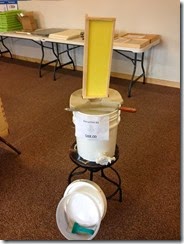
Extract Finally, are you prepared for a honey harvest in a few months? We have a new harvest kit that comes with some new and effective ways to harvest your honey. It is a plastic device that fits on top of the honey bucket with a valve at the bottom. Also comes with a strainer and lid and a cold uncapping knife. See all the details by clicking here.

Thank you for supporting our family business with your beekeeping needs. We value your loyalty.  It’s harder to find small family business anymore but it’s what America was built on. We appreciate your business.

David and Sheri Burns
Long Lane Honey Bee Farms
Fairmount, Illinois
(217) 427-2678

Saturday, April 19, 2014

LESSON 152: Tragic Mistakes Made In The Spring www.honeybeesonline.com 217-427-2678

L152

NOTE: For customers who have ordered and paid for pickup packages of bees, our package bee pickup date has been moved to Sat. May 3 from 9am-6pm. Thank you.

Hello from Long Lane Honey Bee Farms. Today I want to share about the tragic mistakes beekeepers make now that it is spring. But before I do I want to share a bit about our family. Here’s some of our family eating supper. We are one large, hard working family. We work hard together and often we eat together. This week we have been so blessed by several customers who have called in just to tell us how much they appreciate us and enjoy our classes or our website on beekeeping.

This is a very stressful and busy time of the bee year so we always enjoy it when customers have encouraging things to say. One man from California even told my wife to give me a kiss on the cheek. If you got to know us more you’d really like us. Our family is fun and funny. Many families being featured in reality shows no longer do what the show depicts them doing. Much of it is a reflection of what they used to do before they became rich and famous.  But we are still living REAL life! See that table we are eating on? My Uncle Charlie in Stamps, Arkansas cut down those trees and dried out oak planks. My brother-n-law, Alan in Martin, Tennessee went down and got the wood and built me that table in 2002. It’s beautiful.

If you were to wake up and follow us throughout the day you’d agree we are the best reality family around. The stuff we do and run into is a hoot. We put together a bunch of video we took of some things that happen around here with our family, a glimpse into our reality, “American Beekeeper”.


L152aSheri is a sweetheart. Last weekend we had two bee classes back to back, all day Saturday then from noon to 6 on Sunday. But she still managed to make an awesome home cooked supper. She writes books, gardens, raises chickens, rides a Harley, talks all day to beekeepers on the phone and still has time to read a good book at the end of the day.


MotorcycleCA She has notebooks for each of our six children and almost everyday she’ll writes down what we did so that when we’re gone the kids can know what our days were like (as if they don’t already because they are usually here). She earned her college degree in Business Administration/HR, and is even a certified firearm instructor. She has traveled to Haiti, Mexico and Israel doing mission work. She has a real sense of compassion for people. She is the star of our reality show! She’s the queen bee of our lives and operation.  What’s also fun about having Sheri as a wife is she jumps in and enjoys whatever new endeavor I tackle. Every time I start a new hobby she involves herself with me in that hobby. Consequently we are best friends. Today I was driving through Danville, Illinois with pulling a 25’ trailer and she rode up beside me on her Harley. I yelled, “Nice bike! You married?”. She nodded that she was, and I said, “Lucky guy!”

Next year will be our 10th year as a bee business. And those first few years were really tough. We have put our time in trying to make things happen. If it had not been for Sheri, my daughter Karee and our oldest son David, our business could not have survived the rapid growth we’ve experienced. But unlike most reality families on TV, we are still doing it. We are still making hives, raising queens, removing hives from homes, teaching beekeeping classes because we love bees! Like a reality show, sometimes there is lots of drama! Sometimes there is lots of laughter. We’ve all cried at one point or another. But we are a family, making our living from your generosity as great customers and we appreciate that so much. Thank you. We know there are other places you can purchase your beekeeping supplies from so thank you for choosing Long Lane Honey Bee Farms.

When you call in you’ll either speak with Leah, Karee or Sheri. Usually they keep me too busy to take a break and talk on the phone. If you get Sheri you’ll know alittle more about her now. Remember Sheri loves to laugh, and know alittle more about you too.

Come and enjoy the reality of Long Lane Honey Bee Farm for a whole week at our 2nd Annual Beekeeping Institute, June 9th-13th, 2014.  Click here to sign up now. If you cannot stay the entire week, pick and choose which day or days you can come:

MON June 9th-Basic Beekeeping

Tues June 10th-Practical Beekeeping

Wed June 11th-Advance Beekeeping

Thur June 12th -Queen Rearing

Fri June 13th-Insect Photograph

Want to take an Advance Beekeeping Course with us?

  Join us for our Advance Beekeeping Course Saturday May 23-24, 2014. This class opens with our Friday night dinner buffet at 6pm on Friday. This is a two day Advance beekeeping course. Friday 6pm-9pm, then Sat. 9-noon.Some people have kept bees for years, but continue repeating the same mistakes and are not gaining beekeeping experience. Instead they are stuck in being a first year beekeeper year after year. Take the next step, and leap into becoming a better beekeeper! We'll take a more in depth look at swarm prevention, splits, overwintering hives, pests & disease diagnosis, treatment and prevention, increase honey yields and tricks of the trade. Join David Burns, EAS certified Master Beekeeper for a day of advance learning.  Please bring protective gear to examine hives. We have 4 seats left. Click here to register now.

LESSON 152: Tragic Mistakes Made In The Spring

WAIT! Before you jump into your hive now that it has warmed up, lets talk about some tragic mistakes beekeepers make in the spring.

1. BUYING PACKAGES TOO EARLY

Every year more and more beekeepers start packages too early only to lose them to cold nights. Every year we stress how important it is to wait until late April or early May to make splits and start packages. We are holding our packages back until May 3rd. But beekeepers in the north are calling us because their suppliers provided very early packages. Many have called and reported that their bees froze out when temperatures dipped into the 20s last week.

I know we all want to capitalize on early spring nectar flows but please be patient. A new package cannot build up fast until the nights are warm. If you are installing a new package on undrawn (new) foundation, the bees have no comb to store resources even if you do feed them. It will take a couple of weeks until the bees have drawn out substantial comb that can help them store resources and keep warm. Not to mention that in late March and early April there are very few days warm enough for bees to forage. When it does warm up, there really is no nectar sources yet.

It is very challenging for package bee providers to produce early queens that have been mated sufficiently. Later mated queens mate with more drones. You can roll the dice and try to beat the odds, but why not wait. A package resembles a swarm, and bees are not swarming in central or northern states yet. Install a package when swarm season starts, in May.

2.  REVERSING DEEP HIVE BODIES TOO EARLY OR INCORRECTLY

Colonies that survived the winter have moved up into their stored honey, usually up into the top brood box. A tragic mistake is to rotate the hive bodies too early or when there is brood in both boxes. By reversing the hive bodies I am referring to taking the more empty bottom brood box and placing it on top of the top brood box where most of the cluster resides coming out of winter.

Doing this too early places the cluster down, away from the upper part of the hive which can chill the brood as the heat rises up into the top empty brood box. And if there is brood in both the top and bottom box then the brood nest area is broken up. Here in Illinois I never rotate hive bodies until after May 1, and then only after I ensure that there is absolutely no brood in the bottom hive body box. If there is then I leave it as is. Take a look at our article on Reversing Hive Bodies

3.  REUSING OLD COMB

We are constantly asked if it is okay to use comb after bees have died during the winter. It is practically impossible to know why bees die in the winter. Usually we conclude that it was from varroa mites, starvation or the loss of the queen in the fall. Sometimes it is the result of the population being too small to stay warm. These are benign issues and comb can be reused. However, sometimes bees can die in the winter from nosema. Spores stay alive and can infect the new package of bees. It is very hard to clean nosema ( a microsporidian). Of course American foulbrood is always a concern too. Sometimes overwintered bees die from mice that overwintered in the hive too. In this case bees cannot stand the smell of mice and can abscond and entirely vacate the hive.  If you have any doubt start with new frames and foundation.

4.  FAILING TO FULLY UNDERSTAND BEEKEEPING

Spring management of an overwintered colony is so important. This overwintered colony may be fine, but it also might never fully recover from a hard winter without advance beekeeping skills. A basic beekeeping class can never fully prepare a beekeeper for everything they will encounter with their hive. Varroa mite control must start immediately in the spring. Green drone comb trapping should be started now! We are offering our Advance beekeeping class May 23rd-24th. This class opens with our Friday night dinner buffet at 6pm on Friday followed by advance beekeeping teaching, then more on Saturday. This is a two day Advance beekeeping course. Friday 6pm-9pm, then Sat. 9-noon.Some people have kept bees for years, but continue repeating the same mistakes and are not gaining beekeeping experience. Instead they are stuck in being a first year beekeeper year after year. Take the next step, and leap into becoming a better beekeeper! We'll take a more in depth look at swarm prevention, splits, overwintering hives, pests & disease diagnosis, treatment and prevention, increase honey yields and tricks of the trade. And we’ll be visiting the new Pollinatarium at the University of Illinois.  Join David Burns, EAS certified Master Beekeeper for a day of advance learning.  Please bring protective gear to examine hives.  We have 4 seats left. Click here to register now.

Thank you for reading our lesson today. We look forward to hearing from you soon. We apologize if you have difficulty reaching us by phone or email this time of the year. Remember we are on central time and our customer support hours are:

Mon-Thur  10am-4pm
Fri 10am-Noon

hivesmall Are you prepared to capture swarms in your area? It’s a great way to increase the number of hives without having to purchase bees. But swarms only hang around a few days and if you do not have a hive to put them in, they’ll be gone. Consider purchase an empty hive so it will be ready to catch that swarm! Click here for our fully assembled and painted hive.

And if you call in, we’ll ship anywhere in Illinois Free. This hive comes with two deep hive bodies with wood frames and foundation, 1 medium honey super with wood frames and foundation, a screen bottom board, inner cover and a telescoping top cover. Also comes with an entrance feeder and a queen excluder. Fully painted and assembled! Ready for your yard.

Thank you!
David and Sheri Burns
Long Lane Honey Bee Farms

www.honeybeesonline.com
217-427-2678

Saturday, April 5, 2014

LESSON 151: Beekeeping Classes Are Paramount www.honeybeesonline.com 217-427-2678
Hello from Long Lane Honey Bee Farms.

Route663Finally, it seems for us that winter is letting up. We are officially into spring and we hope the weather finds that out too.  My circle of friends and acquaintances include brilliant people who spent their lives researching and raising honey bees. At conferences and during the week we often talk about new research that might be helpful. We also talk about the impact that new beekeepers may have on colony survival. Sometimes we express our concern over the number of beekeepers who start keeping bees with little to no real knowledge about the challenges facing bees today.  We talk about what is being taught in some beginner classes and whether it is enough to really help get a newbie off to a good start.   Today I want to share 4 lesson to be learned from not taking a beekeeping class and in so doing hopefully contribute to better winter survival for next winter. But first let me share some things that been going on around the farm.

Route661 Sheri and I traveled to California with Leah to see our son, Seth, return safely home from Afghanistan. We spent 4 days driving along Historic Route 66 toward Twenty-nine Palms, Ca. Last year Sheri and I studied a few books about Route 66 and planned a trip out west but our schedule never worked out.

route664 This was our first time to see the Grand Canyon. It was unbelievable and as breath taking as everyone says it is. We were following along Route 66 somewhere in Arizona through a tight and winding mountain road when we started wondering if we’d ever find another gas station. Then we rounded a corner and found a small town bustling with people, stores and donkeys. It was Oatman, Arizona. It’s a restored goldmine ghost town.

Route667 The town is mostly for tourist now and it was fun. There was a make believe gun fight out in the street and everywhere you walk there is a donkey in the way. Apparently when the gold mine closed they didn’t know what to do with the donkeys so the workers just let the donkeys free and now they simply roam the area and hang out in town. It also helps that you can buy small blocks of grass to feed the donkeys.

We finally made it out to the Marine Corps Air Ground Combat Center in Twenty-nine Palms, Ca. We got on base about 11:30pm California time and waited for the arrival of 3/7 India company which finally arrived around 3:30 a.m. They marched out and family and friends cheered, filled with joy that they were home after their 6 month deployment in Afghanistan.

We are thankful that Seth is back from the combat zone and on base. He will be back on the farm in May for a few weeks of post deployment leave. Then in August Seth and Leah will be married and move back out to California. He will deploy again in 2015 but hopefully not to a combat zone.

Route662 It was great to take a vacation especially in a warmer climate. All our family and friends did a great job covering for us while we were gone. Now it’s back to work!

LESSON 151:BEEKEEPING CLASSES ARE ESSENTIAL  AND CONTRIBUTE TO LESSONS LEARNED FROM THE WINTER OF 2013-2014

This winter was one of the hardest winters on record. I believe for Illinois it was our third worst winter and the bees suffered. It will take a while for surveys to shed light about winter losses but it would be surprising if it is not much higher than usual.

The million dollar question is what could we have done differently. As I have said before, sometimes we can do everything right such as having low mite levels and a strong queen and a strong population of bees but viruses can simply overtake the bees in the winter. Varroa mites vector viruses. Those viruses can weaken and cause the colony to perish in the winter. Varroa mites can cut the life of bees in half. So  you can see how a long winter can take it’s toll on bees.

class3 There is a reality that many beekeepers start beekeeping without taking a solid beekeeping course or class. I did when I first started. And I lost my first hive after a few years because I made mistakes and didn’t really know up from down. Taking a class does not guarantee success but it certainly increases the chance. Of course it is still up to the beekeeper to put into practice what is learned.

I’ve noticed that when doctors and nurses take our classes their bees do really well because they care for their colony like a patient. It really does require careful and deliberate care to keep a colony healthy. I know there are plenty of YouTube videos on how to raise bees. I have some online. But there is nothing like spending a day with a knowledgeable beekeeper where you can ask questions, take notes and have it all come together.

Here’s a sure way for your colony to die. Pour in your package, put the boxes on and do nothing. Oh, occasionally a colony can survive and do well, but that is a rare exception. To keep that colony strong it takes a knowledge base and skill level that you are best able to grasp by taking a class.

Institute4 It may sound like I’m promoting our classes we offer. Of course I am! I’d be a fool  not to because I’ve worked hard over the last decade to learn everything about bees and become a certified master beekeeper. If you want to see what it takes to be a certified master beekeeper check this link out and you’ll see what I had to accomplish. In 2010 I became a master beekeeper so that our beekeeping classes would be spot on with solid teachings to help beekeepers learn as much as possible.

Take a look at our upcoming courses:

April 13 Basic Beekeeping - 2 Seats Left

May 23-24 Advance Beekeeping

Beekeeping Institute:

June 9-13 Beekeeping Institute – Sign Up For The Whole Week

If you cannot make it to all classes during the institute, sign up for a single day by clicking on the class below you wish to attend.
  June 9th-Basic Beekeeping, Tues June 10th-Practical Beekeeping, Wed June 11th-Advance Beekeeping, Thur June 12th -Queen Rearing and Fri June 13th-Insect Photograph

June 27-28 Queen Rearing Course

October 3-4 Basic Beekeeping

October 25 Basic Beekeeping

We are gearing up for the 2014 beekeeping year and as you can see from above there are plenty of classes to participate in. Please take advantage and learn as much as you can. So what did we learn from the winter of 2013-14? It might seem like the wrong time of the year to plan for winter, but actually, what you do now will lend to successful overwintering of your bees. You must start now controlling varroa mites, making sure you have a great laying queen, and make sure you colonies are very populated all year.

1. Winter Survival Begins With Controlling Varroa Mites

NS14 I simply cannot stress this enough. You might even be tired and bored of me repeating this time and time again, but if you choose not to do anything about mites, the colony will eventually perish. Maybe not the first or second year but eventually. We all love the occasional survival hives that have mites and yet still do great. These rare hives intrigue all of us who raise queens. We want to reproduce those traits. But even this is not a proven science. So we must fall back on some methods of reducing mites. Some of our links below will take you to a more descriptive lesson for the method.

a. Start now using green drone comb.

drone foundationUse drone foundation to lure the mites. Mites prefer drone cells because the foundress mites have a full 24 days to develop their prodigy since the drone is the longest in the cell. So, you can lure the mites from worker cells by placing drone foundation on the outside edges of your brood hive bodies. We sell a one piece drone foundation plastic frame. The cell size is for drone cells so the queen knows to lay only unfertilized eggs producing drones. Then, your mites run to these cells and after the comb is capped, you pull the frames out and freeze them overnight and your mites are dead. Scratch open the cells and place it back in hive for the bees to clean out, and they will! They get rid of all the mites and dead drones. These frames are a bright lime green so you can easily identify your drone frames. We sell these frames for $4.99 each, much cheaper than chemicals.

b. Powder sugar dust your bees. See http://basicbeekeeping.blogspot.com/2008/08/lesson-39-controlling-varroa-mites.html

c. Use screen bottom boards to help mites fall out of the hive.

I used to be a staunch solid bottom board fan until I experimented with a screen bottom board. Wow! I immediately converted all of my solid bottom boards over to screen bottom boards. When mites fall to the bottom of a hive with a screen bottom board, they are gone, and cannot make it back in. On a solid bottom board, they simply wait for the next passing bee to get on and ride back up to infest the hive.

d. Break the colony’s brood cycle once the hive reaches a strong population. Review my lesson on breaking the queen’s brood cycle at: http://basicbeekeeping.blogspot.com/2012/07/lesson-121-new-method-to-better-control.html

2. Winter Survival Preparation Means Having A Strong Queen In The Fall

It is important that you know the health of your queen at all times, especially in late summer and early fall. She should be laying really well all the way into fall. Throughout the beekeeping year monitor your queen. If she is not laying lots of eggs, replace her immediately. It is certain failure to over-winter with a poor queen.

3. Winter Survival Means Having A Large Colony In The Fall

It seems that a strong colony has a much great chance at survival that a colony that is weak in numbers. Obviously for winter survival more bees means more heat that can be generated. If a colony is not strong in numbers going into winter it probably means that a problem already exists and that winter will be the final straw.

4. Winter Survival Means Trying Everything Else 

I think if we all knew that this winter was going to be this hard we might have tried a few extra methods and tricks. Even not knowing if they work, maybe they couldn’t have hurt? It’s hard to know for certain. But here’s some thoughts:  Wrapping is always a consideration. It doesn’t always help and hives still perish that have been wrapped. But it might be worth a try.

Winter-Bee-Kinds are viewed as emergency feed, top insulation to cut down on moisture developing at the top and an upper vent to provide a sooner opportunity for bees to defecate outside the colony during winter. Hives with viruses and other problems can still perish with a Winter-Bee-Kind. But it is certainly worth a try.

A wind break is always a good thing . Imagine yourself either in the cold wind or behind a wind block. It’s always better out of the wind.

In summary the key to winter survival is to keep mite levels down, strong numbers, a strong queen and plenty of honey and pollen in the hive prior to winter. So, start now to prepare your hive for next winter.

We appreciate you doing business with us! Take advantage of our many offers on hives. Here’s our best deal.

Two Full Size Hives, fully assembled and fully painted. He hive consists of a Screen Bottom Board, two deep hive bodies with wooden frames and foundation, one medium super with wooden frames and foundation, an inner cover, a top cover with metal covering and also comes with two entrance feeders and two different sized entrance reducers. One to accompany your entrance feeder, and one to stand alone. We recommend starting with two hives. Click for more information.

Swarm Are you ready to catch that swarm?  It’s swarm season. Have that extra hive ready when you get that call to collect a free swarm of bees. If you’re not ready to collect the swarm, they’ll fly away before you have something to put them in. Order an extra hive now.

Thanks for joining us for another lesson! See you next time!

David & Sheri Burns
HoneyBeesOnline.com

Wednesday, February 26, 2014

LESSON 150: The Transition From A Hard Winter Into Spring www.honeybeesonline.com 217-427-2678

 sdairport

Hello from Long Lane Honey Bee Farms and thanks for joining us for an important beekeeping lessons. We’re David & Sheri Burns and we operate Long Lane Honey Bee Farms here in East Central Illinois. We manufacture and sell beekeeping equipment, package bees, nucs, queens, honey and everything to do with bees! As an EAS certified Master Beekeeper I offer these lessons, answering hundreds of beekeeping questions all FREE.  But, if you want to help us pay the bills, consider buying hives,  beekeeping supplies, packages and queens from us. We appreciate your business. We are a family business with a personal touch. Thank you in advance for your business.

Like most of us here in the north we’ve been waiting for warm weather and we are becoming impatient! Temperatures tomorrow night here will be –1 below (f) and even a week from tomorrow the low is 9 (f). We have a lot of winter still left. It’s going to be important for beekeepers to transition their colonies out of this hard winter into the spring season. In today’s lesson I want to give some important feeding information as well as cleaning out the hive and how to rotate hive bodies to help give the colony a good start to spring.

2014Class Before our lesson let me tell you how excited we are at the number of students taking our beekeeping classes and getting into beekeeping. While many of our students at our basic classes are new, other students have been keeping bees for a few years and decided it was time to take a class to learn more. Students, this year, have been very inquisitive and passionate about getting into beekeeping. It is very good to see.

buildroom As usual, this time of the year through June is very hectic trying to keep up with the equipment demand from our shop. Needless to say we stay very busy building hives and equipment. We purchase wood from a local hardware store and custom cut all hive equipment to our specs and then assemble and paint everything here. It takes a lot of effort and hard work. We’d like to thank all our wonderful customers for ordering from us, keeping our family busy and helping others to have jobs. We know you could go to other places, so thank you for your business. We appreciate it.

Busybee We are offering FREE SHIPPING to all hives shipped within Illinois. This is for phone orders only, not onlineFreeshipping orders. Call 217-427-2678 to take advantage of this special offer. Limited time only. Please order your hives as early as you can to avoid the busy bee season when shipping times may take longer.


Two Seats Left For March 8th Basic Beekeeping Class

Our beekeeping classes always sell out. We have two seats left for our March 8th basic beekeeping class. Click here to register. Time: 9am-3:30 Central Time. Bring your own lunch. Registration includes student workbook. We have 3 lb packages of bees with mated queens available for purchase for our class students only.Upcoming Classes:

April 12th Basic Beekeeping - 4 seats left

May 23-24 Advance Beekeeping - Open

June 27-28 Queen Rearing Course -Open

October 3-4 Basic Beekeeping -Open

October 25 Basic Beekeeping -Open


2nd ANNUAL BEEKEEPING INSTITUTE

Do You Have The Knowledge Necessary To Keep Your Hive Alive And Strong?

Imagine spending 5 days with certified master beekeeper David Burns, Jon Zawislak, University of Arkansas Div of Agriculture Apiculture, Charlie Nye from the University of Illinois Bee Lab and Alex Wild, renown insect photographer!  Long Lane Honey Bee Farms Beekeeping Institute will be Monday-Friday, June 9-13, 2014. This is our second year to offer our Beekeeping Institute and last year was a smashing success.

The Beekeeping Institute is a series of classes over the course of five days to make you a well rounded, knowledgeable beekeeper. This week long institute is held at our honey bee farm in our new classroom building. Here's the approximate schedule (which may change due to weather):
Day 1 Monday: Basic Beekeeping
Day 2 Tuesday: Practical Beekeeping
Day 3 Wednesday: Advance Beekeeping
Day 4 Thursday: Queen Rearing
Day 5 Friday: Insect Photography with Alex Wild
Lunch each day is included as well as workbooks. Click here for more information. If you want to attend only one day, please call in to secure you seat. 217-427-2678.

I’ll be speaking at the Tri-County Beekeepers conference in Wooster, Ohio this weekend. Hope to meet some of you there.

facebook Follow us on Face Book at: http://www.facebook.com/longlanehoney

Lesson 150: The Transition From A Hard Winter Into Spring

 beepoop2 Most of us in the north really aren’t sure how our hives have done this winter. It’s still too cold to inspect. All we can do is keep feeding our colonies and keep waiting for spring. This time of the year we start becoming optimistic that our bees are fine because spring is right around the corner. However, now is the time colonies die. Winter has been very cold and we’ve had only one or two days all winter for the bees to take a cleansing flight. Since bees do not defecate in their hive, they wait until it is warm enough to take a cleansing flight. If they are confined too long, they will show signs of defecating in the hive.Brown spots will appear on the frames and comb. If the weather is warm enough for a cleansing flight bees usually potty all over the front of the hive and top of the hive on that first flight after winter. And they carry bees that died over the winter out of the hive and deposit them in front of the hive.

beepoop If the ground is covered with snow and it warms up, the bees will carry out the bees that died over winter and deposit them into the snow. This usually alarms new beekeepers, but rest assured it is as normal as spring cleaning.

What measures need to be taken by the beekeeper to help an overwintered colony going into spring? 1) Proper Feeding 2) Clearing Out The Bottom Board 3) Rotate Hive Boxes

First, proper feeding will help bees remain well fed between winter and spring when there is very little resources available. Until the temperature outdoors rises above 45 (f) bees usually remain clustered to keep warm. When bees cluster it is best to use our Winter-Bee-Kind and place it above the cluster. Our Winter-Bee-Kinds contain both carbohydrates and protein. It is very important to feed bees during the crucial time between late winter and early spring because the queen is laying more which requires more resources to feed young developing larvae and bees. Do not try to use an entrance feeder during cold weather because the bees are unable to break cluster and move down. The Winter-Bee-Kind placed above the cluster allows the bees to gain easy access to the food.

Once temperatures rise into the 40s and 50s (f) bees will break cluster and move more freely in the hive. Any time bees fly they can be fed liquid sugar as with an entrance feeder with 1:1 sugar water. I would never feed bees liquid sugar until bees are flying outside the hive. Until that time, use the Winter-Bee-Kind, hard sugar.

Secondly, it can help to clean out the bottom board of the overwintered hive. Usually the bees will clean dead bees out just fine, but it can save them the trouble. It works best to wait until it is warm enough to remove the hive bodies off the hive and to dump out all the debris. During a really hard winter there can be an exceptionally high number of dead bees on the bottom board. One year I made a special steel rod with a curve so I could drag out the debris on the bottom board without disturbing the hive. Be careful because bees may come out and investigate who is at the other end.

3) Rotating the hive bodies in early spring can be helpful. Below watch my video of how to rotate the hive bodies during the early days of spring.

Thanks for joining us for another beekeeping lesson. Check out all of our beekeeping hives and kits specials at www.honeybeesonline.com

David and Sheri Burns
Long Lane Honey Bee Farms
217-427-2678