Thursday, January 30, 2014

LESSON 149: What’s Hurting Bees? Chemicals Or Varroa Mites? www.honeybeesonline.com 217-427-2678

Class1

Hello from Long Lane Honey Bee Farms. Hello long time friends and a warm welcome to those who have just found us on the web! We are all counting down the days until spring with only 49 days to go. Still hard to get excited with recent frigid temperatures.

As usual more and  more people are calling us and stopping in getting started in beekeeping for the very first time. 2014 will be the very first year of beekeeping for so many people. We are excited to be a catalyst and source of training for new beekeepers and experienced beekeepers. Stop in and see us or call us at: 217-427-2678

As a certified master beekeeper I review the latest findings, attend conferences, review journals and speak with friends doing research so that I can continue to teach and mentor beekeepers with facts not myths. Our beekeeping classes are filling up fast. Some of our spring classes only have several seats left. If you are considering taking one of our beginner, advance, queen rearing or bee institute classes, do so soon. Beekeeping Classes. 

PACKAGE BEES

NS15 As predicted last fall and early winter, package bees are being sold at an unusual rate. Never before in our history have we sold out of bees in January. But we have sold out for the year. There is a small chance that we might be able to shake more, but it is too early to tell. If we do, we will be able to tell more around March. Please keep an eye on these lessons and our website www.honeybeesonline.com and we’ll post more information as soon as we know.  Please do not ask to be placed on a waiting list. Instead if we can obtain more we will give a week’s notice before we place them online so you can be ready to order as soon as they go live.

PACKAGES AVAILABLE FOR CLASS STUDENTS

NYPhoto4 For those of you taking our classes or anticipating signing up for a class, we have reserved some packages for students. However, we may not have enough packages for all students. This is on a first come, first serve basis. You must sign up for a class first and then purchase a package. These will run out soon too! Here’s  a list of our classes:

Feb. 8 Basic Beekeeping - SOLD OUT
Feb. 15 Basic Beekeeping
March 8 Basic Beekeeping
April 12 Basic Beekeeping
May 23-24 Advance Beekeeping
June 9-13 Beekeeping Institute
June 27-28 Queen Rearing Course
October 3-4 Basic Beekeeping
October 25 Basic Beekeeping

LESSON 149: What’s Hurting Bees? Chemicals Or Varroa Mites?

A common question from new beekeepers often has to do with farm fields close to where they want to place their hives. Those of us in the Midwest are surrounded by farm fields. Data is flowing in from many different reliable sources as bees, pollen and wax are examine to see how much these farm chemicals could be effecting honey bees.

Most of us watch aerial sprayers in the summer and wonder if this will hurt our bees. However, if we removed all chemicals from our world our bees would still face their greatest foe, the varroa mite. I think we would all agree that far more hives are lost to varroa than all chemicals combined.  I attend many meetings and conferences and I hear from beekeepers who do nothing against mites are quick to blame chemicals. That, to me, is unfair. In no way am I defending chemicals that kill bees. But, the reality is we need to invest our concerns first into defeating mites because we have absolute proof that varroa kill bees and contribute to the greatest loss of honey bees.

Varroa mites came to our country shortly after I started keeping bees. I’ve written an article on the history, lifecycle and how to break the brood cycle of varroa mites in the hive.

There are very effective chemicals to use in the hive to reduce mites. Whether to use chemicals in the hive or not, is a personal opinion that you will have to consider. However, if you want to avoid chemicals we recommend a 4 part method to greatly reduce varroa mites in the hive. We teach in detail these 4 methods in our basic and advance classes because for you to be a successful beekeeper you must stay on top of varroa mites.

Four Steps: 1) Use screen bottom boards 2) Dusting with powdered sugar 3) Green drone comb and 4) Breaking the queen’s brood cycle.

I am always surprised at the number of experienced beekeepers who have never heard about Green Drone Comb Trapping of varroa mites.

drone foundation We strongly suggest using drone foundation to lure the mites. We explain this method in more detail in our classes how mites prefer drone cells because the foundress (adult female) mites have a full 24 days to develop their prodigy since the drone honey bee is the longest in the cell. So, you can lure the mites off of your workers by placing drone foundation on the outside edges of your brood hive bodies. We sell a one piece drone foundation plastic frame as seen here in the picture. The cell size is for drone cells so the queen knows to lay only unfertilized eggs which produces only drones. Then, mites run to these cells to reproduce. After they are capped, you pull the frames out, put them in a plastic trash bag, freeze them overnight and your mites are dead. Scratch open the cells and place it back in the hive for the bees to clean out, and they will! They get rid of all the mites and dead drones on the green drone comb and you can repeat this method over and over  These frames are a bright lime green so you can easily identify your drone frames in the hive. We sell these frames for $4.99 each, much cheaper than chemicals. These can be purchased from our website at: www.honeybeesonline.com under tools, smoker category. By scratching the cells open after freezing, it allows you to keep the drawn comb intact, but encourages the bees to clean out the dead mites and drones from the cells. If you scrap the wax completely off, then it just takes more time for the bees to build the comb out again.

NS14 Do not let varroa mites discourage you. But work all season with our 4 suggested methods to greatly reduce the negative impact mites can have on your hive.  No matter where you purchase your bees from, your hive will quickly have varroa mites. Mites crawl from bee to bee even when bees are out foraging on flowers. Bees sometimes drift into other hives and drones are carriers of mites to other hives. You may never have chemicals hurt your hives, but you will always have mites hurting your hive. Be proactive.

Let me tell you about an awesome gathering of beekeepers in February. It’s called the Tri-County Beekeeper’s Association and meets in Wooster, Ohio. This thing is HUGE. It’s believed to be the largest gathering of beekeepers in the US. It’s over 35 years old and keeps getting bigger and better. This year, I’ve been asked to be the keynote speaker and would love to see you there. The dates are Feb. 28- March 1.  Click here for more information and registration information.

Then in March I’ll be speaking for the Missouri State Beekeeper’s Association Spring Meeting. This will be held at the Country Club Hotel & Spa Lake Ozark, Missouri March 21st-22nd. I hope you can join me there too. Click here to register for this conference.

David & Sheri Burns
Long Lane Honey Bee Farms
www.honeybeesonline.com
217-427-2678

Friday, January 24, 2014

LESSON 148: Are You And Your Bees Prepared For Spring www.honeybeesonline.com 217-427-2678

DavidSheri

Hello from Long Lane Honey Bee Farms where it is cold, cold and cold. The good news is that we are only 55 days from spring. If you are like us, you can’t be more ready.

We’ve been busy as a bee this winter, meeting so many new folks who are starting beekeeping this spring for the first time, and of course new customers who just found us on the internet. Welcome!

Today I want to encourage you to be sure you are prepared for spring, and I want to help our new beekeepers understand when to add hive bodies and supers as the year progresses.

Before our lesson today, take a peak at what’s been going on here at Long Lane Honey Bee Farms. Our son Seth is still deployed in Afghanistan and will be coming back this spring. He’s doing fine and we look forward to seeing him again. After returning home he’ll get a short leave and will marry Leah our newest addition to our staff. Unfortunately, we’ll be losing Leah after the wedding as they will be moving out to Twenty-nine Palms, CA where Seth is stationed. They will be getting married this summer so we’ll have Leah through the busy busy bee season. Yea!

I had a great birthday last week and all my children wrote me letters letting me know how much they love me. I’m keeping those! It was great for them to share with me how much I have influenced their lives. Then Sheri took me to a Japanese restaurant, the kind where you sit right next to the flat grill where the chef does amazing things with fire, knives and food. It was lots of fun.  

With Leah, Karee, Jennifer, Josh and Zach doing such a great job around here, we enjoyed a trip over to the Children’s Museum in Indianapolis. Our Christian is growing up so fast. He’s now six and he’s a sucker for a building full of fun stuff to do to break up the monotony of winter. Yes, winter seems long and boring this time of the year for those of us in the north. We have to do something fun to keep our sanity.

Let me tell you about an awesome gathering of beekeepers in February. It’s called the Tri-County Beekeeper’s Association and meets in Wooster, Ohio. This thing is HUGE. It’s believed to be the largest gathering of beekeepers in the US. It’s over 35 years old and keeps getting bigger and better. This year, I’ve been asked to be the keynote speaker and would love to see you there. The dates are Feb. 28- March 1.  Click here for more information and registration information.

Then in March I’ll be speaking for the Missouri State Beekeeper’s Association Spring Meeting. This will be held at the Country Club Hotel & Spa Lake Ozark, Missouri March 21st-22nd. I hope you can join me there too. Click here to register for this conference.

LESSON 148: Are You And Your Bees Prepared For Spring?

Whether this will be your first year to keep bees or you have years of experience there is always so much to know and do in preparation for spring.

Rainbowhive If you live in the cold north like we do you might find that winter seems like it will never end. However, as of today there is only 55 days left until spring.  Whether you are new to beekeeping or experienced, do not let this cold weather fool you into thinking spring is a long time away.  Start preparing now. Let me give you several tips on how to prepare for the new beekeeping year:

1. Purchase your equipment and bees in advance. I cannot stress this enough. Bees always run out fast for all providers across the US. Do not put off buying your packages of bees. If you haven't purchased your hive kits yet, do not delay. You do not want your bees to arrive before your equipment and have nothing to put your bees into. Get your equipment early so you can become familiar with the pieces and even place it out where it goes. If you cannot decide whether to start with one hive or two, read my article on, “How Many Hives Should I Start With”? We are selling bees very fast and may only have several week’s supply left. If you still need a 3 pound package, click here.

2. Increase your knowledge of beekeeping. Now is the time to take a beekeeping class. A thorough beekeeping class can make all the difference on how you can keep varroa mites under control, install a package, harvest honey,  trap small hive beetle and much more. It's a different beekeeping world now. So much has changed so keep up with it all by taking a class.

3. Be prepared to know when to add hive bodies and supers to your expanding colony. I have a complete article and video for you to study so you will not make rookie mistakes.

4. For new beginners, brush up on how to install a package of bees. It's really enjoyable. But watch my video first so you do it right.

winterbkind 5. Even though spring is close, do not let your bees starve to death now. Remember, bees need food and most colonies starve in late winter and early spring just before flowers bloom. Be sure to put on one of our Winter-Bee-Kinds to help your bees get that added nutrition to hit spring running. Be sure to select either 8 frame or 10 frame when ordering.


For those of you who have hives enduring the winter you need to have a plan ready as soon as spring arrives. I have some suggestions on how you can prepare yourself and your hive for spring:

1. First, DO NOT pull out a frame unless the temperature is above 60 degrees (f). Otherwise the cold can damage the brood. Warmer is better, but you can do a quick inspection if it is 60 degrees (f).

2. Once you can perform your first inspection you need to look for the following:
     a. Brood in various stages such as eggs, larva and sealed brood.
     b. Identify the queen.
     c. Assess the amount of pollen/honey. Add pollen patties or our Winter-Bee-Kind if low on food.
     d. Clean debris from bottom board.
     e. Determine how well the hive came out of winter in population. Are they low in numbers of bees are very strong?

NS8 3. Once you have performed your first inspection in the spring you will need to plan what to do to help your hive grow well. Questions to ask are:

    a. Is the queen laying well or does she need replaced?
    b. Is the colony so strong in population that splitting the hive is necessary to prevent swarming?
    c. Do I have mites? Place green drone comb in each deep hive body to begin capturing varroa mites.
    d. Do I have small hive beetles? Insert small hive beetle traps, one in each deep between the frames.
    e. Determine if you need to place a honey super on for the spring flows.

These are important ideas and questions to encourage you to think now what you will do in the spring. For example, if you find your hive is very populated and you need to split the colony but you do not have another hive, then half of your colony may swarm. Be sure to have adequate beekeeping supplies before you desperately need them. Now is the time, while you are bored of winter, to prepare for spring.

See you next time.
David & Sheri Burns
Long Lane Honey Bee Farms
217-427-2678
www.honeybeesonline.com

Sunday, January 5, 2014

LESSON 147: What Will Winter Storm Ion Do To Honey Bee Hives? www.honeybeesonline.com 217-427-2678

DavidSheri Hello from Long Lane Honey Bee Farms. We are David and Sheri Burns and we operate a family owned beekeeping business. We make all our hives by hand. We DO NOT buy other hives and assemble them. We start with large pine boards and build hives. And as an EAS certified master beekeeper we offer beginner and advance beekeeping courses, as well as queen rearing classes in our education center here on our farm. Visit www.honeybeesonline.com/classes.html for a full list of our 2014 class schedule. We sell everything to do with bees, even the bees. So we appreciate your business.

We are a one stop place where you can get everything you need to get started in beekeeping. You’ve thought about it, and now it’s time to get started in the exciting world of beekeeping.


Hive2 Years ago we started making our own hives. They meet traditional Langstroth’s measurements but we’ve tweaked our hives because we are beekeepers and we knew what improvements we could make to improve our hives. Our complete hive was one of the first hives to be completely painted and assembled and we still build and paint them the same way. If you need a hive for spring, check our hives.

Winter weather certainly brings concern to most beekeepers. Although healthy colonies can withstand brutal winter weather, colonies that are low in numbers or food supply can fall victim to such storms as we are witnessing across the Midwest and northeast. The low temperature in Chicago tonight will be minus 13 below zero (-13 f). The high temperature in Chicago tomorrow is predicted only to reach a negative 10 below zero…that’s the high temperature!

Winterhives When blasts of cold, brutal winter weather threatens colonies around the US we get questions from beekeepers asking whether their bees will survive. Colonies that were already in trouble will probably fail. Small colonies with less that 40,000 bees will likely freeze and die. Larger colonies that are healthy will likely be unaffected by winter storm Ion.

The winter colony of honey bees does not hibernate, rather bees cluster together and generate heat to keep work. The queen will be in the center of the cluster as well as possible small amounts of brood. Remember, developing pupa needs to be kept around 92 (f) degrees. Bees will work hard to generate the heat needed around the brood area and in support of the winter cluster. The greater the number of bees, the more heat can be generated. This is why it is so important to start preparing for winter in the spring, making sure your bees are developing into strong colonies all year long in preparation for winter.

Tomorrow we will receive lots of calls from beekeepers in a panic over winter storm Ion, asking us what they can do to help their bees make it through winter. When Sheri and I were discussing how to answer these questions I jokingly told her she should answer, “buy more packages”.  The tricky part of winter beekeeping is packages have to be ordered in January and February when you really don’t know yet how your existing hives will do coming out of winter. Will they make it or not? If you wait until March to find out, it’s practically impossible to buy packages this late in the year if you need replacement packages of bees.

wraphive Most people wonder if they should wrap their hive, or cover the hive with something to hold in the heat. A blanket may help your bees if they have no wind block and are in a very windy area. I would only use the blanket for short durations, taking it off when temperatures reach back into the 30s. Many insects survive winter by burring down under brush, leaves or dirt to avoid drastically cold temperatures. Of course, a blanket is feasible if you only have one or two hives but is impractical the more hives you have. A blanket on a cold night still may not help an unhealthy hive or a hive with inadequate numbers of bees. But, since you do not know how many bees are in your colony, it may be something worth trying. The reason you do not want to leave it on a hive is because it could become moist and hold too much moisture and stale air within the hive.

Should you put a heating pad or light around the hive? Again, this is a lot of work and excessive or unnatural heat can adversely affect the colony. Again, if you have a hive or two and it’s going to be –10 (f) for a night, some beekeepers claim this is helpful. Ideally, we want strong colonies going into winter so these attempts are not necessary with strong and healthy hives.

What about moving the colony into a barn or garage? Certainly this could be helpful if the hive does not have a wind block. But, a healthy hive is going to be very heavy to move. What if you move it and spill it and separate the boxes and break the propolis seal? Not good! What if you hurt your back? And if you do move them into a building, be sure to screen the front so no bees can fly out to investigate what all the shaking and groaning is about. Then, you’ll need to move them back out on a day of 50 (f) degrees or above so they can fly out from their old location. So again, this could be helpful but requires a lot of work and risk.

So what’s the best thing to do? Stay warm in your house and hope for the best. That’s really all we can do. Of course we believe in our Winter-Bee-Kind upper insulation/candy and protein board with an upper entrance/exit.  Watch my video on how it works:

It’s never too cold or late in the winter to put the WBK boards on your hives. When ordering, be sure to specify whether you have an 8 frame hive or 10 frame. Look closely to order the proper size for  your hive. Click here to order. In summary, there is very little left to do at this point. Winter preparation has to be completed during warm weather, now we sit and wait keeping our fingers crossed and saying our prayers.

Before I go, here’s some items and classes you need to know about:

busybee1BUSY BEE SPECIAL 1 Hive and one package of bees with mated queen. The hives are custom made by hand right here in Central Illinois. The packages of bees are shipped to you from Gardners Apiary in Georgia, who have agreed to help us help you fulfill your dreams of becoming a beekeeper in the spring 2014. Your hive will ship first from Illinois, then bees will ship approximately in May of 2014. CLICK HERE to read more about our BUSY BEE SPECIAL. VERY LIMITED NUMBERS.


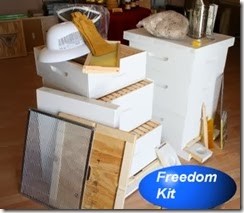
FREEDOM KIT INCLUDES 2 COMPLETE HIVES AND SUPPLIES

Freedomekit Two complete hives. Each hive includes the following: CLICK HERE FOR MORE INFORMATION AND TO ORDER
1 screen bottom board with two different entrance cleats. One cleat is for use with the included entrance feeder. The other is used without an entrance feeder.
1 entrance feeder. Just add your small mouth glass jar and feed your bees sugar water if needed.
2 Deep Hive Bodies. This is the area where the bees live. Each deep hive body comes complete with 10 wooden frames with full 3/8 side bars, and are glued and stapled. Plus each frame is already assembled with plastic beeswax coated foundation. This is a total of 20 deep hive body frames.
1 Medium Honey Super. This is where the bees store their excess honey that you can
remove. This super comes with 10 wooden frames, glued and stapled, fully assembled
with plastic beeswax coated foundation.
1 Inner cover. This goes on top of the boxes, but beneath the final top cover. This inner
cover allows for upper ventilation and an vapor barrier.
1 Telescoping Top Cover. This is the final top cover with nice white aluminum metal to
help protect it from the weather.
LOOK WHAT ELSE IS INCLUDED:
1 Plastic Pith Beekeeping Hat.
1 Veil that goes around the hat to protect the face and neck.
1 hive tool. 1 Beekeeping Stainless Steel smoker with heat guard
1 Package of smoker fuel, though you can also use pine needles or other natural items.
1 Book, "First Lessons In Beekeeping" by Keith Delaplane.
2 Queen Excluder, used to keep the queen from entering into the upper super.
These hives are built right here at our honey bee farm in Central Illinois.

Classroom Plug in to one of our upcoming beekeeping classes:

Jan. 24-25 Basic Beekeeping

Feb. 8 Basic Beekeeping

Feb. 15 Basic Beekeeping

March 7-8 Basic Beekeeping

March 22 Basic Beekeeping

April 12 Basic Beekeeping

May 23-24 Advance Beekeeping

June 9-13 Beekeeping Institute

June 27-28 Queen Rearing Course

October 3-4 Basic Beekeeping

October 25 Basic Beekeeping

Stay warm and thanks for joining us for another beekeeping lesson.
David and Sheri Burns
Long Lane Honey Bee Farms
www.honeybeesonline.com

217-427-2678 M-Thu 10am-4pm central time. Friday 10am-Noon

Thursday, December 26, 2013

LESSON 146: Using Old Beekeeping Equipment vs. New Equipment

DavidSheriWe are David and Sheri Burns from Long Lane Honey Bee Farms. We hope you had a Merry Christmas. The new year is around the corner and with the new year comes the hope of another great year for beekeeping. The early months of a new year makes us consider our beekeeping equipment. Do we have enough hives if we catch swarms or want to expand? Do some of our rotting bottom boards need replaced? 

Maybe you are just now getting into beekeeping and you are trying to round up used equipment from family or friends. Did you know that used equipment can present some serious problems for your bees? Today I want to share the difference between using old equipment and new equipment.

Christmas 2013 Before I do,  let me tell you what’s been going on around Long Lane Honey Bee Farms. We manufacture beekeeping equipment. We make hives right here, paint them and ship them out to customers. We DO NOT buy kits or someone else’s hives and assemble them. Nope, we buy lumber and build the entire hive, hand made. That’s why our hives are completely assembled and painted when you buy from us. We really enjoy cranking out hives from our shop. We took Christmas week off to enjoy rest, family and the holidays. We’ll get back at it on Monday Dec. 30th.Truckwreck

So here’s what been going on. Sheri hit some black ice and totaled our business truck. She rolled it but Christian was strapped in good in the back so they were all fine. Sheri was sore for a few days and busted her lip, but minor injures only. Christian wasn’t sore and didn’t get a scratch. We were all worried until we found out they were okay. Because the truck was on it’s side firemen had to prop the truck up and work at getting them out the topside window. I thought maybe they could just push the truck back on all fours and I could drive it home…no! Accidents happen.

Yellowbelt Christian earned his yellow belt in Taekwondo. It’s fun watching him learn, exercise and excel. He broke a board in half at 6 years old. Though we have 6 children, for some reason, Christian is the first one to ever participate in Taekwondo. It looks like something I would enjoy.

SethAfgh Speaking of belt colors our middle son, Seth, will be in Afghanistan for another 3 months and he has earned his gray belt. He’s in the Helmand province where we’ve recently lost two marines in the last 10 days. So please keep those serving our county in your prayers. Seth is the one kneeling in the photo. Our men and women in service endure so much as do their families. You really do not realize the gravity of the sacrifice made until you have a loved one in a combat zone.

2014 BEEKEEPING CLASS

Class Our first Basic Beekeeping class for 2014 is coming up January 24-25, 2014. This class opens with our Friday night dinner buffet at 6pm and then the workshop continues on until 9 p.m. This is a two day beginning beekeeping course and continues on Sat. 9am-noon. This class will benefit those interested in keeping bees, as well as those who have been keeping bees for a couple of years. Topics include: basic bee biology and anatomy overview, package installation procedures, winter/spring/summer/fall management, integrated pest control, equipment and hive inspection techniques, registration/licensing/zoning requirements, and honey extraction. We teach you how to do it from start to finish. Click here for more information. Come spend some time with us learning about bees. Check out all our classes at: www.honeybessonline.com/classes.html

Snow2013 As beekeepers we worry about our bees during the cold days of winter. I realize many of you live in warm climates, but in central Illinois bees face cold months and go weeks without ever being able to break cluster. We’ve already received our share of ice and snow. I rest a bit easier knowing our Winter-Bee-Kinds will help our bees should they run out of food. Remember it is NEVER too late to place our Winter-Bee-Kinds on your hive. You can do it quickly on the coldest of days. In fact, many people continue to purchase these candy boards/ventilation/insulation boards way into March. Click here to watch our video on our Winter-Bee-Kinds. We sell both 8 Frame and 10 Frame WBK so be sure to select the proper size for your hive.

busybee1 Finally, before today’s lesson, let me tell you about a special offer. While we are NOT shipping bees in 2014 (Pick up only), we do have a BUSY BEE SPECIAL where we ship you the hives and the bees are shipped to you. The hives are custom made by hand right here in Central Illinois. The packages of bees are shipped to you from Gardners Apiary in Georgia, who have agreed to help us help you fulfill your dreams of becoming a beekeeper in the spring 2014. Your hive will ship first from Illinois, then bees will ship approximately in May of 2014. CLICK HERE to read more about our BUSY BEE SPECIAL. VERY LIMITED NUMBERS.

LESSON 146: USING OLD BEEKEEPING EQUIPMENT vs. NEW EQUIPMENT

BeewithPollen With spring only 84 days away, it’s time to get into swing of the 2014 beekeeping year. Our 3 lb packages of bees with mated queen are selling faster than ever. Please order your bees right away. Remember they are for pickup only. Click here. You MUST order your bees in the winter to ensure you’ll be able to pick them up in the spring. Every year some people make the mistake of ordering their bees, but they forget to order their hives. Big mistake. Once you receive your bees they should be placed in your hives as soon as possible. So now is the time to order your new hive equipment. But maybe you are someone who remembered that a friend or grandpa has a bunch of hive equipment in the barn that hasn’t been used for years. Think of all the money you could save by using old equipment.  Many people call and ask us about the risk of using old equipment. The only answer I can give is that it is a gamble. You really don’t know until your new bees get sick and die.

oldequip1 It seems so innocence using old equipment. Throw a new coat of paint on them and all is good, right? Maybe on the outside but it’s what lurking on the inside that could be a risk, especially on used frames and comb. What we all fear is American foulbrood. AFB spores are known to live a long time on infected, used equipment. If your bees are infected with AFB your only recourse, in many states, is to burn the bees and all the equipment. You have to burn everything from the bottom board all the way to the top cover. I called the bee lab in Beltsville, Maryland to see if they could detect AFB on old comb or equipment and they told me they could not. They can only detect it from comb containing fresh brood. Not only is AFB a concern in old equipment, but now we are also concerned about Nosema Ceranae spores in used equipment.

While all of us want to save a buck if we can, my advice is to decide your level of risk you are willing to take. Bees have enough to contend with without us starting them off on the wrong foot. New equipment at least will give our bees a chance to start strong without the risk of infected old equipment.

All beekeepers should keep this in mind even when buying live hives (hives with established bees inside) from retiring beekeepers. Always have prospective purchases of hives inspected thoroughly by your local bee inspector. Insist that samples of brood be sent to Maryland before you buy living hives. There is very little concern when buying packages because there is no brood in packages. However if you are buying nucs, be sure they come with a clean bill of health.

oldequip2 In my own operation, I am discovering that my bees prefer newer and fresh comb. Most brood diseases occur on old comb. It is a good idea to replace three frames a year from your deep, brood nest area. If you use two deep hive bodies on your hive, pull out 3 older frames from each hive body each year and replace with new ones. By doing so your comb will never be more than 4 years old and this will reduce the risk of AFB. Use a marker to date your frames. This means if this is your first year to keep bees and you buy new equipment that you do not need to worry about replacing your first three frames for 3 years. If you currently have a very old hive with dark, almost black comb that you cannot see light through, it is definitely time to replace frames and comb.

It is possible to obtain used equipment that has never had diseases, and you might successfully raise healthy bees. Again, this is a risk you will have to decide if you want to take. This is a risk I have decided is not worth taking. I regularly burn old frames and boxes because I just don’t want to provide and environment within my hives for future problems.

Thanks for joining us for another beekeeping lesson. We are closed for the holidays until Monday Dec. 30th. When calling us remember we are on CENTRAL TIME. Call us Mon-Thursday 10am-4pm, Friday 10am-Noon. 217-427-2678. Of course we’ll be closed for New Years Day. Orders can be made online at: www.honeybeesonline.com

We prefer you call rather than email us. We are swamped with emails and with spam filters your email may not make it to us. So always call instead of email.

Bee-Hav Yourself!

David and Sheri Burns
Long Lane Honey Bee Farms
14556 N. 1020 E. Rd
Fairmount, IL 61841
217-427-2678

Friday, November 29, 2013

LESSON 145: 7 Ways To Check On Your Hive During Winter www.honeybeesonline.com 217-427-2678

Christmas2013

Happy Thanksgiving everyone! Today is known as Black Friday, the day after thanksgiving when everyone rushes the stores in hopes of getting the best deals on Christmas gift purchases. Not me! We’re enjoying these couple of days off, putting up our Christmas tree and eating too much. I never did get into Black Friday. I used to wait and buy gifts a few days before Christmas. For the last few years, online shopping has taken the stress out of gift shopping for me. I research what I need online, purchase it online and soon it is delivered to my home. Awesome! I save gas, time and a lot of frustration.

Mobile Here at Long Lane Honey Bee Farms, we’ve made it even more easier for you to shop online at our store with our new mobile website. Log in to www.honeybeesonline.com from your smart phone and you’ll see our new smart phone website, making your shopping experience much more enjoyable.

packages PACKAGES OF BEES NOW ON SALE & THEY ARE SELLING FAST

We are selling PICK UP ONLY packages of 3lbs of bees with a mated queen again this year. CLICK HERE to secure your packages for late April of 2014. WARNING: They are selling faster than we’ve ever seen. Do not delay.

2014 Beekeeping Classes

class3 Sheri and I sat down and worked out all the details for our 2014 Beekeeping Classes including our second week long Beekeeping Institute. Sheri, being a teach by trade, has designed student workbooks for all our classes. We’ll be using more hands on in our classes to help the learning experience really click. This year we are also adding a slew of FREE Introductory Meetings:

FREE 2013 Dec 13th. INFORMATIONAL MEETING

FREE 2013 Dec 19th. INFORMATIONAL MEETING

FREE 2014 Jan 4th. INFORMATIONAL MEETING

FREE 2014 Jan 8th. INFORMATIONAL MEETING

FREE 2014 Jan 17th. INFORMATIONAL MEETING

These are  free informational meetings on beekeeping. Are you curious about the hobby of beekeeping. Are you unsure of the cost and the time involved?  Do you just need a little more information before you plunge in? Then come to one of our FREE informational meetings. Sign up is required. Click on one of the links above.

Here’s our class line up for 2014:

Jan. 24-25 Basic Beekeeping

Feb. 8 Basic Beekeeping

Feb. 15 Basic Beekeeping

March 7-8 Basic Beekeeping

March 22 Basic Beekeeping

April 12 Basic Beekeeping

May 23-24 Advance Beekeeping

June 9-13 Beekeeping Institute

June 27-28 Queen Rearing Course

October 3-4 Basic Beekeeping

October 25 Basic Beekeeping

We are really excited that some of our classes have a new two day format starting with a Friday night dinner buffet at 6pm and then the workshop continues on until 9 p.m. This is a two day beginning beekeeping course and continues on Sat. 9-noon. Please book your classes above as soon as you can as they do fill up fast. Remember, our classes are limited and each seat sells out, so anyone attending must purchase a seat. Thank you and we look forward to another exciting year of learning more about bees.

Today, I want to share 7 ways to keep an eye on your hive now that it’s cold outside. Before I do, let me take a moment to encourage our new beginners with:

BEGINNER’S SPOTLIGHT

Freedom Thinking about starting with bees in the spring. CAUTION: PLAN NOW!! Too many prospective beekeepers wait and try to order hives and bees in the spring only to find everything across the country is sold out. Do not delay. Order your bees now even though you will not get them until the spring. And order your hive equipment now too. We ship hives (without bees) now, but hives are in such demand in late winter and early spring that there usually is longer shipping delays. Don’t put it off or you may miss another year. Check our our most popular item our FREEDOM KIT, 2 complete hives. Click Here. FREEDOM KIT.

Also, follow our daily updates on Facebook at: https://www.facebook.com/longlanehoney

LESSON 145: 7 Ways To Check On Your Hive During The Winter

We worry about our hives in the winter, don’t we? Are they cold? Are they diseased? Will they survive? Is my queen alive? We want to do something to help them along. While there is very little we can do at this point to help our bees, it does make us feel better to be actively checking on our hives during the winter.

1. PROVIDE FOOD

An average size colony has the same nutritional needs of a medium size dog. Bees need protein and carbohydrates just like us, just like most animals. Do your bees have enough honey (carbohydrates) and pollen (protein)? Bees consume their food in the winter to stay warm. Ideally, if the temperature stays around 30-40 degrees (f) they consume the least amount of food. But the colder it gets the more food they consume to generate heat.

winterbkind Our Winter-Bee-Kinds provide both carbohydrates and protein for your bees and provides upper vent/exit and 1” of upper insulation to help reduce excessive condensation. Many of you have been purchasing pollen patties from us and I’m glad to see that. While it is not as necessary with the use of the Winter-Bee-Kind, it is necessary if you are just wanting to provide extra protein. Bees cannot exist on sugar alone.

Winter Remember you cannot lift frames out of the hive when temperatures are below 60 degrees (f). If you do, you can damage developing pupa of bees. But you can lift the top off briefly to take a 30 second peak at food supplies by looking down between the frames of comb. Keep food on top of the winter cluster all winter long. This does not guarantee that your bees will make it, but at least they will not die from starvation.

2.  WIND BLOCK

Hives In Winter Some studies have shown a slight advantage to wrapping a hive with roofing paper. Instead, I like the idea of a wind block. If you wrap your hive you’ll also need to provide more upper ventilation to reduce excessive condensation that causes cold water to drip on the colonies. With a wind bock, the fierce winter winds hitting the hive is reduced. Be careful. Do not place stray or hay bails next to the hive. They can hold water and this can provide too much moisture around the hive. Keep your wind block several feet back from the hive to help the area around the hive remain as dry as possible. You may have a natural wind block such as a grove of trees as in the photo or a shed. This works great.

3. STABILITY

Hives In Water Make sure your hive is stable on its stand throughout the winter. As the ground freezes and thaws, your stand or blocks can shift and your hive may topple over. Also, if you broke the propolis seal on your top cover, a harsh winter storm could blow the top off. Regularly check your hive for any shifting and keep it stable all winter. Keep a rock or weight on top to help stabilize the hive.

4. KEEP MICE OUT

Mouse1 Mice will kill your hive if they nest over the winter in your hive. Take a flashlight when it’s dark, remove your entrance reducer or mouse guard and make sure you cannot see a mouse nest on your bottom board. If you see a pile of grass in a corner there is a mouse in your hive. If there is, find a friend to help you lift off the hive from the bottom board and if you are lucky the mice will stay in their nest on the exposed bottom board and you can get rid of them and put the hive back down on the bottom board and reduce the entrance. When you do this, please remember to keep your tops on and your deeps together. Do not open or separate your hive during the winter. Just lift it off the bottom board and check for mice. It’s better to find mice now than in April after they have destroyed your bees.

5.  KEEP AN EYE OUT FOR CRACKS

If your equipment is old and falling to pieces, you might find corners missing and large cracks. Duct tape or metal tape can seal the gaps until you can replace your equipment in the spring. Broken bottom boards can allow mice to get in, so keep an eye out for drafty cracks.

6.  PUT YOUR EAR ON THE HIVE AND TAP

You can put your ear on the side of your hive and tap and you may hear an increased buzzing. This serves no purpose other than bringing you false securing that all is okay. I have tapped on my hives and have heard absolutely nothing. But in the spring that same hive was doing great. There is some benefit. If you are sure that there is no sound of life in your hive, you can open it and verify by looking for 30 seconds between the comb. If the colony has perished it is best to shake out the dead cluster as soon as you can to prevent further decay inside on the combs. Just remember if you don’t hear anything it may speak more to your hearing than of your bees. Be careful as bees sting in the winter too.

7.  KEEP THE ENTRACE CLEARED

deadsnowbees Snow and ice can pile up on the hive blocking the entrance at the bottom. In the past, I’d always go out after it snowed and especially after an ice storm and clear out the opening at the bottom of the hive. However, with our Winter-Bee-Kinds, the entrance is built into this feeding system and bees prefer a top entrance/exit during winter. This can allow your bees to take that much needed cleansing flight to potty which they may not have taken if they had to walk all the way to the bottom to fly out. Also, bees die of natural causes all winter and begin to accumulate on the bottom board, blocking the entrance. The upper entrance on the Winter-Bee-Kind keeps the bees away from the gross accumulation of dead bees below.

Keep an eye out on your hive this winter. Thanks for joining us for another beekeeping lesson. Hope to see you soon at one of our FREE Introductory meetings or at a class.

David and Sheri Burns
Long Lane Honey Bee Farms
www.honeybeesonline.com
217-427-2678

https://www.facebook.com/longlanehoney

Thursday, November 21, 2013

LESSON 144: The Future Of Beekeeping www.honeybeesonline.com 217-427-2678

sdairport

You found us on the Internet. Nice to have you visit our site. Some of you reading this know us like family. You have visited Long Lane Honey Bee Farms on numerous occasions. While some of you have just discovered us we believe you will soon be an old friend in no time.

We are David and Sheri Burns and we own Long Lane Honey Bee Farms in central Illinois. We have spent the last several years working hard to help more and more people get involved in beekeeping. Daily we work our hives, manufacture beekeeping equipment for beekeepers throughout the US, teach beekeeping classes, answer questions on the phone and still find time to write these weekly beekeeping lessons. And we started the first beekeeping institute that we know of. As you can see we have a passion toward bees and compassion toward the beekeeper, helping to save the honey bee and serve the beekeeper. We are not a big beekeeping box store.

71013 From iPhone 334 We’ve had many customers email or call to check on us after tornadoes tore through our area Sunday afternoon. Our facilities has several weather alarms, even a large siren incase we are out in the bee yard. We get notices to our phones like many of you do which is great. My son told me in the morning that the risk for tornadoes was high in our area. He was right. That morning at church we talked a lot about God being in control of all things and how His hand is in all things. Nothing happens that He does not see or does not have a reason for.(it was a fantastic time in church). Towards the end of church, we were summoned home by the alarm company because it looked as though we had a break in at our house. When we got home, we saw that a door had blown open because of the high winds (which triggered the alarms). Not long after that, we were in the basement because of the storm, 5 hours without electricity--and we began to wonder if we had not been summoned home at that exact time so that we would not be driving through the 70 + mph straight wind and rain that occurred out here. We praise God in the storm--and anytime there isn't a storm we do the same. A bad situation (possible break in) was actually protecting us from something else (the storm) Praise God! Thank you all for your concern and our hearts and prayers go out to those who lost family members, and homes.

Packages1 PACKAGE BEE UPDATE FOR 2014: Many of you have been calling about packages of bees for 2014. We are still weighing all options regarding cost, numbers available, queens and shipping.  Some major package producers will not be shipping packages for 2014. It seems every year more and more producers stop shipping bees due to losses. We are hoping to ship some packages with kits, but mostly our packages will be available for pickup only in the spring. Since it will be more difficult to have bees shipped to you this spring, it is important now for you to begin finding people, like us, who bring bees up for local pick up. We have some customers who drive 8 hours one way to get their bees every year. This is in the beekeepers future.  We will post information on our website as soon as we have the details worked out.  I am hoping within a few days to have our 3 lb package (pickup only) online for purchase.  One thing is for certain, the package bee industry continues to change every year.

ACCESS OUR WEBSITE & ORDER FROM YOUR SMART PHONE

Mobile We’ve added a new feature to our website. Now you can log in to our website through your iPhone or other smart phone and our website will detect it is a mobile phone and make the website larger and easier to navigate and shop. Just log in from your smart phone to: www.honeybeesonline.com and check it out. We listen to our customer’s suggestions. 240 million Americans shop on smartphones. 75% of smartphone shoppers never get past the first page of any site that’s not mobile friendly.  Enjoy!

Holiday Beekeeping Gifts

Christmas2012 Can’t thing of a neat Christmas gift for the one you love? Why not give them what they’ve been wanting to do for years. Image their surprise when they open up and find beekeeping equipment for Christmas. (Bees arrive in the spring).

Here at Long Lane Honey Bee Farms we always have a surge of beekeeping orders for the Christmas holidays.  Please note that you must place your orders by December 1, to ensure your order will arrive in time for Christmas.

We also have gift certificates which work great if you have a beekeeper in your family but you are not sure what they want or need. To purchase a gift certificate for a Christmas gift click here. Or go to: http://www.honeybeesonline.com/servlet/GiftCertificate

Hive2 We began making our completely assembled and painted hive in 2006. We were one of the first companies to offer a completely assembled and painted hive. While our hives are standard in size in the industry we have perfected various components that are unique with Long Lane Honey Bee Farms. Our customers appreciate the extra effort we place into our hives, all built right here in central Illinois. We use the highest quality of exterior Valspar paint, applying a full two coats. We first made solid bottom boards, but when screen bottom boards proved to be beneficial for ventilation and showing some control over varroa mites we quickly started with screen bottom boards. All of our hives are sold with screened bottom boards.

Entrance Large My son, David, designed our bottom boards and we cannot improve upon his measurements. The frames are wooden, no knots, glued and stapled with that additional important staple through the side bar into the header. Our lumber is purchased from a local lumber yard here in Illinois. We know there are other places you can purchase your hives, but we welcome the opportunity to hand make your hives by a hard working family. We’ve been doing it for years. To purchase one of our hives, click here. We make our hives in both 8 and 10 frame sizes. Thank you.

2014 CLASS SCHEDULE ONLINE NOW (Click Link)

Freedom

One of our most popular Hive package is our Freedom Kit. This includes 2 fully assembled hives, protective gear, smoker, gloves, brush, feeders, queen excluders and smoker fuel, everything shown in picture(Bees not included). Read why it is better to start with 2 hives by clicking here. Hives are fully assembled and painted hives with all the frames and foundation.

Click here for more information on our Freedom Kit.  This makes a great Christmas gift. What a surprise under the tree. Who could guess what this is? To receive this by Christmas, all orders must be placed by Dec. 1.
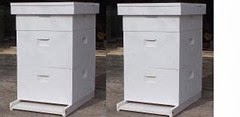
2hives If you already have equipment and just need two hives, save a few dollars and purchase our two hive combo. This is two complete hives, painted, assembled with wooden frames and foundation. These hives include a screen bottom board, two deep hive bodies, one honey super, an inner cover and a top cover.

HiveTalk

Jon Zawislak and I are having a great time on our Hive Talk radio/podcast every Tuesday night at 6:30 central time. We are now on the topic of helping new beekeepers. If you’d like to join us the number to call is: 1-724-444-7444. When you call in you'll be asked to enter our SHOW ID which is: 129777 followed by the # sign. Then the automated system will ask you for your Pin number which is 1 followed by the # sign. At that point, you'll be on the show with us so you can ask your questions. You will be muted unless you press * 8 on your phone and that will allow us to unmute you so you can ask your question. Call in around 10 minutes prior to broadcast, at 6:20 p.m. central time. The show starts this coming Tuesday night at 6:30 p.m. central time. If you want to just listen from your computer, go to: http://www.talkshoe.com/tc/129777

If you use a smart phone you can add the Podcast App and have our shows sent to your mobile device every time we produce a new one. Just go to iTunes and search for Hive Talk, scroll down to podcast and you'll find us there.

Or listen to our past episodes by clicking here or by copying the link below and pasting it into  your internet browser.

http://www.talkshoe.com/talkshoe/web/talkCast.jsp?masterId=129777&cmd=tc

LESSON 144: The Future Of Beekeeping

If I could predict the future of beekeeping it would go viral throughout the internet overnight. No one knows the future. We can make predictions but it does not mean it will be accurate. Having said that, let me do my best. The future of beekeeping is bright if we learn from the mistakes of our past and plan for our future.

Beekeeping Has A Bright Future

In my state of Illinois, more and more people are entering into the exciting hobby of beekeeping. This year the number of registered beekeepers in Illinois is up by 38%. There are over 2,500 active, registered beekeepers in Illinois. 700 new beekeepers in Illinois registered for the first time this year and some suspect that only about 1/2 of beekeepers register their hives. So the actual increase could be much higher. Sheri and I have made it our passion to work hard to get more and more people to start keeping bees. Last year we taught over 20 beekeeping courses from our farm. Our 2014 beekeeping courses are now open for registration.    But this is not just an Illinois phenomena. All across the country there is a surge in beekeeping. Why? More and more specialty crops depend upon honey bee pollination. There is a greater awareness of the health benefits of honey as a natural sweetener and the price of honey is through the roof! 1 pound of honey is now selling between $6-$8. The average hive makes around 70 pounds of honey and at $8 a pound, that’s $560 per hive each year in honey production.

LESSON 144: THE FUTURE OF BEEKEEPING

NS14 The future is bright for keeping healthier bees. Most beekeepers are shying away from harsh chemicals to treat against pests and diseases. More natural methods are being used resulting in a much healthier environment for honey bees. The biggest threat to the honey bee is NOT CCD, but varroa mite. After fighting this mite for two decades we now have many effective ways to control this parasite. For my article on control mites in the hive, click here. In all of our classes as well as our beekeeping institute we arm our students with safe and effective methods to combat varroa destructor. A list of our 2014 class is now online! CLICK HERE to sign up now. Our classes fill up very fast.

Honey Bees Will Finally Be Respected In Society And In Agriculture.

The essentiality of honey bees has made the news. Bees have been elevated to rock star status. People are quickly jumping on board in order to protect the honey bee. The power of pollination is impressive. No bees, no food. We like to eat. Agriculture is driven by productivity and profit. Without honey bees, agriculture fails. Corn and bean farmers are showing great compassion to work with beekeepers to protect the honey bee. Chemical companies are feeling the “heat” of complaints from beekeepers that chemicals may be contributing to Colony Collapse. Finally, roadsides will be allowed to grow, providing food for bees. More and more organizations are focusing on support of the honey bee. I saw a brief commercial on Disney explaining the importance of the honey bee.

As long as the current overwhelming interest in beekeeping continues bees have a bright future. We must do our part and continue to encourage more and more people to start keeping bees.

Thanks for joining us for another beekeeping lesson. We hope you’ll visit our website at www.honeybeesonline.com, buy some hives and get started in beekeeping! It’s not too late. Now is a great time to dive in. We are ready to be your friend and mentor in beekeeping. See you next time! David and Sheri Burns Long Lane Honey Bee Farms
We are available to take your calls:
M-Thur 10am-4pm CENTRAL TIME
Friday 10am-Noon
Someone from our family looks forward to speaking with you. www.honeybeesonline.com 217-427-2678 facebookYoutube