Friday, November 8, 2013

Lesson 143: Accidently Killing Your Queen When Harvesting Honey www.honeybeesonline.com 217-427-2678

SheriDavidAirport

Welcome to another beekeeping lesson from EAS certified master beekeeper David Burns.

Hello friends we are David and Sheri Burns owners of Long Lane Honey Bee Farm, a hard working family business striving to earn your trust, providing you with the knowledge of beekeeping we have acquired over the years. Sometimes beekeepers are stingy with what they know. No us! We have posted over 143 FREE lessons here for you to gleam over. We offer over 20 specialized classes a year from our beekeeping education center at our honey bee farm located in central Illinois. We offer an entire hands on week in June here at our Beekeeping Institute. We welcome your business and appreciate your support. Feel free to give us a call M-Thru 10am-4pm central time and Friday 10am-noon. All of our hives are hand made right here in central Illinois.
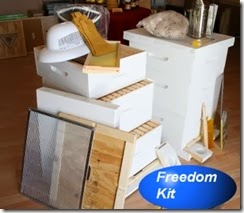
Freedom NEW BEGINNER ALERT:  Thank you for your interest in beekeeping. Be sure to order your beekeeping equipment between NOW and February. Order your bees between Jan-Feb. Trying to purchase bees after February and you may discover a shortage of packages around the country. Once you buy your hives, they will ship from us within 10-15 business days. When you order your bees in Jan, they will be available for pickup in the spring. Do not delay and wait too long. And, always have your equipment ready before the bees are ready. And if you know someone in need of a beekeeping gift, check out giving them a gift certificate from Long Lane Honey Bee Farms by clicking here or going to: http://www.honeybeesonline.com/servlet/GiftCertificate

It’s better to start with two hives. Click on the image above to find out more information about our Freedom Kit that comes with two hives and supplies. Why are two hives better than one?  Or go to: http://basicbeekeeping.blogspot.com/2007/12/lesson-eighteen-how-many-hives-should.html

All beekeeping equipment purchased as Christmas gift must be placed by December 1st to ensure arrival prior to Christmas.

ADVANCE BEEKEEPER ALERT: Take off queen excluders going into winter. Put on mouse guards and Winter-Bee-Kind boards. Put up a wind block keeping material about 3 feet away from hive so as not to allow moisture build up next to hive.

LESSON 143: Accidently Killing Your Queen When Harvesting Honey

Most beekeepers have harvested the honey from the hive. Supers full of golden honey were removed from the colony and extracted and bottled. It felt good. But then there is always that sinking feeling, wondering if the queen may have been in the super and was killed or carried off without you knowing it. Oh, you weren’t thinking that, not until I just mentioned it. Well, don’t worry too much about it, but it does happen. During the summer if we lose our queen, we do not worry too much because they can raise another one, and she will mate with drones outside the hive and all is well. However, most beekeepers harvest the honey supers in the fall and if the queen is killed or carried off the hive cannot raise a new queen because there are no drones to mate. The hive goes into winter queenless. The hive will perish during the winter or early spring from a lack of brood and population.

Even though most queens lay very little in the winter, they do lay some eggs to keep the hive going and by late winter, queens are laying the first group of spring foragers. So without a queen to overwinter with the colony it will perish. This is an awkward situation for two reasons. First, in is almost impossible to find a queen in the fall if you do kill yours. And the same is true if your colony does survive into early spring, most people cannot produce queens that early.

NS6The best practice to ensure your queen is safe when you rob the honey off is to find her and put her in a queen cage and set her inside the hive while you work. After you finish manipulating your frames and supers you can release her back into the hive.

We hope the queen has not walked up into the supers, but usually we do see a few bees on the supers at the honey house. Could the queen have been pulled? It is a concern. Queen excluders could help, but this can reduce the honey volume placed in the supers. Even then, a queen can be on the bottom of a queen excluder so when it is removed carelessly she can be lost.

WHAT NOW? If you notice in the spring that your hive survived but you are queenless, you can wait until a day above 60 degrees and move a frame of sealed brood over from a strong colony. This is only to buy you time until you can purchase a queen. Keep that in mind in the spring. Just be careful not to move the queen over or the other hive will probably destroy her.

NS8 Speaking of queens, the queen is by far the single most important bee in the hive. She lays 1,000 or more eggs a day. Without a prolific queen the hive will begin to weaken in population and without a strong population the hive will suffer and eventually fail. Does the perfect queen exists? Well, there is no such thing. Some queens are stronger than others, no doubt. You must get in the habit of regularly checking on the strength of your queen. When she shows signs of weakening in egg production, replace her so that you can save the hive. Those of us who raise queens do our very best to provide the best queens. It's complicated to raise queens. There is grafting, starter nucs, royal jelly, queen cups, finishing hives and more. What's fascinating is how queens mate. Virgin queens always mate outside the hive mating with upwards of 20 drones. The drone dies after mating. The sperm is stored in the queen's spermatheca for her entire life, 2-4 years. If she wants to lay an egg to become a male drone she chooses not to fertilize the eggs before she deposits it. Jon Zawislak and I wrote a booklet on queen rearing which is very thorough. In fact, if you want to know more about queens or queen rearing, this will be the topic of our next Hive Talk broadcast this coming Tuesday night at 6:30 p.m. central time. Jon and I will be teaching a queen rearing class in the summer here at Long Lane Honey Bee Farms.

HiveTalk Join us this Tuesday night, November 12th at 6:30 p.m. Call in to ask your queen questions. The number to call is: 1-724-444-7444. When you call in you'll be asked to enter our SHOW ID which is: 129777 followed by the # sign. Then the automated system will ask you for your Pin number which is 1 followed by the # sign. At that point, you'll be on the show with us so you can ask your questions. You will be muted unless you press * 8 on your phone and that will allow us to unmute you so you can ask your question. Call in around 10 minutes prior to broadcast, at 6:20 p.m. central time. The show starts this coming Tuesday night at 6:30 p.m. central time. If you want to just listen from your computer, go to: http://www.talkshoe.com/tc/129777

If you use a smart phone you can add the Podcast App and have our shows sent to your mobile device every time we produce a new one. Just go to iTunes and search for Hive Talk, scroll down to podcast and you'll find us there.

Or listen to our past episodes by clicking here or by copying the link below and pasting it into  your internet browser.

http://www.talkshoe.com/talkshoe/web/talkCast.jsp?masterId=129777&cmd=tc

One final thought. Be sure and keep protein and carbohydrates on your hive all winter. We recommend our Winter-Bee-Kind. In The summer of 2011 we introduced our Winter-Bee-Kind after several years of studying overwintering hives. We could barely keep up with production they were in such demand. We still make them right here at Long Lane Honey Bee Farms but we've expanded our production methods to keep up with demand. So many beekeepers told us that these were the only thing that got their hives through the winter. We’ve include many commonly asked questions about our Winter-Bee-Kinds:

Winter-Bee-Kind For Winter Feed For Bees

WHAT IS A WINTER-BEE-KIND? It is a one piece candy board that provides food, ventilation, upper insulation and an upper exit/entrance to help bees remain healthier during the winter. Someone said it insulates, ventilates and feed-i-lates. With the built in upper vent, you don't have to worry about snow covering up your hive's lower entrance. The bees can still go in and out through the top vent spacing. We avoid shipping Winter-Bee-Kinds in hot weather and start shipping each September-March. You can place our Winter-Bee-Kinds on your hive anytime, even in the winter. Because it goes on top of the hive in place of the inner cover, and you are NOT removing any frames, it can be placed on the hive in cold weather. Just do it fast. Open the top, remove the inner cover and place the candy side down and the vent slot toward the front of the hive and you're done. Click here to order your Winter-Bee-Kinds Some form of a candy board has been around for a long time. Beekeepers of long ago placed candy in their hives to provide enough food for their bees to survive the long months of winter. There are various mixtures and receipts for candy boards. Some are made with soft candy and some with hard candy. The end result is still the same. The bees will consume the sugar as they need it. We've always been concerned about the amount of condensation that can develop in the hive during the winter. The bees produce heat within their hive and as the temperature is very cold outside the hive, condensation will develop on the warm side, just above the bees on the inner cover or top cover. This condensation can accumulate and drop down onto the winter cluster of bees below. Bees can stay warm in the winter but they must remain dry. If this cold water drips down onto the bees, it can reduce their ability to keep their cluster warm. The insulation on our Winter-Bee-Kind helps reduce the excessive moisture and even puts some of that moisture to work, as it accumulates on the candy and makes it easy for the bees to consume the sugar. Thus, a Winter-Bee-Kind can help lessen two winter stresses, the lack of food and excessive moisture. We make our Winter-Bee-Kinds with sugar and a healthy amount of pollen powder. Many beekeepers make the mistake of only feeding their bees sugar in the winter, but the bees also need protein which they obtain from pollen. Our Winter-Bee-Kinds come with pollen mixed in with the sugar.. Click here to order your Winter-Bee-Kind today. We recommend that you place candy boards on your hive any time between Oct-March.

Commonly Asked Questions

Q: Which way does the candy face in the hive?

A: The candy faces down just above the winter cluster. Normally, this means that the Winter-Bee-Kind would be placed on the brood box that contains the cluster. For example, if you overwinter your bees in a single deep hive body, the Winter-Bee-Kind would be placed on this deep hive body with the candy facing down toward the cluster. If you are using two deep hive bodies to overwinter, then the Winter-Bee-Kind would be placed on the top deep hive body. It is best to disregard the use of an inner cover, and simply place your top cover over the Winter-Bee-Kind.

Q: What about winter moisture?

A: Moisture can develop in the winter from condensation, a contrast of the heat the bees produce in the hive and the extreme cold temperature outside the hive. Condensation accumulates on the warm side, which means moistures collects on the inner cover or top cover above the hive. This can drip down on the bees and chill them during the winter. A Winter-Bee-Kind takes the place of an inner cover and any moisture that develops from condensation aids the bees in consuming the candy.

Q: How long will a Winter-Bee-Kind last on a hive?

A: On average about 3 weeks. However, a colony that has ample stored honey may not consume the candy board as fast or not at all until they need it. A colony close to starvation may consume a Winter-Bee-Kind within a week or two.

Q: Since Winter-Bee-Kinds are placed or replaced on the hive in the winter, can I open the hive up on a cold day?

A: It is best to place the candy boards on a hive when the temperature is above freezing and try to place the candy board on and have the hive sealed back up within 1-2 minutes. It should not take over 1 minute. Do not remove any frames in cold temperatures, only place your Winter-Bee-Kind on and off quickly. If you can choose the warmest day during the winter, that would be best. Try to avoid very cold, windy or rainy days.

Q: How do I refill a candy board?

A: It is best to send back your candy board and we will refill it for $7 plus shipping. If you are a good candy maker, you can do it yourself.

Q: How do I get one with a pollen?

A: Our Winter-Bee-Kinds contain pollen as well.

Q: Can I make my own?

A: You can, but you must experiment, because you do not want the candy to be too hard or too runny. The exact mix depends on your altitude, heat source and other conditions so it will be different from one location to another.

Q: Why was some liquid sugar dripping out of my Winter-Bee-Kind when I received it?

A: It is the nature of candy boards to be a bit on the dripping side even though the top may be hard. Do not be concerned if you see liquid sugar dripping out of your boards when you receive it. It usually means it was left on end during shipment for a prolong period of time. The bees will clean everything up and enjoy this soft liquid.

Q: How much sugar is in one Winter-Bee-Kind?

A: Approximately 5 pounds

Q: When do I put a Winter-Bee-Kind on my hive?

A: Any time! Nov, Dec, Jan, Feb are good months to place on the boards.

Q How often should I check my Winter-Bee-Kind?

A: Every three weeks, take a peek.

Q: Do you make Winter-Bee-Kind for 5 frame nucs or 8 frame hives?

A: Yes, check out our website to order, but carefully read the description to make sure you are ordering the correct size and type.

Q: Can the candy break loose from the board on the hive?

A: It rarely happens, but during extreme winter weather, the candy and separate from the board while on the hive. This is not a problem. The bees will continue to consume the sugar.

Q: When I place it on the hive, do I use my inner cover. Just how does it go on?

A: Winter-Bee-Kind takes the place of your inner cover. Simply place the Winter-Bee-Kind on the top of your upper hive body or super with the candy facing down, then place your top cover on top of the Winter-Bee-Kind. Be sure to use a rock or brick to make sure the wind does not blow your top cover off. There is overwhelming enthusiasm about our Winter-Bee-Kinds. Click here to order now.

Thanks for joining us for another beekeeping lesson. We hope you’ll visit our website at www.honeybeesonline.com, buy some hives and get started in beekeeping! It’s not too late. Now is a great time to dive in. We are ready to be your friend and mentor in beekeeping.

See you next time!

David and Sheri Burns

Long Lane Honey Bee Farms
We are available to take your calls:
M-Thur 10am-4pm CENTRAL TIME
Friday 10am-Noon
217-427-2678
Someone from our family looks forward to speaking with you.

www.honeybeesonline.com

217-427-2678 facebooktwitter iconYoutube

Monday, October 7, 2013

LESSON 141: I’ve Always Wanted To Keep Bees, But…

DavidSheri

Hello, we are David and Sheri Burns at Long Lane Honey Bee Farms, located in central Illinois. For years now we’ve been making and selling hives, nucs, packages, queens, beekeeping supplies and holding beekeeping classes at our bee farm. In today’s lesson we want to speak to those who have always thought about keeping bees but have never taken the plunge due to obstacles or concerns. We want to resolve those hindrances so you can finally start keeping bees.

This year we’ve held 14 classes in our new education center with one more Basic Beginner class coming up on October 19th. THIS CLASS IS FILLED TO CAPACITY. This year we held classes in many other places such as community colleges, bee associations and clubs. We are excited about the increased enthusiasm toward our classes and the success beekeepers are having once they are equipped with sound and proven beekeeping instructions.

Not only do we offer beginner, practical, advance and queen rearing classes, but we also offer these free online lessons as well as podcasts.

Our newest addition is HIVE TALK, a call-in beekeeping internet/radio podcast. Each week I join my good friend and bee expert, Jon Zawislak for a 30 minute program. Last week was our debut episode and the response overwhelmed Jon and me and our engineer, Jesse March. We had some glitches with the technology but the program turned out fine and we had many nice responses from those who either called in or listened live from their computers. If you missed the program, it’s available in two ways:

If you have an iPhone or use iTunes, download the Podcast APP from iTunes. Once the app is downloaded, search for Hive Talk. You can even have new episodes downloaded to your smart phone automatically to listen at your convenience.
or

On TalkShoe by clicking on the link below:

Our next episode is tonight at 7pm central time. Please help us promote this new beekeeping program by inviting others to join in. Send out a group email to your bee club with the information below.  The success of this program depends largely upon you, callers who will call in and ask beekeeping questions. Here’s what you do. Around 6:50 p.m. central time tonight, Dial 1-724-444-7444. A voice recording will ask you to enter you “CALL ID” for our show which is: 129777, then press the # sign. When asked to enter your pin, enter 1 followed by the # sign.  It’s that simple. Signing in again is simple:

  1. Dial: (724) 444-7444
  2. Enter: 129777 # (Call ID)
  3. Enter: 1 # or your PIN

For our call in guests, if you’d like to ask a question you must select * 8 from your phone keyboard when you are ready to ask your question. This will indicate on our screen that you’d like to ask your beekeeping question. Otherwise we will keep your mic muted.

If you want to just listen from your computer, go to: http://www.talkshoe.com/tc/129777 Hope you can join us!

LESSON 141: I’ve Always Wanted To Keep Bees But …

Beekeeping has really taken root in recent years. More and more people are starting to realize the importance of honey bees in pollinating our fruits and vegetables. Some people might only view honey bees as just another annoying stinging insect. Yet, without honey bees our diet would change drastically. Here are a few foods that we’d have less of if we lost our honey bees: coffee, milk, ice cream, melons and most of our fruits and vegetables. So many of our students are from large cities, so it isn’t just rural people with lots of land. More and more people want to do their part in saving the honey bees and the best way is to become a beekeeper. But maybe you’ve thought about it but you have never taken the plunge because of concerns.

In our class on Saturday, a new beekeeper said he has been putting it off year after year and finally his wife told him to take our class and get started!

Here are common concerns we hear.

1) I’m not sure if I have the time.

We always find time to do the things we enjoy. Beekeeping really isn’t all that time demanding. We have dogs and chickens and they always need fed and watered. But bees don’t require daily attention. You can even take a three week vacation and never worry about your bees. We recommend you check on your queen every two or three weeks to be sure she is laying good. Even though time is a concern for some people, most find themselves enjoying spending time with their bees. You can even wait until fall and take off the honey all at one time and enjoy the fall harvest season bottling honey.

2) Will the bees bother my neighbors?

Whether you keep bees are not, bees are still flying around all summer pollinating. There are hives all around, in trees, abandoned buildings and barns. These are called feral colonies because they are not kept by a beekeeper. These feral bees are still making visits to your neighbors flowers even if you do not keep bees. Bees fly up to 3 miles on average to gather pollen and nectar so imagine how many potential feral hives are within a 3 mile radius of you. Honey bees outside of their hive are rarely defensive. They simply travel from hive to flower, in a bee line, gathering resources.  Usually by offering your neighbors a free jar of honey each year you can keep the relationship sweet.

3) I’m still afraid of being stung.

Honey bees are not to be compared to more aggressive insects such as yellow jackets and waps. Honey Bees are bred to be manageably gentle. They do have a stinger, and it does happen occasionally, but we teach our students how to best work a hive to avoid most stings. Of course you can always purchase protective suits, gloves and head gear to put your fears to rest.

4) Can I afford it?

Beekeeping, like any business or hobby, does have an initial investment. Our complete hive and a package of bees with a queen will run you just over $300. We sell our honey for $6 per pound and our average hive produces around 70 pounds a year. That’s $420 in honey a year for one hive. The second year that hive is paid for and makes more profit. And once you gain more experience you can sell nucs, queens, wax and pollen from that hive and make more money if you want. It’s not only affordable but can actually turn into a nice sideline money maker.

5) I don’t want the honey. I just want to keep bees to help with pollination.

Yes, you can keep bees just for fun or for pollination without harvesting the honey. Many people do just that. Some people have found a tremendous property tax savings from having hives on their property.

The new season is fast approaching. Beekeepers are purchasing their equipment now getting ready for bees to arrive in the spring. Do NOT wait until spring to order your equipment and bees. They will be sold out. Order your equipment now, and your bees in Jan-Feb. Call us at 217-427-2678 or visit us online at: http://www.honeybeesonline.com

Take the next step! Get started in the spring of 2014 finally becoming a beekeeper. We are here to help!

Tuesday, October 1, 2013

Introducing Hive Talk: Internet/Radio Program on Beekeeping

(Last week’s blog had the call in number incorrect. Please use the correct number below).

HiveTalk New to the beekeeping community is our new beekeeping internet and radio program called Hive Talk. My good friend and bee expert Jon Zawislak and I will be hosting this weekly call in beekeeping radio program. Our opening episode is tonight (Oct. 1, 2013), 7:00 p.m. central time.

The success of this program depends largely upon you, callers who will call in and ask beekeeping questions. If you don’t call in with questions, Jon and I will be left to ramble on and make a miserable attempt to be entertaining. Here’s what you do. Around 6:50 p.m. central time on Tuesday, Dial 1-724-444-7444. A voice recording will ask you to enter you “CALL ID” for our show which is: 129777, then press the # sign. When asked to enter your pin, enter 1 followed by the # sign.  At that point our engineer will chat with you and get you ready to ask us a question. We recommend that you log in to our show 10 minutes prior to 7:00 p.m. central time. Signing in again is simple:

  1. Dial: (724) 444-7444
  2. Enter: 129777 # (Call ID)
  3. Enter: 1 # or your PIN

If you want to just listen from your computer, go to: http://www.talkshoe.com/tc/129777

Click here to view our full cover sheet on tonight’s program.

Hope you can join us.

Friday, September 27, 2013

LESSON 140: Protect Your Hives From Mice & Combine Hives If Necessary

DavidSheri

Mice seem so innocent and so small. What could they possibly do to hurt your bee hive during the winter? Now is the time to take precautions to keep mice out of your hives. Hi, we are David and Sheri Burns from Long Lane Honey Bee Farms located in central Illinois. Thank you for following our beekeeping lessons online.

Now that it is fall, I’d like to share several fall management tips for your hive to have a better chance at surviving our upcoming winter. Yes, I know. No one wants to think about winter yet, but you have to so that you can make sure your colony is strong and healthy.

Before we begin our lesson, I want to share some things going on around Long Lane Honey Bee Farms. I had a great time speaking in Chicago at the Lake County Beekeepers Club. Ann Miller Did a great job hosting the meeting. I spoke on how to raise queens and I did it in 45 minutes!

Homeschoolers We’ve also been hosting groups at the honey bee farm. This week we had a group of homeschoolers who came out to learn more about honey bees. They asked some good questions. I think a few families are going to start keeping bees next spring.

FFA Then we had all the local FFA chapters from surrounding schools visit our place. They were fascinated by our large bee tree and how we make queens and woodenware. But I think what really got their attention is when I opened a hive and found the queen on a full frame of bees. I carried it around so that each one could see the queen. The future of honey bees can be greatly increased as the importance of the honey bee is impressed upon these Future Farmers of America!

Be sure and LIKE US on facebook. facebook 

JD1 As many of you know Long Lane Honey Bee Farms is a family business and our family is doing great. We have three sons and three daughters between the ages of 31 and 6 years old. And we have seven grandchildren and another one on the way. Many of you have talked to Karee or Jesse on the phone or in person here. They recently had a baby, Jesse David. He is our newest grandson and he was born premature, spending 103 days in the NICU. The good news is he finally came home on Wednesday! Thank you for your prayers.

HiveTalk New to the beekeeping community is our new beekeeping internet and radio program called Hive Talk. My good friend and bee expert Jon Zawislak and I will be hosting this weekly call in beekeeping radio program. Our debut will be this Tuesday night, October 1st at 7pm central time. The success of this program depends largely upon you, callers who will call in and ask beekeeping questions. If you don’t call in with questions, Jon and I will be left to ramble on and make a miserable attempt to be entertaining. Here’s what you do. Around 6:50 p.m. central time on Tuesday, Dial 1-724-7444. A voice recording will ask you to enter you “CALL ID” for our show which is: 129777, then press the # sign. When asked to enter your pin, enter 1 followed by the # sign.  At that point our engineer will chat with you and get you ready to ask us a question. We recommend that you log in to our show 10 minutes prior to 7:00 p.m. central time. Signing in again is simple:

  1. Dial: (724) 444-7444
  2. Enter: 129777 # (Call ID)
  3. Enter: 1 # or your PIN

If you want to just listen from your computer, go to: http://www.talkshoe.com/tc/129777

WINTER-BEE-KIND UPDATE

We are heavy into production of our Winter-Bee-Kinds! Years ago, Zach Watts worked for our family mowing and keeping our place cleaned up when he was younger. Over they years, we keep moving him up and now he’s one of our best shop guys. He’s the main builder of our Winter-Bee-Kinds. He’s working for us while going to college. He’s a huge blessing to our business. You should start seeing your Winter-Bee-Kind arrive in a few weeks. If don’t know about our Winter-Bee-Kinds, check out our website at: http://www.honeybeesonline.com

Finally before our lesson today, here are three of our featured products:

Hive2 Our traditional Langstroth Hive (Above). Completely assembled and painted with frames. Click here for more information.

Cedar

Our new Langstroth Hive made from Cedar! (Above)  Spruce up your garden or yard with this majestic hive! Click here for more information.

winterbkind

Our popular Winter-Bee-Kind winter feed, ventilation and upper exit candy board. Click here for more information.

When you order from us, we are able to make a living doing what we love. Thank you!

LESSON 140: Protect Your Hives Against Mice & Should You Combine Your Hives For Winter

Mouse2 Mice seem so innocent and so small. Who would think they could be such a pest to the bee hive? In my early days as a new beekeeper I really didn't do much to prevent mice from entering my hives during the fall and winter. I just assumed the mice would stay out. I thought if they did make it in, they would be well behaved on the bottom board and not bother my bees. Nothing could be further from the truth! Mice will destroy a hive during the winter. When the weather turns cooler mice leave the outdoors and find your hive the perfect place for warmth and yes, food---your bees.

Mouse3 It seems like the colony would kill the mice, but during the winter the colony is clustered to stay warm. In the spring and summer the bees are able to move about the hive and chase out or kill mice. But in the winter the mice have free reign since the bees are clustered to stay warm. This is a great place for mice to raise their young. In the spring you can find a whole nest of pink baby mice and a few adults on your bottom board. When you see that, you’ll probably notice your hive is dead. The mice have slowly eaten away at bees and comb for food.

Mouse1 Do something now! First, understand that mice can fit through a hole the size of a ballpoint pen, or about 1/4 inch. So the challenge is to leave an opening large enough for bees but small enough so that mice cannot fit through. Not to mention mice can enter through a damaged corner or ventilation holes in hives. While it is nearly impossible to find the perfect sized mouse guard, most entrance reducers and mouse guards discourage mice from entering. A wide open bottom board is like hanging out a vacancy sign.We sell different types of mouse guards but an entrance reduce is our suggested defense.

This spring I conducted a study on mice and bees. I was startled at the results of my experiment. In 12 colonies I placed a component which had mouse urine, droppings or nest debris on it. I then installed packages into those 12 colonies on drawn comb. All 12 packages absconded within 7 days. I’ve been studying what makes packages abscond. I found that bees installed from packages can still abscond in new hives on new foundation, but the chances are less likely in new equipment. Drawn comb can help reduce absconding but the older the drawn comb is the more likely bees are to abscond. But any sign of mice urine, droppings or debris can cause a new package to abscond. The best thing is to destroy boxes, bottom board and frames that are soiled from mice droppings.

COMBINING HIVES

There is an old beekeeping saying that we should take our winter losses in the fall. This means that small and weak colonies, which will not survive the winter, should be combined with a larger colony that has higher populations and more food in the hive. The most common way to combine hives is to destroy the queen in the weaker colony and wait a few days. Then place newspapers on top of the top deep box in the strong colony. Then, move all the frames in the weak colony into one deep and place it above the newspaper on the strong hive. Cut a few slits in the newspaper so the bees can begin to destroy the newspaper. The theory is that by the time the newspaper is cleaned out, both colonies will be friends and become one.

Another option is to use a double screen board and place the weak colony on top of the strong colony. Both colonies have queens and the double screen keeps the bees and queens from fighting. The heat from the larger hive drifts up through the screen and keeps the smaller colony warmer on top. Keep in mind that cold is not the colony’s worst enemy. The number one concern is the varroa mite. If the colony has a severe infestation of varroa, they are unlikely to survive the winter. Other concerns are viruses and diseases which can cause the hive to die in the winter.

So you may want to take your winter losses now and combine some hives. If the combined hives overwinters well, you can split it in the spring and you’re back to two.

That’s all for now and thank you for joining us for another beekeeping lesson! Please let others know about these lessons and our business. We appreciate you spreading the word! TipJarYour donations help us continue our work and research on the honey bee, such as our recent development of our Winter-Bee-Kind. These lessons are free and will provide you with as much if not more information than you would find in a $30 book. So consider making a $30 donation so that we might continue these lessons, CLICK HERE TO DONATE $30 or go to:
http://www.honeybeesonline.com/servlet/Detail?no=144

Thank you in advance.
David and Sheri Burns
Long Lane Honey Bee Farms
217-427-2678 Website: www.honeybeesonline.com facebooktwitter iconYoutube

Thanks for joining us for another beekeeping lesson!

Saturday, August 31, 2013

LESSON 139: Why Bees Fail In Autumn www.honeybeesonline.com 217-427-2678

family11

Hello from all of us at Long Lane Honey Bee Farms, almost all of us. Welcome to another beekeeping lesson from EAS certified master beekeeper, David Burns. Today’s lesson is about why some colonies seem to be doing great all summer, but all of the sudden become weak, low in population and show signs of brood abnormalities. Maybe you’ve noticed this in some of your hives in late summer or fall.

winterbkind Sheri: Before David shares, I want to encourage all of you to pre-order your winter-bee-kind winter candy boards. We wait until it cools off before we start shipping the WBKs, but the boys are gearing up for a very demanding schedule to fulfill orders, so do order now. If this is your first time to hear about our WBKs or you want to know more information, check out our website at: www.honeybeesonline.com/winterbkind.html  Or order now by clicking here. It insulates, ventilates and provides your bees with extra nutrition to help with winter survival.

seth111 We’ve had so much fun this summer here at the honey bee farm working bees, and teaching classes. The weather has bee absolutely gorgeous even though it has been hot the last few weeks.  Karee and I have been running the business while various beekeeping projects keep David traveling alot. Hardly a day goes by without David coming up with another project, idea, product, article to write or a new test to try out in the hives. Our summer hours are 10am – 4pm, which has given me a little more time to read, ride my Harley, visit our new grandson JD in the NICU and help our 5 year old enjoy the last few weeks of summer. Our marine son, Seth, is home for a 10 day pre-deployment leave prior to heading out to Afghanistan.

Bill11 Some of you may not know my dad. He’s on a crutch in the family photo at the top of this lesson because he fell off a fishing dock and fell in the lake and bummed up his knee. My dad, Bill Henness, lives over in Paris, Illinois and has always been a vital part of our business. In the early days, he helped build hives, then later he made our bee vacs. Now he does whatever we need from him. David got my dad started in beekeeping. Years ago, David was hauling a trailer load of live hives and needed to drop them off somewhere other than at our place, so my dad made his place available to us. As a result, David left a few hives for Bill to have and work.  He really started enjoying keeping bees. Now, he keeps expanding his hives and he absolutely loves harvesting and selling honey. His hives have a very successful survival rate and he doesn’t treat or do much to his hives. He’s got hives scattered here and there around Paris, plus he takes care of a few hives for other people.  Now David has a few thoughts before today’s lesson.

David: Sheri’s right, I have been busy. I just returned home from the Eastern Apicultural Society conference at West Chester University in West Chester, Pennsylvania. Nearly 800 beekeepers from around the US and the world gathered to learn and share about honey bees. It was great. When I chose to pursue becoming a certified master beekeeper, EAS proved to me to be the most challenging certification program. After earning my certification 3 years ago, I now enjoy volunteering to test applicants each year. I would encourage anyone wanting to learn more about bees to consider becoming an EAS certified master beekeeper. Preparing for the tests will force you to learn all you can and make you a better beekeeper. It was a blast. Next year EAS  will be at the Eastern Kentucky University in Richmond, Kentucky July 28-August 1, 2014. I have developed a great relationship with a strong team of fellow EAS master beekeepers and it’s always great to spend the week together each year at the conference. Visit the EAS website at: http://www.easternapiculture.org/conferences/eas-2014.html

Dr. Caron In this picture Dr. Dewey Caron (far left) grades master beekeepers tests to see who might be new master beekeepers. Assisting Dr. Caron are master beekeepers Landi Samone (certified in 2004) and Stephen Repasky (certified in 2011). Dr. Caron has a new book out entitled Honey Bee Biology and Beekeeping. This is a book every beekeeper must have. It was first published in 1999 but was revised with color photos and updated this year.

Our fall classes are filling up fast but there are still some openings. Our October 19 class filled up fast so now we’re offering an additional basic beekeeping class on October 5th from 9am to 3pm. Click here to find out more information, or go to www.honeybeesonline.com/classes.html

AlexWild21 World renown insect photographer Alex Wild will be offering his second class at our honey bee farm on October 12. We are still taking registrations so sign up today. It’s a great way to learn how to take spectacular pictures of honey bees. Click here to find out more information on insect photography.

On Fri., Sept 20, we will have a FREE 3 hour Intro to Beekeeping Class here at our farm from 9 - Noon for parents and their Jr High/High School children. Even though it is a free event, registration is required by calling us at 217-427-2678. Space is limited, so call now! (This is a basic overview ONLY, if you are planning on hobby beekeeping, we suggest our all day class on Oct. 5)


LESSON 139: WHY BEES SOMETIMES FAIL IN AUTUMN

Because the weather is different from year to year, the health of a colony is different as well. Last year our hives made more honey than they did this year. Some springs are great for making nucs and other springs are more challenging. I may depress you but I must say that winter is coming. Even though we have several more nice months, now is the time to make last minute changes to your hives to improve winter survival. Does your hive need a new queen? Better requeen now! Does your colony need fed? Start feeding now. Maybe you have one hive that is so weak it needs combined now with a stronger hive.

During this last month of summer the race is on to improve the health of our colonies. Aggressively pursue reducing your level of varroa mites. This is a good month to break the brood cycle of your bees to help reduce mites. Click here to read my article on how to break the brood cycle. Only do this is the colony has significant brood and adult bees.

All of these measures require a thorough fall inspection, frame by frame. During your fall inspection you may discover that what was once your best hive is now your weakest. You might notice that their population is lower, brood is spotty and even the brood may look abnormal. There can be many contributing factors. Sometimes I’ve noticed it is simply because the bees are starving from a lack of nectar in the area. Larvae isn’t fed well and starts to suffer. The adult bees start to eat the eggs that the queen lays and the hive begins to dwindle. It can also be caused from a failing queen. Maybe the queen simply has come to the end of her life. However, PMS should be considered.

In my beginner and advance classes I always mention PMS. When I mention that bees can get PMS, most people think I’m joking and laugh. But it’s not human PMS but bee PMS. It stands for Honey Bee Parasitic Mite Syndrome, named by the Beltsville Bee Lab. Beltsville concluded that varroa and tracheal mites were the principle cause or carrier of some potential virus or disease causing PMS. However, more and more studies cannot consistently point to a particular pathogen.

BMPS With BPMS there is usually a significant amount of honey in the hive. A starving hive may look the same but would not have stored honey. When I see a colony with plenty of stored honey, but experiencing a sudden drop in population with spotty brood, a recent queen event, and no specific brood disease, I suspect PMS. A frame of PMS can be misleading because the larvae and pupae can look like European foul brood and American foul brood. Sacbrood and chalkbrood may be present too. Here are a couple of pictures of a frame of BPMS that was presented in the lab for prospective master beekeepers taking their lab tests. Click on the images for a larger view and become familiar with it.

BPMS2

In this picture it looks like American foul brood but the bacterium Paenibacillus larvae is not present. A beekeeper a few miles from me has a hive with BMPS. Her hive has the classic symptoms and I will start a few experiments on it this week to see if it is possible to strengthen the hive. Usually a colony with BPMS does not survive the winter and if it survives the winter, it crashes in the spring.

HOW TO PREVENT IT

Since there is no known pathogen, we really do not know how to prevent it. Certainly keeping mite levels down is important and regularly inspecting your hive can help make an early diagnosis of PMS.

HOW TO TREAT IT

Again without knowing the cause, treatment is a guess. I will be placing a comb of sealed brood along with a new queen in the hive. Then, I will place a top feeder with 1:1 sugar water with Honey-B-Healthy just to see how it might respond to a new queen and being fed. I’ll keep you posted.

Thanks for joining us for another beekeeping lesson. We hope you’ll visit our website at www.honeybeesonline.com, buy some hives and get started in beekeeping! The 2014 bee season is fast approaching. Decide now to do it! We are ready to be your friend and mentor in beekeeping. See you next time!
David and Sheri Burns
Long Lane Honey Bee Farms
www.honeybeesonline.com
217-427-2678
facebooktwitter iconYoutube

Wednesday, July 31, 2013

LESSON 138: What Keeps Beekeepers Keeping Bees? www.honeybeesonline.com 217-427-2678

DavidSheri

Hello from Long Lane Honey Bee Farms. We are David and Sheri Burns and today we’ll share an important lesson about why beekeepers keep on keeping bees. You’ll pick up some helpful tips on how to stick with it even when times get tough. You may even learn how to avoid some pitfalls that are sure to happen unless you are properly prepared.

Before we start today’s lesson, Sheri and I want to say that it’s nice to be with you today and have this time to share with our wonderful friends and great customers. We’ve been very involved in so many new projects in beekeeping along with our daily beekeeping work.

jd Some big news for us is that Karee and Jesse had their baby, a baby boy. Jesse David Warren Marsh. We have six granddaughters and now a grandson too. He was born premature at 26 weeks, three months early. Of course he has been in the NICU and remains there for a few more weeks until he can eat and breathe on his own. He was born on June 14th, 2 lbs 7.6 oz and 14.5 inches long. Mom and dad’s hands bring his size into perspective in this photo.

jdnow Today he’s 17 inches long and weighs 4 lbs. Many of you have probably missed speaking with Karee on the phone but she’s slowly working her way back to regular hours. We’ve really missed Karee at Long Lane Honey Bee Farms and Sheri has picked up so much of her work during the summer and Sheri is ready for a break. So Sheri is glad to see Karee back. Of course, please keep JD in your prayers.

(Photo By: Cpl. Ali Azimi)Marine I rode my motorcycle out to see our Marine son Seth in Twenty-nine Palms, Ca. Marine Corps Air Ground Combat Center. I covered nearly 5,000 miles, got lost at night in the Mojave desert (stupid GPS), got way too close to tornadoes and rode through 12 states. On one mountain I froze at the top and burned up at the bottom.

Riding a motorcycle from Illinois to California and back was on my bucket list. Check mark. It took me 12 days.  baseballmarines I’m adventurous! Once I made it out I enjoyed getting a rental car and taking Seth and a member of his fire team to a baseball game. (Seth in middle). Seth deploys to Afghanistan next month.

Once I made it back to the bee farm, it was crazy. Splitting hives, making up nucs and queens and trying to keep up with orders. This was our absolute best year ever.

Institute4 This year we offered twice as many beekeeping classes and all classes sold out quickly. We even added our first ever week long Beekeeping Institute. Beekeepers came from Illinois, Arizona, Colorado, North Carolina, Wisconsin, Ohio, Indiana, Missouri and I can’t remember them all.

Institute3 The weather was beautiful and hats off to my fellow instructors, Sheri, Charley Nye (University of Illinois Bee Lab), Alex Wild, world renown insect photographer, and our good friend and field and classroom assistant Tony Gedritis. Our institute lasted 5 days. Already the interest for next year’s week long Beekeeping Institute is soared. Stay tuned for the date, but it should be in June of 2014.

CLASSES! CLASSES! CLASSES!

NYPhoto1 Wow! Sheri and I have been overwhelmed with the growing interest in our beekeeping classes. Here’s a list of our final batch of classes for the 2013 season:

October 5th – Basic Beekeeping. This is perfect timing for those wishing to start beekeeping in the spring of 2014 or those who started this year but did not take a class but now realize they should have. Click Here To Register Now!

NYPhoto7 Oct 12th – Insect And Honey Bee Photography With World Renown Photographer Alex Wild. Alex’s insect photos appear in most books and literature. What a privilege for us to partner with Alex to have him personally mentor you for a day! Alex travels the world photographing insects. As an entomologist and a professional photographer you’ll enjoy learning from Alex how to capture that perfect shot! Click Here To Register Now!

NYPhoto4 October 19th – Basic Beekeeping. This is perfect timing for those wishing to start beekeeping in the spring of 2014 or those who started this year but did not take a class but now realize they should have. Click Here To Register Now!

It’s The Season For Winter-Bee-Kinds!

Wow! The response to the effectiveness of our Winter-Bee-Kinds has been phenomenal. For years beekeepers knew hives were often getting too much condensation inside during the winter. And for years we knew we needed a better upper vent and entrance/exit for better overwintering.

winterbkind So a few years ago we created the perfect solution, the Winter-Bee-Kind. It’s a modified candy board that includes upper insulation to reduce condensation, keeping cold water from dripping on bees, and a mixture of pollen, sugar and honey-b-healthy to feed bees in the winter. Read our complete page of questions and answers for our Winter-Bee-Kind candy boards by clicking here. Plus we added an upper vent that also serves as an entrance and exit for bees so they can take easier cleansing flights in the winter. Customers and bee inspectors have reported  how hives with a Winter-Bee-Kind came out of winter stronger than colonies without them.

Now, Winter-Bee-Kinds are online for pre-order purchase. The demand is so strong all through the winter that it is important for your to order yours as early as possible. We will begin shipping WBKs in September. Click the link below to pre-order:

10 Frame Winter-Bee-Kind

8 Frame Winter-Bee-Kind

LESSON 138: What Keeps Beekeepers Keeping Bees?

As beekeepers we have every reason to not keep bees. It takes time and money plus there are natural challenges with pests and diseases. Not to mention that some winters are hard and some summers are wet and we have no honey for our efforts. While we have every reason not to keep bees something keeps us going. Maybe it’s knowing that we need bees to pollinate our food. Maybe it’s the hives that pull through and do fantastic even though we thought they would not make it. Maybe it’s the unquenchable demand for honey or maybe it’s just fun.

Here’s a list of 5 things that keep me keeping bees.

1. Bees Are Fascinating

NS1 How do they do it? It is fascinating how bees build comb. People often think bees gather wax outside the hive, but bees make wax from their wax glands and it takes 8-10 pounds of nectar consumed to produce 1 pound of wax. They grab the little wax flakes and work them in their legs and mandibles and somehow construct magnificent walls of comb with thousands of perfectly created hexagonal cells. Notice in this picture I took, the bees lined the tops of the cells with propolis for structural strength. Propolis is absolutely an incredible product the bees make from sources outside the hive. See my article on propolis. Then there is the honey, and how bees forage, the wag dance, pollen, replacing queens, swarming and on goes the list. I keep on keeping bees because they are fascinating.

2. Bees Give Us An Outlet From Stress And Boring Routines

IMG_2648 Boring routines are my worst enemy. I realize some people like a very quite and safe life, but I like a challenging adventure. Beekeeping gives me a healthy dose of adventure and challenge. And if we are stressed, we can pull up a chair by a hive with a class of sweet tea and relax and watch the girls fly in and out. Sometimes I sit with my binoculars and try and follow a bee as long as I can to see where she’s going. (I’m sure I’m not the only one to do this). I keep on keeping bees year after year because I don’t ever want to succumb to boring routines.

3. As A Beekeeper I’m Helping Provide Pollination For The Food I Love

I’ve seen the benefit of fruits and vegetables pollinated by honey bees and it is awesome. I take great pleasure in knowing that my bees are pollinating towns near me, my gardens and my neighbor’s gardens. My bees are even pollinating wild flowers, raspberries, blueberries, and trees. I keep on keeping bees because we need them to pollinate our foods.

4. Beekeeping Forces Me To Learn More

Other than the Bible, I’ve never learned so much from anything thing else than keeping bees. I’ve learned about pollination of flowers, farm chemicals, other bees similar to honey bees, queen rearing, types of honey, biology, and botany to name a few. I’ve also learned much about people through honey bees. Going to conferences and local club meetings has given me great insight into why other people keep bees. I keep on keeping bees to learn something new, to keep my brain working.

5. Beekeeping Allows Me To Be A Citizen Scientist

lesson138 Beekeeping produces citizen scientist, people who are always looking for a fresh approach to contribute to the success of beekeeping. I’ve made some amazing discoveries in my little bee lab. It’s real easy to run tests on bees and make scientific observations. You don’t have to be a University expert. I’ve invented some neat things that make my operation so much easier. That’s the neat thing about beekeepers is that we can adapt and make our own experiments and discoveries. I have a strong desire to wipe out varroa destructor single handedly if I have to. Of course there are hundreds of other people much smarter than me doing the same thing, but I’m not giving up. I may never come close, but I’m having fun running my own experiments and tests. I shared how to break the queen’s broad cycle last year and some commercial beekeepers are finding this more effective than treatments for varroa. Jon Zawislak and I discovered after plowing through various reports and studies that southern bees are no more worse off than northern bees. The American Bee Journal is currently running our discovery in a 2 part series. I keep bees because I like being a citizen scientist.

Whatever the reason is that you started keeping bees I hope you have expanded it and will stay with it. We need you!

Thanks for joining me for another lesson in beekeeping and remember Sheri and I would love to meet you personally. Drop by our farm and see us soon, but please call first because we are often away at meetings, conferences and bee work.

Sheri and I believe the honey bees will only continue to make a comeback if more and more citizens take up beekeeping. Hobbyist can step forward and make a huge impact on the survival of the honey bee by keeping bees, allowing weeds and flowers to grow, never poison honey bees and sharing the important role honey bees play in pollination.

Thanks for joining us for another beekeeping lesson. We hope you’ll visit our website at www.honeybeesonline.com, buy some hives and get started in beekeeping! The 2014 bee season is fast approaching. Decide now to do it! We are ready to be your friend and mentor in beekeeping. See you next time!
David and Sheri Burns
Long Lane Honey Bee Farms
www.honeybeesonline.com

217-427-2678

facebooktwitter iconYoutube