Thursday, May 6, 2010

Lesson 73: How To Build Up A Strong Colony

davidsheri
Hello from Long Lane Honey Bee Farms and welcome to another beekeeping lesson! We are David & Sheri Burns and we are passionate about helping people become beekeepers. Here at Long Lane Honey Bee Farms, we love keeping bees, even though it can be a real challenge at times.
postal packages
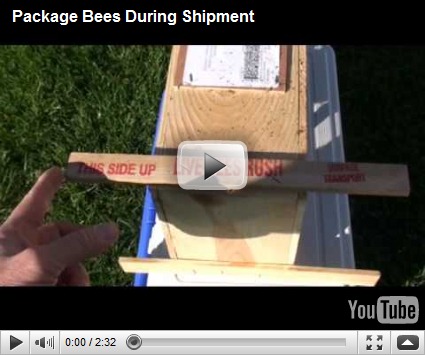
We can’t tell you how relieved we are that we got hundreds of packages shipped off! It took two postal trucks and 1 UPS trailer, but we did it!
UPSPackageTrailer
Sheri and I babysat the UPS trailer until the driver hooked up to haul it away. Though it was a nice cool day, we hooked up a fan and blew air on the bees. We want our bees to reach the customer more than the customer does, so we went the extra mile. In fact, me and my daughter Karee Lesson73b missed a whole night’s sleep getting labels on and the boxes ready for shipment. Every year we tell ourselves we will never ship bees again, and we’ll only do local pick up. But we still ship year after year. It’s a bit treacherous shipping bees and so few of providers do it. Most prefer local pickup only but we realize so many live far way.  We will ship if you also buy hives.

Lesson73a
When I see pictures from our customers like young James full of excitement as a young beekeeper about to install his first package, it makes me want to ship bees again next year. Way to go James!

Our package bee pickup day was a huge success. We brought in hundreds of packages and customers from 8 different states arrive to pick up packages.
Enough about the past, let me tell you about what’s coming up soon, and then I’ll teach on how to build up a strong colony.


LESSON 73: HOW TO BUILD A STRONG COLONY
The success of your colony will depend mostly upon their overall strength. The stronger your hive is the less likely they will be to develop a disease or be overtaken by pests.
A new colony, whether it is a nuc or a package, can benefit from these 5 growth tips:
1) Feed the colony 1:1 sugar water & pollen patties.
2) Only give them more boxes of frames as they need.
3) Keep all frames tight together and keep the hive level.
4) Use beetle traps if you live in an area that has small hive beetles.
5) Every 14 days, inspect your hive and make sure there is a good brood pattern and that you can see eggs. If not, you must replace your queen immediately or the hive will not become strong and may even perish within 40 days. Let me give more details.
First, feed you hive. When they are new, they do not have any food inside the hive. They need pollen and honey. And most new colonies are placed on undrawn foundation, meaning they do not have any drawn out comb in which to place incoming nectar or for the queen to lay in. Feeding them 1:1 sugar water can assist the younger bees in producing wax and thus they will be able to draw out their combs faster. This is not essential because spring usually provides more than enough incoming nectar that feeding is not necessary. But, spring can also provide several days in a row of cool, rainy weather. Then, the bees can run out of food and fail to build comb. This is why many beekeepers experience a slow build up of their hives. Entrance feeders are what we recommend.

How long to feed? Anywhere from not at all to several weeks. Most people will feed their bees until they have down out comb in both deep hive bodies.
Division board or frame feeders are the second best feeders, pail and top feeders last. Top feeders have always been very problematic for beekeepers. They can crack, leak, mold and generally allow bees in the reservoir and die. We sell them though they are not our preferred type of feeder. You just can beat the long tested and used entrance feeder. So feed your bees.
Feed your bees pollen patties. They need pollen. There is always plenty of pollen in the spring. Last year some of our hives were pollen bound, meaning there was so much pollen in the comb that the queen ran out of room to lay. Again, if the weather is cool and rainy then they will lack pollen and not be able to build up their population as fast. So feed your bees pollen patties for about 1 month after installation. Remember, you usually do not have to, but if you really want to ensure they become strong, feed.
Secondly, keep your new colony tight. Do not give them too much space. For example, only give them 1 deep hive body to start with. If you give them two, it can discourage them from building comb. And, the extra space gives room for pests to hide and grow, pests like mice, small hive beetle and wax moths. But, if you keep the bees tight then they can better grow their hive and defend it against intruders. Wait until your deep hive body has 7 frames that are drawn out and full of bees then you can add the second hive body. Do the same before you place on the super above the second hive body too.
Lesson73d I actually have a technique that works well for me. I install packages in a 5 frame nuc box, allow it to become completely filled, then transfer the frames over to a deep hive body. Bees work better when they are crowded. Will being crowded make them want to swarm? No, not a new set of bees. Bees are social insects which work better crowded. It is only when they become congested that they can swarm. Congested means they do not have any drawn comb for the queen to lay eggs in, or for the forages to bring in nectar or pollen. Congestion is not the same as being crowded. Crowd your new package but make sure they do not become congested.
3) Keep your frames tight together and your hive level. Bees are sensitive in how they draw comb on frames. If you leave too much space between frames, they will draw out odd shaped columns on the frame or they will build out a comb without attaching it to the foundation. So keep all frames tight against each other. Keep the hive level. Bees build comb straight down so if it is tilting slightly to the right or left, straight down will mean the comb will be slightly off the frame.
4) Use some sort of beetle trap to prevent the spread of small hive beetle. The best trap we’ve seen and one that we sell is the Better Beetle Blaster. We sell it with a syringe so you can easily fill it with your own vegetable oil. Watch our video below on how to use this trap.
Finally, you must inspect your hives every 14 days to ensure your queen is healthy and laying well. The queen lays about 2000 eggs a day. This allows the colony the ability to grow fast and have enough foragers to bring in lots of nectar. When you inspect, make sure you can see a good brood pattern and eggs. If the pattern of brood is spotty or looks to be drone brood only, replace the queen immediately. We raise our own queens and sell them all around the US. Please call us if you  need a new queen. 217-427-2678
We are working on another fun-filled Studio Bee Live podcast, so keep an eye out.
coppertop We have a new hive that we cannot keep in stock. It is a beautiful 8 Frame garden hive. We have these for sale now, so order yours today! Please allow 14 days for shipment. CLICK HERE FOR MORE INFORMATION ON OUR GARDEN HIVES.

If you need beekeeping hives or other equipment, remember we always appreciate your business! Here’s how you can contact us:
WEBSITE: www.honeybeesonline.com
Email: david@honeybeesonline.com
Phone: 217-427-2678

Sunday, March 28, 2010

Lesson 72: The Antenna of the Bee & Overwintering Success

davidsheri
Hello from David & Sheri Burns at Long Lane Honey Bee Farms. 

Today, we’ll continue our look into the biology of the honey bee as we examine the bee’s antenna and we’ll talk about how another harsh winter has taught us more about successfully overwintering hives. Remember, if  you have trouble viewing photos or videos in this message sent to your Email, you can always go to our actual posting of these lessons and view them there: www.basicbeekeeping.blogspot.com
Please tell others about these free lessons. They (or you) can sign up and have these sent to your Email FREE.
Enter your Email


Preview | Powered by FeedBlitz
Before we begin, let me tell you what we’ve been up to. This is the time of year when everything is running at full speed. In the winter April seems so far away. Then, suddenly we wonder where the time went, because we are only three weeks away from package bee pickups! And only 4 weeks away from when our first shipment of packages ship out.
For my 50th birthday, all my children went together and bought me an HD video camera and I’ve had a blast video taping bees! And it takes beautiful close ups too.
Pollen Here’s a bee working hard to bring in pollen. She’s flying in hovering for a good spot to land. If you click on the photo for a larger view you can see the pollen in her back legs. Here in central Illinois the bees started bringing in pollen around the middle of March. Maple trees and other trees are starting to produce for the bees.
I placed a video on YOUTUBE of bees collecting nectar and pollen from my maple trees. Which brings me to a point I’d like to make. I need your help. We are always seeking ways to promote beekeeping and one of the ways we are doing this is through YOUTUBE videos. Here’s how you can help. Sign up for our YOUTUBE Beekeeping channel. Just go to www.youtube.com/longlanehoney and sign up for our video subscriptions. It’s free. But more importantly, if you can view our videos then give them a high rating, it will push our videos higher up on the search engines on YouTube. That would be  a big help and you’ll benefit from learning through our videos. Thanks!
Here’s an example of our Beekeeping Video channel. Our most recent video demonstrates how to check your hive for sealed brood, eggs and larva.
Eggs2 And I also want to include a picture below to help you identify eggs in the cell. Click on the image to see the larger image. When you inspect a hive, you do not have to see the queen as long as you see 1 day old eggs. Here’s what they look like. You may need reading glasses or a magnifying glass to see them, but most people can see them with the naked eye. Notice the eggs, pollen, larva and sealed brood. I took this photo to help you become familiar with what to look for in the hive.
Gardenhive Before we get into our lesson today, I want to show you a beautiful hive that we are now carrying. Customers have always made special request and a frequent special order is for 8 frame hives, instead of 10. Everything is the same, but the hive is a bit more narrow, and of course each box contains two less frames. Recent studies show that 8 frame hives do slightly better than 10 frames. Probably not enough to switch over, but a slight advantage because bees prefer to build up and down over sideways.  So now we are making 8-Frame equipment regularly. Here’s a beautiful 8 frame set up we are selling with a pure copper top. It’s called a Copper Top Garden Hive. We have two of these available, so you must call in to purchase. 217-427-2678.
LESSON 72: The Antenna of the Honey Bee and Overwintering Success

Winter-Bee-Kind For Winter Feed For Bees
In The summer of 2011 we introduced our Winter-Bee-Kind after several years of studying overwintering hives. We could barely keep up with production they were in such demand. We still make them right here at Long Lane Honey Bee Farms but we've expanded our production methods to keep up with demand. So many beekeepers told us that these were the only thing that got their hives through the winter. This year, it's time for the 2014 production year. We even mix the sugar and pollen and right here and pour the candy into the Winter-Bee-Kinds. WHAT IS A WINTER-BEE-KIND? It is a one piece candy board that provides food, ventilation, upper insulation and an upper exit/entrance to help bees remain healthier during the winter. Someone said it insulates, ventilates and feed-i-lates. With the built in upper vent, you don't have to worry about snow covering up your hive's lower entrance. The bees can still go in and out through the top vent spacing. We avoid shipping Winter-Bee-Kinds in hot weather and start shipping each September-March. You can place our Winter-Bee-Kinds on your hive anytime, even in the winter. Because it goes on top of the hive in place of the inner cover, and you are NOT removing any frames, it can be placed on the hive in cold weather. Just do it fast. Open the top, remove the inner cover and place the candy side down and the vent slot toward the front of the hive and you're done. Click here to order your Winter-Bee-Kinds Some form of a candy board has been around for a long time. Beekeepers of long ago placed candy in their hives to provide enough food for their bees to survive the long months of winter. There are various mixtures and receipts for candy boards. Some are made with soft candy and some with hard candy. The end result is still the same. The bees will consume the sugar as they need it. We've always been concerned about the amount of condensation that can develop in the hive during the winter. The bees produce heat within their hive and as the temperature is very cold outside the hive, condensation will develop on the warm side, just above the bees on the inner cover or top cover. This condensation can accumulate and drop down onto the winter cluster of bees below. Bees can stay warm in the winter but they must remain dry. If this cold water drips down onto the bees, it can reduce their ability to keep their cluster warm. The insulation on our Winter-Bee-Kind helps reduce the excessive moisture and even puts some of that moisture to work, as it accumulates on the candy and makes it easy for the bees to consume the sugar. Thus, a Winter-Bee-Kind can help lessen two winter stresses, the lack of food and excessive moisture. We make our Winter-Bee-Kinds with sugar and a healthy amount of pollen powder. Many beekeepers make the mistake of only feeding their bees sugar in the winter, but the bees also need protein which they obtain from pollen. Our Winter-Bee-Kinds come with pollen mixed in with the sugar.. Click here to order your Winter-Bee-Kind today. We recommend that you place candy boards on your hive any time between Oct-March.


Commonly Asked Questions
Q: Which way does the candy face in the hive?
A: The candy faces down just above the winter cluster. Normally, this means that the Winter-Bee-Kind would be placed on the brood box that contains the cluster. For example, if you overwinter your bees in a single deep hive body, the Winter-Bee-Kind would be placed on this deep hive body with the candy facing down toward the cluster. If you are using two deep hive bodies to overwinter, then the Winter-Bee-Kind would be placed on the top deep hive body. It is best to disregard the use of an inner cover, and simply place your top cover over the Winter-Bee-Kind.

Q: What about winter moisture?
A: Moisture can develop in the winter from condensation, a contrast of the heat the bees produce in the hive and the extreme cold temperature outside the hive. Condensation accumulates on the warm side, which means moistures collects on the inner cover or top cover above the hive. This can drip down on the bees and chill them during the winter. A Winter-Bee-Kind takes the place of an inner cover and any moisture that develops from condensation aids the bees in consuming the candy.

Q: How long will a Winter-Bee-Kind last on a hive?
A: On average about 3 weeks. However, a colony that has ample stored honey may not consume the candy board as fast or not at all until they need it. A colony close to starvation may consume a Winter-Bee-Kind within a week or two.

Q: Since Winter-Bee-Kinds are placed or replaced on the hive in the winter, can I open the hive up on a cold day?
A: It is best to place the candy boards on a hive when the temperature is above freezing and try to place the candy board on and have the hive sealed back up within 1-2 minutes. It should not take over 1 minute. Do not remove any frames in cold temperatures, only place your Winter-Bee-Kind on and off quickly. If you can choose the warmest day during the winter, that would be best. Try to avoid very cold, windy or rainy days.

Q: How do I refill a candy board?
A: It is best to send back your candy board and we will refill it for $7 plus shipping. If you are a good candy maker, you can do it yourself.

Q: How do I get one with a pollen?
A: Our Winter-Bee-Kinds contain pollen as well.

Q: Can I make my own?
A: You can, but you must experiment, because you do not want the candy to be too hard or too runny. The exact mix depends on your altitude, heat source and other conditions so it will be different from one location to another.

Q: Why was some liquid sugar dripping out of my Winter-Bee-Kind when I received it?
A: It is the nature of candy boards to be a bit on the dripping side even though the top may be hard. Do not be concerned if you see liquid sugar dripping out of your boards when you receive it. It usually means it was left on end during shipment for a prolong period of time. The bees will clean everything up and enjoy this soft liquid.

Q: How much sugar is in one Winter-Bee-Kind?
A: Approximately 5 pounds

Q: When do I put a Winter-Bee-Kind on my hive?
A: Any time! Nov, Dec, Jan, Feb are good months to place on the boards.

Q How often should I check my Winter-Bee-Kind?
A: Every three weeks, take a peek.

Q: Do you make Winter-Bee-Kind for 5 frame nucs or 8 frame hives?
A: Yes, check out our website to order, but carefully read the description to make sure you are ordering the correct size and type.

Q: Can the candy break loose from the board on the hive?
A: It rarely happens, but during extreme winter weather, the candy and separate from the board while on the hive. This is not a problem. The bees will continue to consume the sugar.

Q: When I place it on the hive, do I use my inner cover. Just how does it go on?
A: Winter-Bee-Kind takes the place of your inner cover. Simply place the Winter-Bee-Kind on the top of your upper hive body or super with the candy facing down, then place your top cover on top of the Winter-Bee-Kind. Be sure to use a rock or brick to make sure the wind does not blow your top cover off. There is overwhelming enthusiasm about our Winter-Bee-Kinds. Click here to order now.

First, let’s address overwintering of bees. Let’s face it…it ain’t easy getting bees through the winter. Get this into your head. Bees laugh at cold! Healthy bees have no trouble at all in the coldest of climates. They can and do survive the cold. But, if they have other stressors, like thracheal or varroa mites or a disease or lack of nutrition, they will struggle or perish in the winter.
Our approach, here in Central Illinois, is simple. 1) Adequate ventilation (open screen bottom boards) 2) Good food storage going into winter 3) Our proven queens that are winter hardy, 4) Reduce front entrance to keep mice out and 5) Some sort of wind block that is a couple feet away from the hive. To make my point, here’s one of our customers/students giving a play by play report of how he followed our advice and got his hives through a Kansas winter. Before I share his testimony, I want to make an observation about his photo. Notice how the grass is green around the black paper under his hive? Grass greens up faster the warmer it is.  I suspect the black paper under and around the hive assisted the overall “heat” of the hive and probably was a good thing. I’ll let Brian tell you the rest because his approach proves that it works!
Brian Brian says… “Last fall I knew that I did not know what I should do to help my bee’s make it through the winter.  This is my first hive and was the first winter that I was going to try to take my bees through as a beekeeper.  Dave and Sheri both were very helpful with any questions that I had, plus I read and re-read all the lessons that they most graciously provide us for free.  I also went to my local book store and bought three bee books to increase my knowledge of my new found bee hobby. 
What I did to prepare my bee hive to support my bees as best as I could, was to put up a small wind break with a cheap tarp a couple of feet away on the north side of the hive to block the north wind.  I left the screened bottom board installed on the hive, as recommended by Dave and Sheri.  Then I took two wooden pencils and broke them in half.  I put one piece of the pencils in each corner on top of the inner cover, as I learned from one of the books that about one quarter to three eights of an inch between the inner and outer covers would help prevent condensation by improved ventilation.  I then placed the outer cover back in-place on top of the inner cover.  I installed the metal entrance reducer to keep mice out of the hive.  Walla, my winter preparation was complete.  What I learned through reading Dave and Sheri’s lessons, and confirmed through the books that I bought, was make sure that the bees had proper ventilation to prevent condensation within the hive, because condensation is a bee killer when it builds up and drips onto the colony, and is one of the major reasons a healthy hive will die out during the winter. 
Brian2 I left one honey super installed, that was probably 70 to 80 percent full of honey for the bees just incase.  I also did not take any honey from them last summer since it was their first year, and I was afraid that they would need the food during the winter to remain strong.  I did not try to arrange frames in any order within the hive, since I do not understand that process.  When the bees were no longer foraging for food because there was nothing for them to forage, I put the feeder out for them with 2 parts sugar to1 part water on the warm days.  Basically any day that the weather forecast said a high of about 50 degrees.  What I found out from trial was that my bees did not eat the sugar water unless the temp hit 45 to 50 degrees with calm winds, and they were more active when it was sunny.  We, as most, had a pretty wet and snowy winter.  I have lived in Kansas for the last 25 years and this was the most snow that I can remember having.  Each time it snowed, I would go out to the hive and brush the snow away from the bottom of the hive on all sides.  I also removed the snow from around the pallet that my hive sits on to help increase the airflow through the bottom board.  I also made sure the entrance reducer was cleared of snow so the bees could come and go through the bottom of the hive.  At the end of January I opened my hive for the first time since early November, to see how the bees were doing.  To my surprise, I found they were doing fine and had moved up into the top brood box, I could not see any moisture in the hive, and I was happily surprised at the amount of bees I could see, however initially I was concerned at the amount of dead bees I cleaned out from the bottom board with a stick.  I have since opened my hive briefly two other times, once to put a pollen patty on and once to see if they had eaten the pollen patty.  So far they have not touched the pollen patty and I don’t if that’s because they don’t need it or it they just don’t like processed foods. 
In conclusion, with a little help from me and some great lessons from Dave and Sheri I have to give 90 percent of the credit to my lovely queen and her worker bee lineage, provided to me by Lone Lane Honey Bee Farms, because lets face it, I stayed inside where it was warm.
Thank you Dave and Sheri, I think I’m hooked.
Way to go Brian! Brian’s insight I know will help so many others in the fall as we prepare for winter. But remember what I say…Winter preparation starts in the spring by keeping your bees healthy all year!
THE BEE’S ANTENNA
When I was young, back in the 60s, my parents bought me a set of Radio Shack walkie-talkies for Christmas. My brother and I had a blast with those. We pretended we were astronauts, spies, and soldiers. Back then, they barely carried across the street even with an antenna that I remember being about 4 feet long. I remember I was terribly heartbroken when I went to retract my antenna in a hurry and it bent and broke. We tried to tape it and solder it, but it was done. That was my first experience with an antenna.
We still use antennas for communication. Even the satellite dish for our t.v. is technically receiving a signal from outer space.
Les72a Bees also use their antennae to communicate and gather data about their environment around them.
Where do honey bees spend a large amount of their time? In the hive, in a dark hive. Therefore they use their antennae for taste, smell and touch. They have one antenna on each side of their head. It is connected to the brain through a large nerve, a double nerve that transfers all data received. The antenna moves freely as it is set in a socket. This allows the bees to manipulate their antennae freely. Each antenna is full of tiny hairs, nodules and other sensory organs. While it is true that bees do not have ears like we do to hear, they use their antennae to hear. Actually tiny hairs on the antennae can detect tiny movements in the air caused by vibration. As you can see in the photo above (click for a larger image) the antenna is made up of segments, 12 in worker bees and 13 on drones.
It is not uncommon to see bees rubbing their antennae together to communicate, feed and share information. Honey bees are known to trap and encase other invaders in the hive, such as the small hive beetle. They will build a propolis jail house around a small hive beetle. However, the beetle uses its antennae to trick the bee into feeding it.Here’s a bee on my finger cleaning her legs and antenna.
Okay, for all of you who are waiting for a chance to receive something free…who doesn’t like free!  Call in on Monday morning starting at 9am sharp Central Time. for two free Beetle Blasters. These are neat little traps for small hive beetles. First 3 callers are winners.
beetle Every beekeeper should have one or two of these in their hive just in case that beetle shows up. You fill it have full with vegetable oil and place it in the deep hive body between two frames. The beetle likes dark places and will run down into the oil and die. First three callers get two each. Call 217-427-2678. 9am sharp Central Time. Good luck.
Thanks for joining us today for another informative and entertaining talk about honey bees. Be sure to check out our Studio Bee Live Podcasts too: www.honeybeesonline.com/studiobeelive.html
And remember to please view and rate our Beekeeping videos.
We are looking for someone who is somewhat musically talented to work up a little song that we can play when you log on to our website, something to do with bees of course. If you’ve got a band or group, give it a shot!
Here’s our contact information:
David & Sheri Burns
Long Lane Honey Bee Farms
14556 North 1020 East Rd.
Fairmount, IL 61841
217-427-2678
WEBSITE: www.honeybeesonline.com
YOUTUBE: www.youtube.com/longlanehoney
TWITTER: www.twitter.com/longlanehoney
This is David & Sheri Burns reminding you to BEE-have yourself!

Sunday, March 7, 2010

Lesson 71: Amazing Legs of Bees & What To Expect To See In Your Overwintered Hives (Revised)

davidsheri
Hello from David & Sheri Burns from Long Lane Honey Bee Farms. We saw that some may have had trouble seeing this lesson if it was posted via your Email, so we are attempting a duplicate resending, hopefully working this time. Thanks for your patience.
We’ve had some hints that spring is getting closer. Bees are out flying a bit more, and warmer weather! Finally, as it has been another long winter.
In today’s lesson I want to once again teach on the biology of the honey bees as we take a look at the fascinating leg of a bee. Before our lesson, let me ramble on a bit.
Let me tell you that I have some neat videos I’ve taken of our hives this winter. So, be sure and read through all my ramblings so you can see what one of our queens can do taking her gang through a terrible Illinois winter. And if you have trouble viewing the videos because you received this via your Email, go directly to where these lessons are posted:
http://basicbeekeeping.blogspot.com
Many (and I do mean many) people desire to visit our honey bee operation. In fact, already people are showing up to tour our place. Some have asked to go out and work the bees with us. Please understand that we certainly welcome tours, but it is seasonal. Hives cannot be opened and regularly inspected until it is around 60 degrees on a regular basis.
During the spring our operation is buzzing! Grass is green, trees are leafed out, and we are in full operation. Until May 1st, however, our place is not tour friendly. The grass is brown, trees are bare, everything is wet and muddy, bees are tightly clustered, sticks are in the yard…winter has left its mark.
So Sheri and I sat down and discussed how we could better prepare for those who wish to walk around (take a tour) and ask a bunch of bee questions. After all, that’s our goal, to help more people get into beekeeping. Please understand that we offer an array of various beekeeping courses and classes. This is how we educate those who want hands on experience learning to work bees. But if you MUST take a tour read on...
TOURS
We have 3 levels of tours we offer from May 1 through Sept. 1
Friendly Farmer Tour
This tour is available Monday – Saturday any time between 1pm – 4pm. The Friendly Farmer means you can talk to us while we work, and you’ll get to see what we do. It might be grafting queens, painting or building hives, packaging hives from shipment, working hives or mowing grass. In other words, feel free to come, but we must keep working and we’ll talk while we work. We cannot stop what we are doing to show you something else. For that, see our other tours below. Wear your work clothes and bring a hat and veil. If you come unannouced, we might be speaking in a different state and you'll not be able to tour our place, so call first. COST: FREE
David and Sheri’s Vacation Money Tour
This tour is available by appointment only on Saturday. Cost $100 whether it is one person or 100. In other words, a group of 30 people still only pay a total of of $100. The reason for the name is because money paid for this tour goes to our vacation fund. On this tour David or Sheri will take you around the operation and show you how everything works. It is a one hour tour and questions are answered during the tour. If you’d like to see a particular aspect of our operation, we just ask that you let us know when you schedule your tour. COST: $100
Call 217-427-2678 to arrange your appointment.
David’s Brain Picking Tour
This tour is available by appointment only on Monday, Wednesday and Saturday. COST $200  This is a 2 hour tour where David will show you all aspects of beekeeping, raising queens, harvesting honey and more. For 2 hours you can pick David’s brain and he will rattle off whatever comes into his mind at the moment. The cost covers 1-5 people.
Again, all tours do not start until May 1. If you wish to purchase beekeeping equipment, packages, nucs or supplies while you are here, be sure to let us know in advance so we can have everything ready when you arrive. Call 217-427-2678 to arrange your appointment
LESSON 71: Amazing Leg of the Bee & What to Expect from Your Overwintered Hive
Lesson71a The honey bee has 6 legs, three on each side. Bees use their legs like we do, to walk and run. However, there is more to the bee’s leg than just movement. On the very end of the leg is what we might call a foot. The foot is made up of three claws. This enables the bee to cling and grip on to things.
It gets more interesting. On the front leg, called forelegs there are antennae cleaners. All three caste of honey bees (workers, queens and drones) have this special cleaner device. Since the antennae serves an important role in communication it must be kept clean. You can look at bees up-close and usually see them cleaning their antenna.
The front legs also have stiff hairs which the bee uses to clean their head, eyes and mouth and to gather and transfer pollen to the back legs which have the pollen baskets.
The middle legs have hairs or brushes which are used to clean the middle of the bee, her thorax. The bee’s middle legs are also used to continue transferring the pollen to the back legs. The middle leg also has a spur for to pick the wax that is produced on the abdomen. The middle legs are also used by the bees to clean the wings and to dislodge the pollen from the baskets on the back legs.
The back legs are most well known for their pollen baskets. These “baskets” aren’t actually baskets, but hairs that surround bare spots on the leg. So the hairs hold the collected pollen which is placed on the back leg. Often, nectar is added to the pollen to make it stay tightly together. Only the work is equipped with these rear leg pollen baskets. Propolis is a stick substance which the bees gather from tree sap and sticky plants and the bees also carry the propolis back to the hive in their pollen baskets.
As expected the honey bees is magnificently made and every part has many purposes.
What to Expect from Your Overwintered Hive
Many beekeepers are finding that as it warms up, they are peaking into their hives to see if there are still bees alive.
Newer beekeepers are sometimes alarmed by what they find, things like dead bees…lots of dead bees. Even hives that survived the winter and are alive still may be filled with dead bees, certainly on the bottom board but sometimes even between frames.
Often time in the winter the bees break cluster to gather honey from frames that are beyond reach of the cluster. But when the temperature drops, they sometimes fail to regroup as one cluster, and instead form two or more smaller clusters. These smaller clusters cannot generate the heat needed to stay alive, so the smaller clusters die and usually freeze within the hive.
If your bees died with their heads stuck in the bottom of cells, this usually means they starved to death. They died licking the last drop of food from the bottom of cells.
It is very common for the bottom board to be full of dead bees. They either died of old age or winter kill. Left alone, the bees will eventually clean out the dead. However, I like to remove the bottom board and shake out all the dead bees. This keeps a cleaner hive and makes life easier for the bees.
Mold and dampness. It is common for beekeepers to find dead and moldy bees in frames too. This means that your hive had too much moisture over the winter and that you needed better ventilation. Every winter, in our yards, the hives that do best are the ones with opened screen bottom boards, drafty holes and propped lids.
What to do about moldy dead bees in a hive. Shake them out or rub them out, at least as many as you can. You can’t get them all out. They are dead, they won’t sting you. Be careful not to break the comb if you try knocking out the dead bees. Typically, we don’t worry about the mold unless it is really thick. A slight glaze of green or white mold doesn’t worry us. We reuse the frame and let the next package clean it up. Dead bees stink bad! Sometimes beekeepers ask me if they have American Foul Brood since there is such a stink in the hive. But I remind them that there is little to no brood in the winter to smell. The smell is the dead bees.
If you forgot to seal off your entrance to keep mice out, you may find some fury friends in the hive, and even a sizable mouse nest with little baby mice. If so, serve the eviction papers and throw all the mice overboard.
You might also notice bee poop all over the top and sides of your hives. It’s a light to dark brown and thick almost waxy substance. Do not panic and conclude you have Nosema. What you are seeing is that the bees have finally had a chance to defecate outside the hive and they didn’t bother to fly away very far. You wouldn’t either if you’ve spent  4 weeks waiting for a bathroom break. Excessive spotting might happen on some of your hives and not others. Don’t worry, it will clear up with additional warm days. In the slow motion video below you can see my bees have messed on the front of their hive. This was taken on March 4, 2010. If you have trouble watching the videos in your Email, go to our website at: http://basicbeekeeping.blogspot.com and you can watch the video there.
Now, if all went well with your bees over winter, then this is what you’ll see in the video below. Lots of bees, and a queen and lots of stored honey still available. This is an example of the queens that we produce. We graft from hives with strong winter hardiness and good honey producers and very gentle bees. They also show hygienic behavior which means they are more mite resistant. Again, if you have trouble watching the videos in your Email, go to our website at: http://basicbeekeeping.blogspot.com and you can watch the video there. Notice how gentle our bees are even at 40 (f) degrees! No gloves. These hives are as strong coming out of winter as most beekeeper’s hives are in the summer. Our candy boards that we sell also help absorb winter moisture.
Let’s have even more fun. Here’s a video I’ve made into slow motion of bees flying into their hive.
Beekeeping techniques that we teach at our beekeeping classes will help beekeepers have the success in overwinter hives like we do as well. And of course, having the right queen helps, like our Pioneer Queens. In fact, here’s another video of our Pioneer Queen and her overwinter gang. Notice how many bees there are and how much honey they’ve stored for the winter and the key is…how little they have eaten to survive the winter. Watch this…
Before I finish today I do want to let everyone know that we have set aside a large number of packages for customers who also purchase hives from us. In other words, if you want a hive and bees, we have that combination available. Other wise, if you need just bees, we are all sold out. But you can get bees from us if you wish to also purchase a hive.
Here’s the info on our upcoming beekeeping classes:
e limited.Until next time, remember to behave yourself!
David & Sheri Burns
Long Lane Honey Bee Farms
14556 N 1020 E. Rd
Fairmount, IL 61841
Phone: 217-427-2678
Website: www.honeybeesonline.com
FREE ONLINE LESSONS: www.basicbeekeeping.blogspot.com

Sunday, February 7, 2010

Lesson 70: Basic Bee Biology – The Bee’s Mouth & Late Winter Feeding


wood Before I teach our next lesson today, I want to tell you about the wood we use for our beehives that we make here at Long Lane Honey Bee Farms. Our wood is manufactured by Wynndel who claims to have the finest board finishing line in the world. They say, “We started with installation of the SuperThunder Mac (by LeaderMac) the largest production moulder of its kind. Running at a production speed of over 1000fpm, it can produce an eased edge board (1x4 to 1x12), with near-sanded appearance. With its incredible control and delicate handling of the raw material, we are able to maximize quality and grade, minimize trim loss, and create our new line of high end 2&BTR WynnWood Premier Plus”. They are right. We love their wood. It has taken us 3 years to finally find this awesome grade of wood. If you want to watch a video of how they make their wood, CLICK HERE but I don’t like the music on the video, but the video is cool to watch. We feel the quality of the board makes a huge difference in the overall longevity of the hives you purchase.
LESSON 70: Basic Honey Bee Honey Bee Biology – Bee Mouth
Everyone knows that honey bees have stingers, but we don’t think of them as having a mouth. But they do. They have several different parts to their mouth that enable them to chew and to suck. With their mandibles they can chew, manipulate wax and even crush mites. Another mouth pieces is their proboscis. Their proboscis is their way of suck up all the delicious nectar from flowers. They also suck up water. They even use their proboscis to exchange food between bees. This is known as trophallaxis.
When bees gather nectar they draw it out of the flower with their proboscis into their honey stomach which is different than their main stomach. They fly back to the hive with the nectar in their honey stomachs. When they arrive, they transfer it to several other house bees. These house bees take the droplets of nectar and roll it around in their mouth pieces and add enzymes to change it into unripe honey. The house bees work these transferred droplets of honey like this for about 20 minutes and then they deposit the droplets into a honey cell. At this point, it is still honey that is not ripe. It now takes several days for the bees to dry the unripe honey and then they seal off the cell.
Among the different races of the honey bee, the Caucasian has the longest proboscis which might seem to make it a candidate to draw nectar out of deeper and harder to reach flowers.
One of the most unusual behaviors of the honey bees is when the bees will move back and forth on the bottom board ledge or the front of the hive, using their mouth in which they appear to be scrubbing the wood. This has sometimes been called, “scrubbing the deck”. Just what are those bees doing? Some say they are trying to scrap off the paint. Others say there are too many bees in the hive, so some have been told to go hang out front and scrub something to look busy.
We have found that when bees do this, it is usually when there is high humidity or moisture on the surface. The bees are using their tongue to lap up moisture from the hive. It is done after foraging hours. It is amazing to watch. If you’ve never observed this yet, it will surprise you and you’ll know what’s going on.
FEEDING YOUR BEES
Now that the days are getting a little longer, the bees will be expanding their brood area, placing a heavy demand on pollen and honey requirements. The next 6 weeks will be extremely hard on hives, especially in the north. Feed you bees! Pollen patties are great! Place them on the top of the cluster, on the frames. Also, if you can place 2:1 sugar water above the cluster this would be a big help too! Some use bucket feeders, but the easiest way is to place your entrance feeder on the top of the frames above the cluster and then place an empty deep body around it and then the lid on top. Feed your bees!!


David & Sheri Burns
Long Lane Honey Bee Farms
14556 N 1020 E. Rd
Fairmount, IL 61841

Phone: 217-427-2678
Website: www.honeybeesonline.com
FREE ONLINE LESSONS: www.basicbeekeeping.blogspot.com

Wednesday, January 13, 2010

Lesson 69: Basic Bee Biology Part I & How To Convince Your Friends To Keep Bees

davidsheri
Hello! We are David & Sheri Burns from Long Lane Honey Bee Farms in Central Illinois where the weather has been freezing!
We have some real nice videos in this lesson. If you received this via Email, and your Email program will not display the videos, you can use this link to view the two videos below: http://basicbeekeeping.blogspot.com
If you are new to our bee lessons, let me say we had a huge request for candy boards from our last lesson. Check out that last lesson if you missed it. Here’s a video showing how I place candy boards on hives that are short on food.
Candyboardwithbees 24 hours later, I took these pictures showing how well the bees took to the candy board. You can click on the image for a larger picture. In this picture, taken at 1:30pm January 13, 2010, the temperature was 30.6 (f). Even at 2 degrees below freezing, the cluster loosened enough to feed heavily on the pollen patties and the candy on the candy board. You can see how they have made chewing marks on both. I also noticed that some bees were breaking off the sugar crumbs and letting them rain down on the bees below who were immediately picking it up.  At this point, I am totally convinced that candy boards are a must on all hives in the winter, along with pollen patties. We sell are selling these boards as fast as we can make them. Click Here To Order
In today’s lesson, we’ll do two things. First, I will share how important it is to encourage others to become beekeepers. Then, I’ll teach Part 1 on bee biology and today we’ll look at the eyes of the bees. The better we understand the honey bee, the better care we can give them. Before we jump into today’s lesson, let me say that we are counting down to spring when we will enjoy watching the bees return to normal activities instead of being clustered in a ball in their hives.  This winter is certain to be very hard on the bees. While bees can withstand very cold weather, the longer they are cold and the longer the cold spell is, the greater the chance they might perish.
winter cluster Here in Illinois we’ve had at least 2 weeks where the clusters have been forced to be extremely tight, unable to move within the hive for more food. Hopefully, by the end of this week, the weather will rise above freezing and allow the clusters to loosen enough to move over to more frames of honey. Today the weather warmed (30 degrees Fahrenheit), so I was out taking a peak and couldn’t believe my bees did so well in the extreme weather.
Here’s a video you’ll enjoy that was from last summer, showing how we find a queen, mark her, place her in one of our shipping cages and then how we add 5 young nurse bees to accompany her royalty during the shipment.
As usual I have many first time experiments underway to test for overwintering, and so far insulated top covers are proving to be winning the race. All hives that have wintered with pollen patties are doing terrific. We produced some outstanding queens last year, and some lines we loved but wouldn’t sell until we tested them for winter hardiness. This winter will be a great test and that line is still doing good so far. If they are winter hardy, then we’ve got a keeper!
It’s January 13, which means in just 3 months we’ll be getting excited about package bees pickup and delivery (with purchase of hive). Usually it is the latter part of April, so around 120 day and we’ll be out of winter and into a new bee season.

It is always paramount this time of the year that I encourage all beekeepers whether new or experienced, to be sure to have all their equipment purchased before April. Otherwise, you might get your bees before you have anything to put them in. Don’t delay. All beekeeping suppliers become overwhelmed with spring orders and shipments are delayed. So by waiting, you could risk having to wait longer for your equipment to arrive.

LESSON 69: Basic Bee Biology & How to Convince Others to Keep Bees.
First, how can we encourage others to become beekeepers? This is so important! The only way we can significantly improve the overall population of honey bees is to increase the number of beekeepers. Let me share three ideas with those of you who presently keep bees.
1. Set a goal, a certain number of people you wish to introduce to beekeeping. It might be one or it might be 10 or 20.
2. Introduce them to beekeeping by sharing how much you enjoy it, and how keeping bees benefits you and your area.
3. Offer to mentor them to help them get started.
4. Invite them to attend local or state association meetings or conferences with you to learn more about bees.

5. Invite them to attend one of our beekeeping classes or a class near you.
Some pointers about introducing people into beekeeping. Be encouraging and positive. Don’t make beekeeping sound worse than it is to prove that you are Rambo. And don’t exaggerate pests and diseases to the point where they think the sky is falling on the bees.
Sometimes we are reluctant to help others get into beekeeping due to a lack of information or help. But as you can see, when you direct your friends to us, we have the advantage of online lessons, real people answering the phones and your friends can receive everything they need from one place, including bees and queens! In fact, we have a lesson gear just toward the new beginner beekeeper. CLICK HERE You can point them to that lesson.
Now on to bee biology! The better we understand the bee, the better we can keep bees. Biology lessons can sometimes become too technical, complicated and seem impractical, so I want to share some bee biology in a way that you will not even know you are in biology class.
beeeye2 Let’s first look into the eyes of the honey bee. I spent an hour today, looking at bee eyes under my microscope. It is awesome to look at a bee under a microscope. How many eyes do bees have? You might be quick to answer two, but they actually have five. On each side of their head they have compound eyes made up of almost 7,000 individual hexagonal sections known as ommatidia. This is very important in helping bees see and evaluate light rays and movement from various flowers. Because of these 7,000 facets to each compound eye, the honey bee can quickly detect motion and movement. In fact, it has been said that if a bee were to watch a movie, they would see it as frame by frame. It would have to be sped up to be seen as we see it. That’s why you should not swat at a bee. The rapid movement is alarming and extremely exaggerated through their sights.
The compound eyes are fixed focus, so for a bee to see letters on a page as we do it would have to be magnified significantly. It is not true that bees are colored blind. They do see in color but not all of our colors, yet they can see colors we cannot, such as ultraviolent colors. They cannot see the color red. To the bee it would only look black or nothing. That’s why we wear red lights when working bees at night. They would be attracted to a white light.
In addition to the two compound eyes, bees also have three additional eyes located in a triangle on the top of their head. They are simple eyes with a single lens. These are the navigational eyes of the bees, the GPS that continually takes readings of the location of the sun’s light rays, allowing the bees to fly with little to no sunlight. These eyes are called ocelli. Just exactly what these three eyes do is still a mystery, but most agree that these eyes are used in orientation.
Thanks for joining us for another lesson today, and we do hope you’ve enjoyed learning about candy boards, how to package a queen, how to encourage others to become beekeepers and more about the eyes of the honey bee.
Here’s our contact information:
PHONE: 217-427-2678
EMAIL: david@honeybeesonline.com
WEBSITE: www.honeybeesonline.com

Until next time, remember to BEE-have yourself!

David & Sheri Burns
Long Lane Honey Bee Farms
14556 N. 1020 E. Rd.
Fairmount, IL 61841

Sunday, December 27, 2009

Candy Board Follow Up

davidsheri

Our recent lesson on Candy Boards generated a lot of interest, and I’m getting lots of emails telling me that the link did not work to order the candy boards. If you received the Lesson via Email, that link doesn’t work. So here are the proper links:

Candy boards for 10 frame hives. CLICK HERE

Candy boards for 5 frame nucs. CLICK HERE

Sometimes there is a difference in sizes of nucs especially 4 and 5 frame nucs, so let us know what size nuc you are using and we can provide candy boards for your equipment.

If you want to order these from our website, go to www.honeybeesonline.com then click on BEEKEEPING EQUIPMENT AT THE TOP and then click on FEEDERS on the bottom row of links.

Thanks!
David & Sheri Burns

Saturday, December 26, 2009

LESSON 68: What Do Bees Do During The Winter? & Candy Boards To The Rescue!!

davidsheri
Merry Christmas from David & Sheri Burns at Long Lane Honey Bee Farms!
It is always so rewarding to enter into the Christmas season. For us, it means another year of hard work under our belts, experience gained and hopefulness for another great bee year. Of course, the greatest blessing of all is the birth of our Savior, Jesus Christ. We give Christ all the glory for blessing us beyond our imagination.
Sheri and Karee have been making lots of good food and some extra Holiday sweets that are impossible to resist. We had our family Christmas gathering at our home on December 20th, and we enjoyed entertaining 20! Our family continues to grow!
This year we insulated our entire bee building, added on another build room and a paint room. We’ve really been enjoying working in a warmer environment with more room!
IMG_4301 (640x427) We’ve decorated our home with a Christmas tree, lights and other decorations. For a tree stand I use a 3 gallon bucket, stand the tree in it and fill it with small rocks. It holds it really tight and then I fill the bucket full of water. My wife wraps the bucket with a special Christmas cloth.
Because our youngest son is only two, we could not put our gifts under the tree, or little Christian would open them up when our backs were turned. He likes Thomas the Train toys, so he’s got a little Thomas the Train track around our Christmas tree. Battery powered and all, playing Jingle Bells as it goes by. There’s nothing like see Christmas reflected in the eyes of a child. Here’s our family all dressed up for Christmas doing our annual Christmas dance!
Family Christmas Dance

LESSON 68: What Do Bees Do In The Winter? Home Of The Winter-Bee-Kinds!
In previous lessons I’ve talked about how to prepare our hives for winter. Please review those previous lessons if you become nervous about your bees this winter.
But before you become too anxious about your cold bees, let’s gain some comfort from understanding how bees overwinter.
The bees prepare for winter long before we even think about it. In the early spring bees are working hard to store up honey for the long winter months. All spring, summer and fall the bees are making preparation for winter. Their stored honey is their only hope of making it through the winter. They only need 3 pounds of honey per month, provided there is no significant brood to feed. That’s why most hives are doing fine now, in December and January, because with little to no brood to feed, there is food in the hive. However, in January as the days begin to lengthen slightly, the queen begins to lay alittle more, thus requiring more food to feed the larvae. This increases week by week until most hives become stressed in February and March, unable to continue to feed themselves or the larvae and they perish from starvation. Therefore, candy boards to the rescue!
I believe the reason most hives perish in late winter is because they were reserving limited stores of food and therefore reduced their brood rearing. This makes for a decreasing hive in number and a hive that will eventually die out or become so weak that even if it survives into spring, it will not make any surplus honey.
When beekeepers complain of low honey production, their hives probably suffered from low nutrition in December and January when they needed it the most. Now is the perfect time to slap on some candy boards.

Winter Cluster Bees do not hibernate during the winter. Instead, we use the word “cluster” to describe what bees do all winter. They cluster together. When I first started keeping bees I remember someone explaining to me that the bees form a ball in the hive and cluster in a ball and stay warm. My first thought was wouldn’t the frames interrupt their ability to form a tight cluster? One year I removed some frames to see if the bees overwintered any better since they could actually form a ball without frames breaking up the cluster. Didn’t make any difference. Heat travels well through the combs and frames even plastic frames. Remember, the bees do not heat up their entire hive like we do our homes. Instead, they merely gain heat from their surrounding sisters. When the temperature outside dips to 50 and below the bees begin to form their cluster. The colder it becomes, the tighter the cluster.

The cluster moves around more when the temperature reaches around 50 outside. At this temperature or higher, they may actually travel to a frame of honey that is around them and carry that honey back to the cluster to feed others. And at temperatures 50+ they will fly outside the hive to finally go to the bathroom (defecate). During the winter, the temperature in the center of the cluster is maintained around 80 degrees and warmer if there is brood. However, toward the outside of the cluster the temperature may barely be above freezing. Cold bees are pulled back into the warmer cluster by warmer sister bees.
I believe my bees do better the more winter fly days they have per month. It seems to me they stay healthier if they can fly one or two days per winter month. But that sometimes never happens here in Central Illinois.
Winter Cluster Drawing In the cluster the bees stay warm by generating heat by flexing their muscles. To do this, it requires eating honey. The colder they are, the more they will need to eat. But the warmer it is, the more they eat because they’ll want to move around and even fly out. Therefore, we have no choice but to leave 60-80 pounds of honey in the hive for winter, or feed them candy boards or sugar water during the winter. By January and February the bees have made their way up into the top deep hive body. The image shows how we can rotate our two hive bodies in April. But, never rotate the hive bodies unless you are absolutely sure that the entire cluster is in the top deep. Never break up the cluster if they are in both the top and bottom deep. Some beekeepers rotate their boxes too early and put the cluster in the bottom deep away from the upper heat source as heat rises. A cold snap can produce a larger number of dead bees than is acceptable.
Winter-Bee-Kind For Winter Feed For Bees
In The summer of 2011 we introduced our Winter-Bee-Kind after several years of studying overwintering hives. We could barely keep up with production they were in such demand. We still make them right here at Long Lane Honey Bee Farms but we've expanded our production methods to keep up with demand. So many beekeepers told us that these were the only thing that got their hives through the winter. This year, it's time for the 2014 production year. We even mix the sugar and pollen and right here and pour the candy into the Winter-Bee-Kinds. WHAT IS A WINTER-BEE-KIND? It is a one piece candy board that provides food, ventilation, upper insulation and an upper exit/entrance to help bees remain healthier during the winter. Someone said it insulates, ventilates and feed-i-lates. With the built in upper vent, you don't have to worry about snow covering up your hive's lower entrance. The bees can still go in and out through the top vent spacing. We avoid shipping Winter-Bee-Kinds in hot weather and start shipping each September-March. You can place our Winter-Bee-Kinds on your hive anytime, even in the winter. Because it goes on top of the hive in place of the inner cover, and you are NOT removing any frames, it can be placed on the hive in cold weather. Just do it fast. Open the top, remove the inner cover and place the candy side down and the vent slot toward the front of the hive and you're done. Click here to order your Winter-Bee-Kinds Some form of a candy board has been around for a long time. Beekeepers of long ago placed candy in their hives to provide enough food for their bees to survive the long months of winter. There are various mixtures and receipts for candy boards. Some are made with soft candy and some with hard candy. The end result is still the same. The bees will consume the sugar as they need it. We've always been concerned about the amount of condensation that can develop in the hive during the winter. The bees produce heat within their hive and as the temperature is very cold outside the hive, condensation will develop on the warm side, just above the bees on the inner cover or top cover. This condensation can accumulate and drop down onto the winter cluster of bees below. Bees can stay warm in the winter but they must remain dry. If this cold water drips down onto the bees, it can reduce their ability to keep their cluster warm. The insulation on our Winter-Bee-Kind helps reduce the excessive moisture and even puts some of that moisture to work, as it accumulates on the candy and makes it easy for the bees to consume the sugar. Thus, a Winter-Bee-Kind can help lessen two winter stresses, the lack of food and excessive moisture. We make our Winter-Bee-Kinds with sugar and a healthy amount of pollen powder. Many beekeepers make the mistake of only feeding their bees sugar in the winter, but the bees also need protein which they obtain from pollen. Our Winter-Bee-Kinds come with pollen mixed in with the sugar.. Click here to order your Winter-Bee-Kind today. We recommend that you place candy boards on your hive any time between Oct-March.


Commonly Asked Questions
Q: Which way does the candy face in the hive?
A: The candy faces down just above the winter cluster. Normally, this means that the Winter-Bee-Kind would be placed on the brood box that contains the cluster. For example, if you overwinter your bees in a single deep hive body, the Winter-Bee-Kind would be placed on this deep hive body with the candy facing down toward the cluster. If you are using two deep hive bodies to overwinter, then the Winter-Bee-Kind would be placed on the top deep hive body. It is best to disregard the use of an inner cover, and simply place your top cover over the Winter-Bee-Kind.

Q: What about winter moisture?
A: Moisture can develop in the winter from condensation, a contrast of the heat the bees produce in the hive and the extreme cold temperature outside the hive. Condensation accumulates on the warm side, which means moistures collects on the inner cover or top cover above the hive. This can drip down on the bees and chill them during the winter. A Winter-Bee-Kind takes the place of an inner cover and any moisture that develops from condensation aids the bees in consuming the candy.

Q: How long will a Winter-Bee-Kind last on a hive?
A: On average about 3 weeks. However, a colony that has ample stored honey may not consume the candy board as fast or not at all until they need it. A colony close to starvation may consume a Winter-Bee-Kind within a week or two.

Q: Since Winter-Bee-Kinds are placed or replaced on the hive in the winter, can I open the hive up on a cold day?
A: It is best to place the candy boards on a hive when the temperature is above freezing and try to place the candy board on and have the hive sealed back up within 1-2 minutes. It should not take over 1 minute. Do not remove any frames in cold temperatures, only place your Winter-Bee-Kind on and off quickly. If you can choose the warmest day during the winter, that would be best. Try to avoid very cold, windy or rainy days.

Q: How do I refill a candy board?
A: It is best to send back your candy board and we will refill it for $7 plus shipping. If you are a good candy maker, you can do it yourself.

Q: How do I get one with a pollen?
A: Our Winter-Bee-Kinds contain pollen as well.

Q: Can I make my own?
A: You can, but you must experiment, because you do not want the candy to be too hard or too runny. The exact mix depends on your altitude, heat source and other conditions so it will be different from one location to another.

Q: Why was some liquid sugar dripping out of my Winter-Bee-Kind when I received it?
A: It is the nature of candy boards to be a bit on the dripping side even though the top may be hard. Do not be concerned if you see liquid sugar dripping out of your boards when you receive it. It usually means it was left on end during shipment for a prolong period of time. The bees will clean everything up and enjoy this soft liquid.

Q: How much sugar is in one Winter-Bee-Kind?
A: Approximately 5 pounds

Q: When do I put a Winter-Bee-Kind on my hive?
A: Any time! Nov, Dec, Jan, Feb are good months to place on the boards.

Q How often should I check my Winter-Bee-Kind?
A: Every three weeks, take a peek.

Q: Do you make Winter-Bee-Kind for 5 frame nucs or 8 frame hives?
A: Yes, check out our website to order, but carefully read the description to make sure you are ordering the correct size and type.

Q: Can the candy break loose from the board on the hive?
A: It rarely happens, but during extreme winter weather, the candy and separate from the board while on the hive. This is not a problem. The bees will continue to consume the sugar.

Q: When I place it on the hive, do I use my inner cover. Just how does it go on?
A: Winter-Bee-Kind takes the place of your inner cover. Simply place the Winter-Bee-Kind on the top of your upper hive body or super with the candy facing down, then place your top cover on top of the Winter-Bee-Kind. Be sure to use a rock or brick to make sure the wind does not blow your top cover off. There is overwhelming enthusiasm about our Winter-Bee-Kinds. Click here to order now.

It has been a pleasure being with you today, and from Sheri and David Burns, we do wish you a Merry Christmas and a very Happy New Year.
Here’s our contact info:
Long Lane Honey Bee Farms
14556 N. 1020 E. Rd
Fairmount, IL 61849
WEBSITE: www.honeybeesonline.com
BLOG LESSONS: www.basicbeekeeping.blogspot.com
PHONE: 217-427-2678
EMAIL: david@honeybeesonline.com
TWITTER: http://twitter.com/longlanehoney