Hi, we are David & Sheri Burns from Long Lane Honey Bee Farms in central Illinois. We love keeping bees. Thanks for visiting our blog and we hope you’ll read what we have to say today about how to become a beekeeper.
I never really know who will be reading our beekeeping lessons. You might be an experienced beekeeper, having kept bees for years. Or you may have only kept bees for a year or two. Maybe you are like so many others who are interested in keeping bees in the spring of 2011. We try to write our articles to reach each group each time. So today, I want to walk you through the process of how to keep bees. Those of you who are already keeping bees will still learn something, I’ll throw in some goodies for you, too.
Before we start today’s lesson, let me tell you what we’ve been doing here at Long Lane Honey Bee Farms. In addition to producing our own beekeeping podcast, I am now hosting a nationwide beekeeping podcast called “Save The Bees.” This podcast has existed for several years through the Wild Life Pro Network and I just recently became the new host. What’s so fun about this podcast is that it’s recorded LIVE on the internet. You can actually call in to the live recording and ask me questions or just shoot the breeze about bees. It’s low-key, home spun fun. So call in to make the show more interesting! You can call in with any question you’d like to ask about bees. These broadcasts are recorded live each third Thursday of the month. Our next one is coming up tonight September 16 at 7pm Central Time. I will be talking about equipment used in beekeeping, specifically about specialized equipment, like queen castles, slatted bottom racks, cloake boards, nucs, smokers, hive tools and more!

Sheri and I have had such a wonderful summer! The weather has been beautiful now that we’re getting into the Fall. Summer has been all about queen rearing. We’re still sending out as many queens as we can produce each week. We have had a wonderful year for raising queens, and our queens have been mating fast and completely, resulting in our usual bounty of outstanding queens. I have a particular breeding technique that has stayed consistent over the last few year to produce a very nice queen that we called the Illinois Pioneer Queen. In his book, “50 Years Among The Bees,” C.C. Miller wrote, “The queen being the very soul of the colony, I hardly consider any pains too great that will give better queens.”

In addition to raising queens, summer and early fall is always a time for us to prepare for the next bee season. We’ve stayed busy repairing, replacing and improving equipment and processes for the upcoming year. When the bee season is in full operation, there is no spare time to make these repairs and improvements. We have about another 45 days left to have everything in place for another exciting 2011 honey bee season and we are excited. Already beekeepers are scrambling to purchase their packages and nucs in advance.
That’s why I want to share in this lesson how to get started in beekeeping. It continues to be our passion to help encourage more and more people to start keeping bees. We believe with more practical information we can help others take the step to keep bees.

A friend of mine visited the island of Palawan in the Philippines where he took a turn off the beaten path on a rented motorbike and journeyed through rivers and between mountains to arrive at a unique bee farm. My friend Aaron Bergman tells the rest of the story.

“Finally we found the bee farm. The "bee farm" is a demonstration facility sponsored by the Palawan city government for the education of local beekeepers.

It's on the bottom side of a mountain on a dirt path. As you see in the pictures, they have 6 hives. They have a small extractor, informational posters, and sell some local honey there. There were 3 friendly ladies happy to show us around when we arrived.
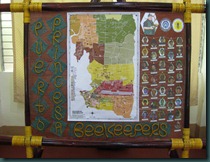
Luckily almost all Filipinos can speak English so communication was no problem. They told me that there are currently 44 local beekeepers, most with only one or two colonies. They purchase queens from Kona Queen in Hawaii as well as Australia. Some of the beekeepers are keeping Apis Cerana. There is also Apis Dorsata, but they told me that they are too aggressive to be managed. They are using Apistan for mite control and it's still working for them. They told me they have a problem with bee-eating birds.
One of the pictures is a poster showing all the local beekeepers, their locations on the map, and at the top is a picture of the mayor of Puerto Princesa, Edward Hagedorn. They told me their honey crop mainly comes from local wildflowers. They didn't have any honey from the Italian bees available, but I bought a jar of Apis Cerana honey and a jar of Apis Dorsata honey. Each jar was 80 pesos, less than 2 USD.” Thanks Aaron!!
In our lesson today, we’ll look at why it is so important to have more people start keeping bees. Hopefully, this lesson can be printed off and handed out in clubs to encourage others to become beekeepers. Or you could forward this lesson to someone you know who might be on the fence about becoming a beekeeper.
How To Become A Beekeeper
by David Burns, EAS Certified Master Beekeeper

I cannot think of any outdoor activity more enjoyable than observing and enjoying the majestic and industrious honey bee. I further cannot believe that everyone isn’t keeping bees. Those who have joined the honorable ranks of being a beekeeper do so for many different reasons. Some keep bees so they can harvest their own home grown honey.
Others keep bees to pollinate their fruit trees, crops and gardens. Many keep bees because they have heard of the decline in honey bee colonies and want to do their part in keeping our honey bees alive and well. There are many other reasons, but deep down all beekeepers enjoy keeping bees because it is simply enjoyable!
A common thread among our customers who are becoming beekeepers for the very first time is that they now have time and a place to keep bees. Many say their dad or grandpa kept a few hives and they were always intrigued with bees and would like to try it for themselves.

If you’ve ever considered keeping honey bees, good for you. It is so important that we understand the essential and significant role honey bees play in our world. Honey bees pollinate 1/3 of all the food we eat. Apples, almonds, melons and even the crops that cattle eat to produce our beef and milk all tie into the pollination of the honey bee. And this is just scratching the surface.
We are here to help you take the step to becoming a beekeeper! I’m a EAS certified master beekeeper and when you buy your equipment and bees from us, I’ll give you my personal cell phone number so you can call me anytime you have a question about your bees.
Just about anyone can keep bees, from the young to the old, from the University entomologist to the stay at home mom. Even the white house has a hive.
Yes, you can be a beekeeper. All you need is a beehive, some protective clothing, a few tools and some bees. You don’t have to know everything about bees to get started. After all, most colonies are pretty forgiving, and experience continues to be the best teacher.
Let me give you a few recommendations in the checklist below so you can become a successful beekeeper in the spring of 2011:
1) LEARN ABOUT BEEKEEPING through online lessons such as the ones you see on our site, or take a class. Beekeeping classes are springing up all over the country. We offer classes almost monthly here at our apiary.

2) DECIDE HOW MANY HIVES you want to start out with. Of course you can start with only one if you have a tight budget. However, most everyone would recommend starting with 2-3 hives. Why? If you only start with one, and it dies or flies away, then you do not have any bees. But with two or more hives you can always equalize your hives by sharing frames of brood or bees.
If you lose a queen or a whole hive, you can make a second hive called a split, or you can even move a frame of eggs over from the strong hive into a queenless hive and let them raise their own queen. You will also be able to harvest more products from the hive such as honey, pollen, royal jelly, propolis and wax. Once you put on your suit and light your smoker, it really doesn’t take much longer to inspect multiple hives.

3) PURCHASE YOUR BEES AND EQUIPMENT at the right time of the year. You should purchase your equipment between September through February. You can purchase your hives later than February, but you might find a longer wait time as this is the busy season for production. Purchase your protective clothing and tools at this time as well.

Purchase your bees between November and March. You can try to see if packages of bees are left after March, and it is possible, but we completely sold out last year on March 1st. If you live close enough, you can pick up your bees at our honey bee farm, but if not we’ll be happy to ship the bees to you either through USPS or UPS.
OLD EQUIPMENT VS. NEW EQUIPMENT

Many people try to save a few bucks and climb up in someone’s old barn loft to resurrect some old beekeeping equipment. This can work, but the risk of disease could cause you to lose your colony. Some diseases can live and remain dormant in old boxes for nearly 80 years.
We would love to be your bee equipment supplier. Your purchases from us will help us continue our beekeeping research, provide these free online lessons and pay our bills. Thank you in advance. We carry a full line of beekeeping supplies and we manufacture our own hives including 5-frame, 8-frame and 10-frame equipment.
DO NOT WAIT UNTIL APRIL OR MAY TO MAKE YOUR PURCHASES. It could be too late. Every year so many people call in May and June once it’s too late. So follow the time table above.
4) CHOOSE YOUR LOCATION to place your hives. Depending on where you live you may want to see if there are restrictions to keeping hives. This is usually only the case if you live in a town or city. However, most city ordinances allow for beekeeping, but you might check first.
If you find that you cannot keep bees where you live, remember there many places in the country where people would be more than glad for you to keep your bees on their property. Just remember not to place your bees too far from where you live or the long distance commute could keep you from enjoying your bees as often as you’d like.
Hives do well in partial shade, but because of various pests such as small hive beetle, ants and mice, it helps to keep hives in complete sun. However, when this is not possible, some shade is fine.
FACE WHICH DIRECTION? Hives can actually face any direction. Generally, facing them East or Southeast allows for early morning sunlight to get the hive out working early. Another consideration is the bees’ flight path. When you’re placing your hive, consider what might be in the hive’s flight path as they leave the hive. Do not place them near your clothes line or next to a walkway. They will stain your clothes and bump into people if they are too close to common walkways.

5) WHAT ABOUT YOUR NEIGHBOURS? There are several steps you can take so that your bees are liked by your neighbors. If your neighbors are close, keep plenty of water around for your bees to prevent them from looking for water in your neighbor’s kiddy pool. Bird baths make great bee waterers. If your neighbors are real close, you might consider giving them a jar of honey each year so they can see first hand how sweet bees are.
Try not to work your bees when your neighbors are having an outing or outdoor party. Always maintain a gentle line of bees.

6) JOIN A LOCAL BEE CLUB AND STATE ORGANIZATION. Most areas have state associations that are made up of smaller beekeeping clubs throughout the state. These are great opportunities to learn, build up your beekeeping confidence and meet other beekeepers. I realize that many beekeepers are very independent or are so busy we don’t have time to join a club. But recently a local park district called a pest control company to kill a large hive in a tree. The hive was full of honey, so once the colony was dead and full of poison, nearby hives quickly robbed the poisoned honey and took it back to local beekeepers’ hives, killing those hives as a result. Our club quickly became involved by educating how bad this was, and how beekeepers are more than willing to remove hives. And our club was instrumental in helping one beekeeper receive compensation for his dead hives from the pest control company.
Our state association (Illinois) recently lobbied and had bottling honey removed from the oversight of the public health department. Now beekeepers are free to bottle and sell their own honey without the same restrictions imposed upon restaurants. This was hard work and took the “muscle” of a state association of beekeepers to get the attention of politicians.
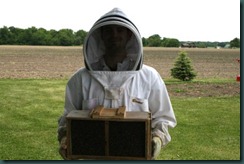
7) PROTECTIVE CLOTHING & TOOLS. There are basically three levels of protective clothing: A complete suit with a built in hood which covers every part of your body, a jacket with a built in hood which protects you from the waist up, and a hat and veil that merely protects your face and head. Rarely do I have to wear a suit. Mostly I’ve learned to work my bees with a hat and veil, and sometimes no protective clothing at all. I have a complete lesson on how to work bees to avoid stings.
CHECK OUT LESSON 21
If you are really worried about being stung, start with a complete suit and gloves. As you build your confidence you can slowly reduce the amount of protective clothing until you finally are wearing a hat and veil and no gloves.

What about gloves? I respect those who have to wear gloves. But, I believe if you keep the right tempered bees, which you should, you should develop your skills to the point where you do not wear gloves. I do not wear gloves and enjoy working my bees with my hands. My bees seem to respect that and I kill less bees.

TOOLS. Two tools are needed to keep bees. A hive tool and a smoker. Do not get caught up in specially designed smokers and hive tools. An inexpensive smoker works just as well, and usually just as long as an expensive one.
Smoker fuel can be anything you have handy that produces non-toxic cool smoke, such as clean cotton rags, burlap, some types of twine, pine needles, dry grass cuttings, mulch, tree bark and cardboard. All of these fuels burn differently, so find the one that you prefer. I have a complete lesson on using your smoker correctly.
Click Here
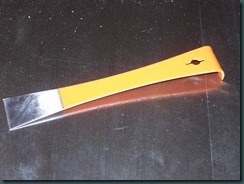
There are various types of hive tools but the traditional hive tool will be all you really need. I prefer using a stainless steel hive tool because if you drop it in the grass and can’t find it until next spring, it will still look the same. A regular steel hive tool will rust quickly, even if painted. Stainless steel hive tools are hard to find, but we sell them.
Click here
Like any hobby there is a ton of various gadgets to buy and some are fun and enjoyable and helpful. But your basic tools are the smoker and hive tool.
These are some of the basics you need to know to start keeping bees in 6 or 7 months. So now is the time to begin learning, purchasing your equipment and bees and deciding on your location. Maybe you are looking for something to occupy your time through the winter. Now you can study beekeeping and be prepared when spring arrives. Maybe you need a hobby, something to keep your mind alert or maybe you would benefit from joining a group of people and interacting more with others. Beekeeping is just right.
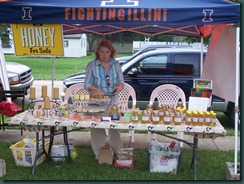
Finally, Sheri and I are here to help you start keeping bees. We are both beekeepers and are available to answer your questions and personally mentor you when you purchase your bees and beekeeping equipment from us.
Thanks for joining us today, and here’s our contact information:
PHONE: 217-427-2678
EMAIL:
david@honeybeesonline.com
WEBSITE:
http://www.honeybeesonline.com/
Our mailing address:
Long Lane Honey Bee Farms
14556 N 1020 E. Rd
Fairmount, IL 61841
Until next time, remember to Bee-Have yourself!
David & Sheri Burns

 My first piece of equipment is a funny round shaped item. A fellow beekeeper donated a large amount of equipment and this was in the mix. It puzzled me when I first saw it. I spent a few minutes wondering if it was part of a larger item or not. What do you think it is? It was purchased from a Canadian vendor at a bee conference. Look at the photo and try to guess.
 Our second item should be easier for most beekeepers to identify. Take a look. Do you know what it is? Looks like a hair pick. It' is actually a capping scratcher. Some beekeepers use this tool to open up cells on sealed honey comb. Others use it in places where the heated knife did not cut open all the comb cappings. This stiff pick will open up all the sealed honey comb for extraction.
 Here’s a harder one. What is this? It’s orange and has lots of holes that hold little cups. Any idea? It is a queen cell protector used in shipping queen cells. Almost ripe queen cells are placed in the small cups and the plastic cups are then placed in the orange holder. The bar is then placed in a shipping box with air vents, bees, water and sugar to care for the cells during shipment.
 What in the world is this? Have you ever seen anything like it before. Can’t believe it would be used in a bee hive? It is. In fact, many beekeepers like these a lot. Do you know what it is?
 Here’s a picture of the bottom and you can see how the bees can easily walk into the groove and out of the red conicals. Keep in mind that the proper way to place this on the hive is with the red conicals down closest to the brood area.
 Put on your thinking caps for this one. What do you think this piece of metal could be? Notice it is L shaped and has holes in it. It is not a frame rest. Ready for the answer? It is a mouse guard. You place it in the entrance of a hive and the bees can fly out and in through the holes but not mice.
 Next item please. Look at this. All those little rails. What do you think about this piece of equipment. Some beekeepers love them. Some claim it prevents swarming. It’s called a slatted bottom rack or a slatted rack. It fits on the top of a bottom board just below the bottom deep hive body. Carl Killion used a similar idea to allow space for bees and extra ventilation. C. C. Miller believed in the idea but he simply made 2” bottom boards but found that the
 bees would build comb on the bottom of the frames to fill the extra space provided. But with a false bottom, the bees are tricked no to build comb.
 For our next strange and unusual item we have a metal item with a handle. If you’re good in the kitchen you may want to pick this up and use it like a cookie cutter. You are close, but it’s not a cookie cutter. Instead it is used to cut comb honey. It is sized just right to cut comb to fit into the plastic provided containers. It’s a comb cutter. Remember if you are going to make comb, use the then rib comb foundation or no foundation at all. Even most wax foundation has embedded wire. This will not be tasty for your customers to bit into a wire.
 Here’s one that is sure to stump the biggest beekeeping know-it-all. What is this? Looks confusing doesn’t it. Complicated. Hmmm… Do you know what it is?
 You will not believe how it works. What I’m about to tell you is unbelievable, but it is true and tested. Bees would not be able to be NASCAR drivers because they don’t like to go left when faced with a wall. I’m not kidding. The way this escape works is that bees will easily walk out by taking right turns, but will not go back in through the openings. It is another way to clear out a super of all bees before taking it off. Amazing! Bees are amazing aren’t they. Place it on the hive hive with the screen facing the brood area.
 My last item looks a lot like a regular deep hive body. But notice some things are different. There are three sections to this deep hive body. Why would a deep hive body have three sections? We started making these last year and it continues to be a popular item. It is a deep hive body that has been converted into three sections to either be a queen mansion where you can raise three queens in one box or you can have 3 separate 3 frame nucs in one box.
 Take a look at the inside. Notice each section is completely sealed off from the other so the queens and bees cannot make contact. Their entrances are unique to their compartment around the sides and back so that each section has its own entrance. Also, it has a screen bottom board and this is important for small nucs in the summer heat.


