Showing posts with label Long Lane Honey Bee Farms. Show all posts

Friday, January 7, 2011

LESSON 91: Best Management Practices For Overwintered Colonies (www.honeybeesonline.com)

DavidSheriNewWe are David & Sheri Burns from Long Lane Honey Bee Farms and we are glad you’ve joined us for another lesson in beekeeping.
We are located in central Illinois where it is cold and snowy and the bees can’t wait until a nice warm day and neither can we.
I was going to jump into some lessons on Top Bar Hives, but I’m going to save that after this series of lessons.
There is plenty of information in the beekeeping literature to help beginners. But there is far less information that goes into great detail about what to do with your bees the second year as they come out of winter. In today’s lesson and over the course of the next few blogs I’ll address what you should be doing with your bees as winter draws to a close and spring makes its usual grand entry.

LESSON 91: BEST MANAGEMENT PRACTICES FOR OVERWINTERED COLONIES
There is plenty of information in the beekeeping literature to help beginners. But there is far less information that goes into great detail about what to do with your bees the second year as they come out of winter. I'll take the next few articles to address what you should be doing with your bees as winter draws to a close and spring makes its usual grand entry. The first thing you should do is celebrate and rejoice that your bees made it through a long winter. After you've had sufficient time to celebrate, you'll need to get serious about helping your bees have a great season. I've made an acronym to make it easier to remember how to prepare your bees for their second seasons:
Stimulate For Rapid Foraging Force Prevent Swarms Rotate Hive Bodies Inspect The Productivity Of The Queen New Queen Give 1:1 Sugar Water & Pollen Patties
In this lesson, we'll look at how to stimulate your late winter bees for a rapid buildup of the foraging force. A colony that is very populated with foragers will be able to gather more pollen, nectar, propolis and water. This alone will make a much healthier colony. And if you desire to increase your honey yields per hive, increasing your foraging force is essential.
How can you help your colony build up a huge foraging force to gather an abundance of resources? To start, we have to do the math. We have to work backwards to arrive at our target stimulation date. Let's randomly choose May 1st as the day we want our full foraging force.
By foraging force I mean a maximum number of worker bees of foraging age. Since worker bees take 21 days to emerge and another 21 days until they take their first foraging flight, that gives us a total of 42 days. So we want our queen to be laying at her maximum 42 days prior to May 1st, which would be March 20th. But, we'll need to stimulate the queen about a week before March 20th so that she can be at her maximum laying on March 20th. Bingo, March 13th is our date that we will want to manipulate the colony to ensure we have our full foraging force for May 1st.
To stimulate our queen to lay at her maximum we would normally want a natural, heavy nectar flow. That might be the case the further south you live. In central Illinois I will have to introduce pollen substitute patties and a 1:1 sugar feedings to stimulate my queen to start laying prior to the natural nectar flow. And once I start, I cannot stop, because the colony is counting on my pollen and sugar water to feed to their larva. Even the adult bees feeding the larva need this same food so the glands in their head can produce the much need brood food.
Of course you'll need to be sure you have a prolific queen and you'll be able to determine this once the temperature warms up above 65 (F) and you can lift out brood frames and inspect for eggs and sealed brood.
…next time we’ll look at Spring Swarm Prevention
We hope you are finding our lessons very helpful and if you can, please purchase all your beekeeping needs from us! We sell packages of bees, 4 frame nucs, raise and sell our own queens and we manufacture beekeeping equipment as well. Make us your one stop shop for all your beekeeping needs. Thank you in advance.
HERE’S OUR CONTACT INFORMATION:
PHONE: 217-427-2678
EMAIL:
david@honeybeesonline.com
WEB: www.honeybeesonline.com
TWITTER: http://twitter.com/longlanehoney

See you next time,
David & Sheri Burns
Long Lane Honey Bee Farms
14556 N. 1020 E. Rd
Fairmount, IL 61841

Wednesday, September 15, 2010

Lesson 82: How To Become A Beekeeper

BodyScan
Hi, we are David & Sheri Burns from Long Lane Honey Bee Farms in central Illinois. We love keeping bees. Thanks for visiting our blog and we hope you’ll read what we have to say today about how to become a beekeeper.

I never really know who will be reading our beekeeping lessons. You might be an experienced beekeeper, having kept bees for years. Or you may have only kept bees for a year or two. Maybe you are like so many others who are interested in keeping bees in the spring of 2011. We try to write our articles to reach each group each time. So today, I want to walk you through the process of how to keep bees. Those of you who are already keeping bees will still learn something, I’ll throw in some goodies for you, too.
podcast Before we start today’s lesson, let me tell you what we’ve been doing here at Long Lane Honey Bee Farms. In addition to producing our own beekeeping podcast, I am now hosting a nationwide beekeeping podcast called “Save The Bees.” This podcast has existed for several years through the Wild Life Pro Network and I just recently became the new host. What’s so fun about this podcast is that it’s recorded LIVE on the internet. You can actually call in to the live recording and ask me questions or just shoot the breeze about bees. It’s low-key, home spun fun. So call in to make the show more interesting! You can call in with any question you’d like to ask about bees. These broadcasts are recorded live each third Thursday of the month. Our next one is coming up tonight September 16 at 7pm Central Time. I will be talking about equipment used in beekeeping, specifically about specialized equipment, like queen castles, slatted bottom racks, cloake boards, nucs, smokers, hive tools and more!


ilqueen Sheri and I have had such a wonderful summer! The weather has been beautiful now that we’re getting into the Fall. Summer has been all about queen rearing. We’re still sending out as many queens as we can produce each week. We have had a wonderful year for raising queens, and our queens have been mating fast and completely, resulting in our usual bounty of outstanding queens. I have a particular breeding technique that has stayed consistent over the last few year to produce a very nice queen that we called the Illinois Pioneer Queen. In his book, “50 Years Among The Bees,” C.C. Miller wrote, “The queen being the very soul of the colony, I hardly consider any pains too great that will give better queens.”

Bee Business 001 In addition to raising queens, summer and early fall is always a time for us to prepare for the next bee season. We’ve stayed busy repairing, replacing and improving equipment and processes for the upcoming year. When the bee season is in full operation, there is no spare time to make these repairs and improvements. We have about another 45 days left to have everything in place for another exciting 2011 honey bee season and we are excited. Already beekeepers are scrambling to purchase their packages and nucs in advance.

That’s why I want to share in this lesson how to get started in beekeeping. It continues to be our passion to help encourage more and more people to start keeping bees. We believe with more practical information we can help others take the step to keep bees.

lesson824 A friend of mine visited the island of Palawan in the Philippines where he took a turn off the beaten path on a rented motorbike and journeyed through rivers and between mountains to arrive at a unique bee farm. My friend Aaron Bergman tells the rest of the story.


Lesson822

“Finally we found the bee farm. The "bee farm" is a demonstration facility sponsored by the Palawan city government for the education of local beekeepers.



Lesson821 It's on the bottom side of a mountain on a dirt path. As you see in the pictures, they have 6 hives. They have a small extractor, informational posters, and sell some local honey there. There were 3 friendly ladies happy to show us around when we arrived.



Lesson823 Luckily almost all Filipinos can speak English so communication was no problem. They told me that there are currently 44 local beekeepers, most with only one or two colonies. They purchase queens from Kona Queen in Hawaii as well as Australia. Some of the beekeepers are keeping Apis Cerana. There is also Apis Dorsata, but they told me that they are too aggressive to be managed. They are using Apistan for mite control and it's still working for them. They told me they have a problem with bee-eating birds.

One of the pictures is a poster showing all the local beekeepers, their locations on the map, and at the top is a picture of the mayor of Puerto Princesa, Edward Hagedorn. They told me their honey crop mainly comes from local wildflowers. They didn't have any honey from the Italian bees available, but I bought a jar of Apis Cerana honey and a jar of Apis Dorsata honey. Each jar was 80 pesos, less than 2 USD.” Thanks Aaron!!

In our lesson today, we’ll look at why it is so important to have more people start keeping bees. Hopefully, this lesson can be printed off and handed out in clubs to encourage others to become beekeepers. Or you could forward this lesson to someone you know who might be on the fence about becoming a beekeeper.

How To Become A Beekeeper
by David Burns, EAS Certified Master Beekeeper
lesson56b I cannot think of any outdoor activity more enjoyable than observing and enjoying the majestic and industrious honey bee. I further cannot believe that everyone isn’t keeping bees. Those who have joined the honorable ranks of being a beekeeper do so for many different reasons. Some keep bees so they can harvest their own home grown honey.

Others keep bees to pollinate their fruit trees, crops and gardens. Many keep bees because they have heard of the decline in honey bee colonies and want to do their part in keeping our honey bees alive and well. There are many other reasons, but deep down all beekeepers enjoy keeping bees because it is simply enjoyable!

A common thread among our customers who are becoming beekeepers for the very first time is that they now have time and a place to keep bees. Many say their dad or grandpa kept a few hives and they were always intrigued with bees and would like to try it for themselves.

L655 If you’ve ever considered keeping honey bees, good for you. It is so important that we understand the essential and significant role honey bees play in our world. Honey bees pollinate 1/3 of all the food we eat. Apples, almonds, melons and even the crops that cattle eat to produce our beef and milk all tie into the pollination of the honey bee. And this is just scratching the surface.

We are here to help you take the step to becoming a beekeeper!  I’m a EAS certified master beekeeper and when you buy your equipment and bees from us, I’ll give you my personal cell phone number so you can call me anytime you have a question about your bees.

Just about anyone can keep bees, from the young to the old, from the University entomologist to the stay at home mom. Even the white house has a hive.

Yes, you can be a beekeeper. All you need is a beehive, some protective clothing, a few tools and some bees. You don’t have to know everything about bees to get started. After all, most colonies are pretty forgiving, and experience continues to be the best teacher.

Let me give you a few recommendations in the checklist below so you can become a successful beekeeper in the spring of 2011:

1)  LEARN ABOUT BEEKEEPING through online lessons such as the ones you see on our site, or take a class. Beekeeping classes are springing up all over the country. We offer classes almost monthly here at our apiary.

Florida 004 2) DECIDE HOW MANY HIVES you want to start out with. Of course you can start with only one if you have a tight budget. However, most everyone would recommend starting with 2-3 hives. Why?  If you only start with one, and it dies or flies away, then you do not have any bees. But with two or more hives you can always equalize your hives by sharing frames of brood or bees.

If you lose a queen or a whole hive, you can make a second hive called a split, or you can even move a frame of eggs over from the strong hive into a queenless hive and let them raise their own queen. You will also be able to harvest more products from the hive such as honey, pollen, royal jelly, propolis and wax. Once you put on your suit and light your smoker, it really doesn’t take much longer to inspect multiple hives.

new hive 3) PURCHASE YOUR BEES AND EQUIPMENT at the right time of the year. You should purchase your equipment between September through February. You can purchase your hives later than February, but you might find a longer wait time as this is the busy season for production. Purchase your protective clothing and tools at this time as well.


Bees 023 Purchase your bees between November and March. You can try to see if packages of bees are left after March, and it is possible, but we completely sold out last year on March 1st. If you live close enough, you can pick up your bees at our honey bee farm, but if not we’ll be happy to ship the bees to you either through USPS or UPS.


OLD EQUIPMENT VS. NEW EQUIPMENT
super1 Many people try to save a few bucks and climb up in someone’s old barn loft to resurrect some old beekeeping equipment. This can work, but the risk of disease could cause you to lose your colony. Some diseases can live and remain dormant in old boxes for nearly 80 years.

We would love to be your bee equipment supplier. Your purchases from us will help us continue our beekeeping research, provide these free online lessons and pay our bills. Thank you in advance. We carry a full line of beekeeping supplies and we manufacture our own hives including 5-frame, 8-frame and 10-frame equipment.

DO NOT WAIT UNTIL APRIL OR MAY TO MAKE YOUR PURCHASES. It could be too late. Every year so many people call in May and June once it’s too late. So follow the time table above.
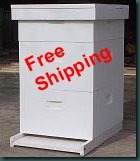
beehive

4) CHOOSE YOUR LOCATION to place your hives. Depending on where you live you may want to see if there are restrictions to keeping hives. This is usually only the case if you live in a town or city. However, most city ordinances allow for beekeeping, but you might check first.

If you find that you cannot keep bees where you live, remember there many places in the country where people would be more than glad for you to keep your bees on their property. Just remember not to place your bees too far from where you live or the long distance commute could keep you from enjoying your bees as often as you’d like.

Hives do well in partial shade, but because of various pests such as small hive beetle, ants and mice, it helps to keep hives in complete sun. However, when this is not possible, some shade is fine.

FACE WHICH DIRECTION? Hives can actually face any direction. Generally, facing them East or Southeast allows for early morning sunlight to get the hive out working early. Another consideration is the bees’ flight path. When you’re placing your hive, consider what might be in the hive’s flight path as they leave the hive. Do not place them near your clothes line or next to a walkway. They will stain your clothes and bump into people if they are too close to common walkways.

Florida Hives 004 5) WHAT ABOUT YOUR NEIGHBOURS? There are several steps you can take so that your bees are liked by your neighbors. If your neighbors are close, keep plenty of water around for your bees to prevent them from looking for water in your neighbor’s kiddy pool. Bird baths make great bee waterers. If your neighbors are real close, you might consider giving them a jar of honey each year so they can see first hand how sweet bees are.
Try not to work your bees when your neighbors are having an outing or outdoor party. Always maintain a gentle line of bees.

August 5, 2009 EAS 029 6) JOIN A LOCAL BEE CLUB AND STATE ORGANIZATION.  Most areas have state associations that are made up of smaller beekeeping clubs throughout the state. These are great opportunities to learn, build up your beekeeping confidence and meet other beekeepers. I realize that many beekeepers are very independent or are so busy we don’t have time to join a club. But recently a local park district called a pest control company to kill a large hive in a tree. The hive was full of honey, so once the colony was dead and full of poison, nearby hives quickly robbed the poisoned honey and took it back to local beekeepers’ hives, killing those hives as a result. Our club quickly became involved by educating how bad this was, and how beekeepers are more than willing to remove hives. And our club was instrumental in helping one beekeeper receive compensation for his dead hives from the pest control company.

Our state association (Illinois) recently lobbied and had bottling honey removed from the oversight of the public health department. Now beekeepers are free to bottle and sell their own honey without the same restrictions imposed upon restaurants. This was hard work and took the “muscle” of a state association of beekeepers to get the attention of politicians.
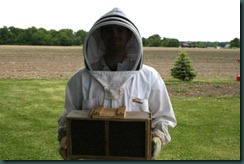


suit 7) PROTECTIVE CLOTHING & TOOLS. There are basically three levels of protective clothing: A complete suit with a built in hood which covers every part of your body, a jacket with a built in hood which protects you from the waist up, and a hat and veil that merely protects your face and head. Rarely do I have to wear a suit. Mostly I’ve learned to work my bees with a hat and veil, and sometimes no protective clothing at all. I have a complete lesson on how to work bees to avoid stings. CHECK OUT LESSON 21

If you are really worried about being stung, start with a complete suit and gloves. As you build your confidence you can slowly reduce the amount of protective clothing until you finally are wearing a hat and veil and no gloves.
Lesson74i What about gloves? I respect those who have to wear gloves. But, I believe if you keep the right tempered bees, which you should, you should develop your skills to the point where you do not wear gloves. I do not wear gloves and enjoy working my bees with my hands. My bees seem to respect that and I kill less bees.


 New Products 009
 TOOLS. Two tools are needed to keep bees. A hive tool and a smoker. Do not get caught up in specially designed smokers and hive tools. An inexpensive smoker works just as well, and usually just as long as an expensive one.

Smoker fuel can be anything you have handy that produces non-toxic cool smoke, such as clean cotton rags, burlap, some types of twine, pine needles, dry grass cuttings, mulch, tree bark and cardboard. All of these fuels burn differently, so find the one that you prefer. I have a complete lesson on using your smoker correctly. Click Here
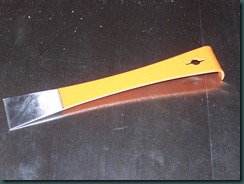
New Hive Jan 07 Parts 003There are various types of hive tools but the traditional hive tool will be all you really need. I prefer using a stainless steel hive tool because if you drop it in the grass and can’t find it until next spring, it will still look the same. A regular steel hive tool will rust quickly, even if painted. Stainless steel hive tools are hard to find, but we sell them. Click here

Like any hobby there is a ton of various gadgets to buy and some are fun and enjoyable and helpful. But your basic tools are the smoker and hive tool.

These are some of the basics you need to know to start keeping bees in 6 or 7 months. So now is the time to begin learning, purchasing your equipment and bees and deciding on your location. Maybe you are looking for something to occupy your time through the winter. Now you can study beekeeping and be prepared when spring arrives. Maybe you need a hobby, something to keep your mind alert or maybe you would benefit from joining a group of people and interacting more with others. Beekeeping is just right.
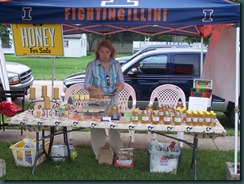
Honey Stand 002 Finally, Sheri and I are here to help you start keeping bees. We are both beekeepers and are available to answer your questions and personally mentor you when you purchase your bees and beekeeping equipment from us.
Thanks for joining us today, and here’s our contact information:
PHONE: 217-427-2678
EMAIL: david@honeybeesonline.com
WEBSITE: http://www.honeybeesonline.com/

Our mailing address:
Long Lane Honey Bee Farms
14556 N 1020 E. Rd
Fairmount, IL 61841
Until next time, remember to Bee-Have yourself!

David & Sheri Burns

davidsheri

Thursday, October 4, 2007

Lesson Eight: Equipment Needed To Keep Bees

As you prepare to keep bees, several tools will make it much easier. Of course, you could do without the tools and probably get by, but these tools have become the best friend to the beekeeper.

Let me start by sharing what I feel is ABSOLUTELY essential, and then I'll talk about extras that just make the job easier.

ESSENTIAL TOOLS & EQUIPMENT:

1) Hive Tool
2) Smoker
3) Hat & Veil

THE HIVE TOOL

When I first started keeping bees I really didn't understand what the big deal was regarding the hive tool. Beekeepers talked about it like a carpenter talks about a hammer or tape measure. Now, nearly a decade and a half later, my hive tool is my best friend in the apiary.

By the way, APIARY is a fancy word for where you keep your bees. It is pronounced like: a-pea-airy. Our actual business is called Long Lane Apiary, but since many people aren't familiar with what an apiary is, we go by Long Lane Honey Bee Farms. Back to the hive tool.

A hive tool is between 9-10 inches long. I prefer the 9" hive tool. The 10" tool just seems too long and clumsy for me. It looks at first like a small carpenter's pry bar. But, it is a hive tool. You will not find them at the local hardware store or at the local home supply center. You may think you don't need one or that another shop tool will work, but take my advice, get a hive tool! One of my workers preferred to use a screw driver until I realized he was tearing up the hives. You'd better get two or three hive tools if you are like me, and lose them so quickly.

Here's what the hive tool looks like:


The shinny end is mostly used for separating the hive bodies and supers. Bees gather propolis and use it as glue to keep their boxes tightly together. When inspecting your hive, you will need to use this hive tool to separate stuck-together pieces.

The hooked end of the hive tool is used mostly for scraping off the propolis. It is important to scrap off as much excess propolis as you can to prevent build up and to keep a cleaner hive.
Notice the small hole in the hive tool. This is for pulling out nails if needed. Of course, you'll find many more helpful uses for your hive tool, but these are everyday uses.

Next, THE SMOKER


I would not want to keep bees without a smoker. Some brag that they don't smoke their bees, but, to me, this is not practical. Okay, first, why blow smoke in a hive? We do it to calm the bees. The idea is that smoke causes the bees to gorge themselves on honey, which makes them less likely and almost unable to sting. For one, they are busy eating, and they become so full, they are unable to bend and sting. It really does work! Trust me, this is not a tool you'll want to be without.

We'll cover how to enter a hive in a future lesson, but for now, let me give a brief explanation on how to smoke your hive. Use pine needles, burlap or corn cobs as fuel for your smoker. Of course, you can use other items such as wood pellets, large saw dust, dried grass or mulch too. Make sure that whatever you burn has not been treated with chemicals as this could kill your bees. When approaching your hive to open it, blow a couple of puffs of smoke into the front opening and wait at least 3 minutes. Then, remove the top cover and gently blow a few puffs of smoke into the entrance hole on the inner cover. As you begin removing the inner cover, blow a few puffs of smoke under the inner cover and between the frames as you lift off the inner cover. It is a good idea to wait a few minutes after blowing smoke into the hive as this gives the bees time to eat and relax.

Smokers are hot! They are metal, and lots of beekeepers have a perfect impression of a smoker bottom melted into their truck bed liners. I have one! I use an army ammo can now to put my smoker in when I am finished using it. It prevents fires, and prevents me from burning up something like my truck.

When lighting your smoker, do not pack it full, then try to light it. Load it lightly, and add fuel as it starts burning good. Be careful that the flame coming out of the opened smoker does not burn your hand or burn a nice size hole in your protective gear (experience speaking here)!!

Also, do not squeeze the smoker billow hard when smoking your hive. Gentle!! If you squeeze too hard, you may send fire into your hive. This is not good for the bees, and could set your entire hive on fire. Smoke only please!

Smoke does not hurt the bees. And you'll get good enough to know how much to use after a few tries. The smoker is good too, in case you get stung, you should blow smoke around the area of the sting. Bees are attracted to the scent of a stinger as a target, so by smoking the sting area, you neutralize this scent. Don't waste your money on expensive smokers! You're only blowing smoke!! A $30 smoker is all you need and works well.

HAT & VEIL
Okay, I admit, I have worked my bees without a hat or veil. And I also admit I have been stung on the face too. That's one place I don't like to get stung. And you could lose your sight if stung in the eye ball. And, if you get stung on the lip, you will look like Donald Duck for 2 days! Wear a hat and veil at all times.

Hats are usually plastic and are modeled after the popular pith hat. I like real pith hats from Vietnam, so I use real ones. They are a few bucks more than a cheap plastic one, but it is just my preference. Here at LONG LANE HONEY BEE FARMS we offer both plastic and real pith hats. Here's a picture of what we sell in our start up kits.


I wear my pith hat all day. When I'm not working bees, I remove the veil. The pith hat is a great sun blocker. Here I am after working my hives, cooling off in the front swing with my pith hat on.

Both the plastic and real pith hats provide total protection from the bees, not to mention they keep ticks out of your hair if your hives are beneath some trees. (Hives should be placed in direct sunlight at all times!)

An occasional stray bee can sneak in beneath your veil. I wear my veil without tying it off, so I do find a bee inside with me maybe twice a year. What do you do then? First, you do not panic. She is not in there to kill you. She wandered in by accident. I advise those who help me to never take off their veil in the field. The first instinct is to rip off the hat and veil to get the bee out. However, that sudden movement with a now exposed face and head in the middle of an apiary is not a good combination. Here's what I do. I face the sun, tilt my head back. She will move toward the sun on my inside veil, and I simply squeeze her between my fingers. The veil is flexible enough that I usually squeeze from the outside, but you can always slip your hand under your veil inside and squeeze her.

OTHER NONE ESSENTIAL TOOLS

Spray bottle, frame puller, frame holders, gloves, boots, etc. I don't like to wear gloves. I get stung more with gloves than without, because a bee will innocently climb up into my glove and I'll not know it and pinch her enough to get stung. Without gloves, I can better feel the bee and know where they are so as not to pinch one. If I do wear gloves, I use a very thin leather glove. I prefer pig skin gloves. A stinger can get through, but it does provide a lot of protection.

Again, the plan is to work your bees in such a way as to never get stung. I'll cover that in a future lesson too.

Please tell your friends about these online FREE beekeeping lessons. They can easily subscribe and have these emailed to their inbox. Also, if you do subscribe, be sure and allow the pictures
to download in your mail program. Some security is set to disable picture downloads in Email. However, in Microsoft Outlook, you can simply RIGHT CLICK on where a picture is NOT showing, and tell it to allow the pictures to show.

Wednesday, October 3, 2007

Lesson Seven In Beekeeping: How To Install A New Package Of Bees

Here at Long Lane Honey Bee Farms, we are committed to help you be a successful beekeeper. David is a certified master beekeeper. You may consider joining us for one of David's beekeeping classes. Click here to see our upcoming classes.

Wouldn't it be nice to have a certified master beekeeper on the other end of the phone or email whenever you had a question. I started my new membership program and members are loving it. Beekeepers around the country have jumped on board. We still have room for more.

MEMBERS ONLY ACCESS TO:
-  1 New Instructional Videos Each Week.
-  My Personal Email and Cell Phone. You'll be a phone call away from a 
   certified master beekeeper.
   pictures of what concerns you and I'll advise you on the next step to take.

-  Picture/Video Evaluation Of Your Hive When Needed. Send me a video and/or
-  Weekly Tips Of What You Should Be Doing With Your Bees.
-  Your Choice Of 1(one) Item From Our Membership Gifts List
   Below: (After 6 months subscribed)
   - 1 Free class at our location per year (Does NOT Include Bee Institute)
   - 1 Free Winter-Bee-Kind
   - 1 Free Burns Bees Feeding System


We are a family business, a turn key beekeeping operation. We manufacture the hives ourselves, hand built for you, and we provide you with the bees and all the equipment you need. We appreciate your business and you'll find we won't treat you like a customer, but like a friend. And when you purchase your equipment from us, we're here for you. You can call us with your questions. We won't leave you hanging wondering what to do. Click here to see our complete online beekeeping store. Contact us today, and get started in beekeeping: 217-427-2678

To prepare for the arrival of your bees, you will want to purchase a new spray bottle and mix sugar water, one part water to one part sugar. Do not use old spray bottles that have been used with other chemicals as this could make the bees sick or kill them.
 Spray an ample supply of sugar water through the screen. Use the mist setting, not the stream. You CANNOT over spray your bees. They have been traveling for several days, and no doubt have been hot and not able to eat much, so the sugar water will really replenish their energy.

If you are traveling elsewhere with your bees, or after you pick them up from us, try to keep the package in a shaded or dark place in the car or truck. If you use a truck, try to avoid excessive wind damage that may occur if you place your bees in the bed of your truck. If you have to travel a long distance at interstate speed, and the bees are in the bed of your truck, place something around them, protecting them from the wind, while also providing sufficient air flow. Bees must have air to breathe just like us!

Sometimes, the weather might be too wet or cold to install your bees the same day they arrive. In this case, simply keep them in a cool basement or dark room and spray them with sugar water 3-4 times a day. They will usually be fine for a few days if you have to wait. Some dead bees on the bottom of their package is common. An inch or two of dead bees might be a problem, indicating they did not withstand the trip well. Call your supplier and report the findings.

If you see a few bees on the outside of your package, do not panic. It does not usually mean there is a leak. It usually means that a few bees have been clinging to the outside of the package for thousands of miles. But do check to make sure the box is sealed well.

Will the bees in the package sting you? Honeybees can always sting. However, you will find that by spraying them with sugar water, they are very calm. And, since they do not have any brood or honey to protect, they are not trying to defend their hive. Technically they don't have a queen either. Their morale is low, so they are not nearly as aggressive. When I install packages, I do not wear gloves or hat and veil. I would not recommend it to you, because you don't want a bad experience on your first installation, but you will find the bees to be very gentle. Work with confidence!
Now, here's how you can effectively install your bees in your new hive. Choose a good time of the day, when it is sunny, warm and not too windy. Mid to late afternoon works well. Be sure and take all your equipment to where you will install your package. You will need the following items:

1) Spray bottle with sugar water (1:1 ratio, one part water, one part sugar)
2) Hive tool
3) A wood screw (for removing queen cage cork)
4) A comfortable amount of protective clothing

Be sure your new hive equipment is where you want your hive to be. At this point, you will only need your bottom board, 1 deep hive body, 10 frames and foundation, inner and top cover. Remove 4 of the center frames from the new hive body. This is where you will shake your bees into. Spray all 10 frames, both sides, with the 1:1 sugar water mixture. This will attract the bees to the foundation and give them a warm welcome to their new home. Bees love sugar!


Also, before you install your package, you'll want to insert your entrance feeder or our new Burns Bees Feeding System. The BBF System is great for new packages. Comes with lids pre-drilled for your jar of 1:1 sugar water.

Bees need fed when first installed because they are not an operational hive just yet. They have no incoming food. So feed them for a couple of weeks the same mixture of 1:1 sugar water.

After 3-4 days, you can remove it entirely until fall. This step is important because occasionally packages can fly away (Abscond) after you install them. This restriction will help tremendously. While the chance of your new hive flying away is VERY RARE, but the possibility does exists. The reducer will help. They will stay put better than you would think. Do not fear that they are flying away because you see lots of bees flying around. This is normal. They need to stretch and go to the bathroom after traveling so far. Bees do not defecate inside their hive. They are very clean.
Now, spray the package thoroughly on both sides of the screen, front and back. This will calm the bees, keep them well nourished and keep them from flying about so much during the installation process. Remember, you cannot over spray. Be prepared for sticky hands and fingers.

Now, you will want to begin opening your package. Do not be afraid. Millions of bees are not going to rush out at you. Work with confidence and enjoy the activity.
To open the package, first remove the top panel. It is stapled on to the box. Staples are sharp, so don't cut yourself on the staples once the panel is removed. Use your hive tool to pry open the panel. But, be careful with your hive tool. The end is very sharp too, and if the tool should slip, it can poke or cut you.

Once you remove the top panel, NO bees will come out yet. This panel simply holds the feeding container in place as well as the white strap that has the queen cage on the opposite end, inside the package.


The bees may become noisy which is normal. Spray them again if you need to calm them. They are becoming loud not because you are making them mad, but simply because of the the sunlight and air. They are ready to do what bees do. Make a hive and gather nectar. Stay calm and confident!
Now you see the top of the tin can of sugar as well as the white queen cage strap. The queen cage strap is also stapled to the top of the box. Free this strap, but do not let it fall into the package of bees.


Gently tip the package of bees over the new hive, positioning it over the center where the 4 frames have been removed. Slide the sugar tin can out a little so you can get an easier grip on it. Sometimes the can comes out easily, and sometimes it is very tight and has to be wiggled out with considerable effort. It will come out.


Once you are ready, pull the can all the way out. At this point, the bees will have access to the great outdoors, specifically, their new hive. They will be attracted to the beeswax and sugar coated foundation awaiting them. Set the can of sugar water aside, holes facing up so it doesn't leak.
You will need to pull out the queen cage now, prior to shaking the bees or else it will fall into the hive. If it does, no problem. The queen is okay, just remove the cage and place it on top of the hive off to the side from where you'll be pouring your bees.

Now begin shaking your bees out of the package and into the new hive. Shake as hard as you want and you'll start seeing them pour into the new hive. You may also want to firmly strike the side of the package with the palm of your hand to free bees that are hanging on to the screen. However, be sure not to strike a bee when striking the side of the box or you might smash a bee just enough to get stung. Notice in the picture, I take advantage of the remaining sugar water in the tin can by placing if over the entrance feeder. I usually poke a few more holes with a nail so the bees will consume it more quickly. After it is finished, I replace it with a mason jar with holes in the lid.


Now you must install your queen. Slow release method is the best. These are not her bees, and she is not the queen they are used to YET! So, you must let them get to know her before she can roam freely among her new hive. Here's how. The queen cage has a screen on top and through the screen you can identify a white candy substance at one end. This is the end that you will HAVE TO remove the cork. DO NOT REMOVE THE CORK AT THE OPPOSITE END OF THE CANDY. Only remove the cork from the candy end of the cage. A hive tool doesn't work well, but screwing in a small screw then pulling it out works well. Once the cork is out, you will see that the hole is still plugged with the white candy. GOOD! Do not disturb that candy plug. As the bees eat through the candy, they will become familiar with their new queen. Then, once the candy has bee eaten, she will emerge from her cage as queen of the hive and be readily accepted by her new workers. After all, they are ready for a queen themselves!
Once you've removed the cork, you will want to place the cage between the frames in the center of the hives from the top. Notice how I use the pressure of the hive frames to hold the cage between the frames. I hang my queen cage with the candy side down. Some say to hang it with the candy up, in case her attendant bees within her cage die, they do not block her exit. However, bees are good about moving dead bees out of the way, and I want her to exit out onto the foundation.

PLAY CLOSE ATTENTION. YOU MUST REPLACE ALL 10 FRAMES!! If you don't, the bees will quickly make comb in place where your frames should have gone. This will be a mess. And they will attach their comb to your top cover and if you wait long enough, you will not be able to open your hive. SO YOU MUST REPLACE ALL 10 FRAMES before replacing the inner and top cover.
Do not place any other boxes on the hive just yet. You only need the one deep box. Let them draw out the comb, usually 6-8 frames, then you can place your second hive body on top. Once 6-8 frames of your second deep have been drawn out, you can start placing your supers on.

Great Job! You Did It!! Place the package box near the front of the hive because it will still have some bees that you were unable to shake out of it. These will find their way into the hive in a day or two.


Saturday, September 22, 2007

LESSON THREE: Basic Beekeeping: Lesson Three: SUPERS

In lesson one, we took a look at the placement of a hive, the hive stand and the bottom board. Then, in our last lesson, we examined the deep hive body. These lessons can be viewed at anytime by simply scrolling down or back.

Today, let's take a look at the honey super. Some new beekeepers pronounce "super" incorrectly, calling it a "supper", like what you eat at night. It only has one "p", so it is pronounced the same as when you say, "super size it please." Since we have already discussed the two deep hive bodies, sometimes also called deep supers, today we are looking at the supers that are placed above the hive chamber, on top of the deep hive bodies. These are the supers we place on hives with the intent to remove whatever honey the bees store in these supers.

The width (16 1/4") and depth (19 7/8") will be the same for all boxes, including the honey super. The difference with the super is the height. There are three sizes used for honey supers. Beekeepers with strong backs sometimes use the deep size, 9 5/8" in height. A very common size is 6 5/8" in height. This is also called the Illinois super or a medium super. Then there is the small super. It is 5 5/8" tall.

Here's a picture of all three sizes, side by side. As you can see, the only difference is the height, which is very critical, because the greater the height, the larger the frame in height, and the larger the frame, the more honey it can hold. Therefore, a deep super full of honey can weight close to 90 pounds. A medium close to 60 pounds and a small 30-40 pounds.
There are some limitations when using the small super. There is no plastic foundation made for that size super. And, during a heavy nectar flow, you will have to super your hives more frequently. Also, it takes the same amount of time to uncap a small super as it does a deep or medium super. And, you get a lot less honey from a small super for the same amount of work. In an upcoming lesson, we'll discuss when and how to add supers. But for now, we are merely getting familiar with the hive components.

Some beekeepers use only 8 or 9 frames in a honey super, while others use all 10. It does make a difference. Obviously, if you use 9 frames, the comb on each frame will be drawn out wider by the bees, thus making much more space for the honey. It is true that a 9 frame super will usually contain more honey than a 10 frame because all nine frames are larger and can hold a total that exceeds 10 smaller drawn frames. Wider combs are easier to uncap because the comb exceeds past the wooden frame, allowing the uncapping knife to ride along the wooden frame as a guide and uncapping all cells. Sometimes if the frames are not pulled out past the wooden frame edge, the uncapping knife cannot uncap the recessed cells. In our hives some have a total of 9 and some have a total of 10 frames.

To help achieve the 9 frame spacing, a metal frame rest is often used. This frame rest is different from the plain frame rest in that it actually has notches to hold each of the 9 frames, giving a perfect spacing between all 9 frames. Be prepared for a few challenges with 9 frame spacers. First, you cannot slide your frames horizontally. They are held tightly in the notches. There are times when you need to slide your frames. But if you use 9 frame spacers, you will have to lift them straight up and out to move them. Secondly, the various gaps around the metal notching gets pretty gunked up with propolis, giving nice hiding places for wax moth or small hive beetle to hide and lay eggs. If you don't have problems with these pests, then it's not an issue. Notice the build up of propolis in this picture on a 9 frame spacer rail below.
We'll discuss supering a hive in a future lesson, but for now, you can place as many supers on your hive as your bees want to fill up. I typically have at least 2-3 supers on my hives during the Spring and Summer.

Our next lesson will be the two final pieces to the hive, the inner cover and the outer cover. See you then!


Please tell your friends about these online beekeeping lessons. Thanks! Remember, we are beekeepers manufacturing beekeeping equipment for beekeepers, and we currently operate hives located in East Central Illinois We know what you need and what you want! To place an order, feel free to call us at: 217-427-2678.

Thursday, September 20, 2007

LESSON TWO: Basic Hive Components: The Deep Hive Body

Hello, we are David and Sheri Burns  at Long Lane Honey Bee Farms. We are committed to help you be a successful beekeeper. David is a certified master beekeeper. You may consider joining us for one of David's beekeeping classes. Click here to see our upcoming classes.

We are a family business, a turn key beekeeping operation. We manufacture the hives ourselves, hand built for you, and we provide you with the bees and all the equipment you need. We appreciate your business and you'll find we won't treat you like a customer, but like a friend. And when you purchase your equipment from us, we're here for you. You can call us with your questions. We won't leave you hanging wondering what to do. Click here to see our complete online beekeeping store.

In our previous lesson, we learned about the bottom board. As we work our way up from the bottom board, we are ready to examine the details of the next item, what is referred to as the deep hive body. It sometimes is called a deep super, hive body, a deep, and a hive chamber. Unless you live in the deep south where winters are very mild, you will need two deep hive bodies on your hive. This is where your bees will live and raise their young. This is where the queen will lay her eggs for new worker and drone bees. This is where the hive will store their own reserves of honey and pollen, their food source and future winter stores.

The standard and common size for a deep hive body is: 19 7/8" in length, 16 1/4" wide and 9 5/8" in height. A deep hive body is heavy when it is full of bees, honey and pollen. Therefore, some beekeepers choose to use the medium size super for hive bodies. The dimensions of the medium super is the same except for the height. It is 3" shorter, with a height of 6 5/8". If you choose to use medium supers for hive bodies, you will need to plan on using 3 supers if your winters are cold, and 1-2 supers if your winters are mild. We will assume your winters are cold and you plan to use two deep size hive bodies on your new hive.

Here's what a deep hive body looks like. The hive bodies we manufacture have rabbet joint corners. This reduces the "raw edge" exposed to the weather. We also use exterior glue on all corners and 8-hand driven 8 penny nails- per corner! We also place nice size handle holds on all four sides of our have bodies. Our deep hive bodies have been specifically designed to provide exact bee space needed in the deep hive chamber. We also insert metal frame rests, so that the individual frames rest upon metal rather than wood. This makes it easier to slide and remove the individual frames for inspection.


It is a common practice to use 10 individual frames per hive body. Using only 9 frames in the brood nest area will have aid in ventilation, but will decrease the amount of cells for eggs, pollen and honey storage, because instead of 10 frames there are only 9. Our frames are strong, have no knots and have full 3/8" side or end bars.  We have found the best frame and foundation combination is what is known as the top and bottom grooved frame. This means the frame has a groove in the top and in the bottom so that a piece of plasticell foundation can snap and lock securely and easily into the frame.


Wood frames with plasticell foundation works very nicely. The plasticell is a hard plastic about 1/8" thick and is coated with real beeswax. Before we place the foundation and frame in a hive, we spray sugar water (1 part water, 1 part sugar) onto the foundation to speed up the time it takes for the bees to draw out the comb. The foundation already has the comb cell pattern embossed on both sides, making the bees' job much easier.


Some beekeepers use real beeswax foundation and use wire to hold it onto the frame. This was the common practice for many years. However, today, plasticell is a much simplier foundation method and is as good in our opinion. Look at how nice this frame and plasticell foundation looks! Our bees love it.
Also the millimeter size of each cell in very important. The larger the size of the cell in the foundation, the larger the cell will be drawn out and the larger the bee will be. So, we use foundation that is specifically around 5 millimeters. This is an average, industry standard.


It is important to remember that where winters are cold, two deep hive bodies are needed so that plenty of honey, around 60 pounds, can be stored for the bees to enjoy throughout the winter months.


Tomorrow, we'll take a look at the next item, the honey super.


Wednesday, September 19, 2007

Lesson One In Beekeeping: Introduction To Placement & Hive Components(www.honeybeesonilne.com) 217-427-2678

Welcome To Your First Lesson In Beekeeping
We are David and Sheri Burns and we want to thank you for using our website to learn about beekeeping. Our main website is: http://www.honeybeesonline.com/ And here's our number, and we'd love to talk with you: 217-427-2678

We are happy that you are interested in beekeeping. Good for you! We think beekeeping is so fun. We need bees to pollinate our fruits, vegetables and crops. One out of three bits of food is pollinated by the honey bee. Not only do we need honey bees for pollination, but the honey is so sweet and has many proven health benefits.

Wouldn't it be nice to have a certified master beekeeper on the other end of the phone or email whenever you had a question. I started my new membership program and members are loving it. Beekeepers around the country have jumped on board. We still have room for more.

MEMBERS ONLY ACCESS TO:
-  1 New Instructional Videos Each Week.
-  My Personal Email and Cell Phone. You'll be a phone call away from a 
   certified master beekeeper.
   pictures of what concerns you and I'll advise you on the next step to take.

-  Picture/Video Evaluation Of Your Hive When Needed. Send me a video and/or
-  Weekly Tips Of What You Should Be Doing With Your Bees.
-  Your Choice Of 1(one) Item From Our Membership Gifts List
   Below: (After 6 months subscribed)
   - 1 Free class at our location per year (Does NOT Include Bee Institute)
   - 1 Free Winter-Bee-Kind
   - 1 Free Burns Bees Feeding System


We are a family business, a turn key beekeeping operation. We manufacture the hives ourselves, hand built for you, and we provide you with the bees and all the equipment you need. We appreciate your business and you'll find we won't treat you like a customer, but like a friend. And when you purchase your equipment from us, we're here for you. You can call us with your questions. We won't leave you hanging wondering what to do. Click here to see our complete online beekeeping store.
Before we get into the actual insect, let's talk about the current hive. Beekeepers, for the most part, still use hives designed by Rev. L. L. Langstroth in the early 1850s. Prior to this, beehives were kept in what looked like up-side-down baskets known as skeps. With skeps, the comb along with the total hive was destroyed when honey was harvested. Langstroth is credited with the removable-frame hive and with specific bee space. In other words, he invented the ability to remove the frames of comb and place them back in the hive without damage to the hive or comb. Langstroth also discovered what is known now as "bee space" and is generally thought to be between 1/4"- 3/8". Anything less, they will add their glue known as propolis. Anything greater than 3/8" they will build comb.
Almost all hive boxes today are modeled after Rev. L. L. Langstroth's design with slight modifications over the years.
A typical hive consists of the following pieces, starting at the bottom and working up:

The Hive Stand
The Bottom Board
The Hive Bodies
The Medium or Small Honey Supers
The Inner Cover
The Top Cover

Today, let me explain the hive stand and the bottom board. The hive stand makes up the very bottom of the hive. However, many beekeepers do not find the hive stand necessary. I personally do not bother with hive stands. They appear impressive because they have a ramp leading up to the entrance. And some people feel this helps the bees walk into the hive. However, I have watched the bees land, and they really don't land on the ramp nor walk up all that much. Bees prefer to fly, not climb. In the natural, they don't have ramps. I would recommend not using a hive stand to reduce cost and it makes it easier should you need to move your hive.

So, in my opinion the first piece of equipment you need is the bottom board. But before we place our bottom board, we have to consider where to place the hive, the direction the hive faces and how much to elevate the hive off the moist ground. I like to use wood pallets that I can obtain free from local factories. Usually one pallet is enough, but sometimes I'll place two pallets on top of each other to elevate the hive around 5-6" off the ground.

Then, I place my bottom board on the pallet. Pallets work well, but so do concrete blocks or any structure that will elevate the hive off the ground. You want the hive elevated for two reasons: To make it less stressful on your back and to raise the hive above the moisture in the ground. Bottom boards do draw moisture and so will be the first item to deteriorate over time. So, keeping the bottom board dry will help then last longer. Plus, it also means less moisture in the hive. Elevating the hive makes it easier on your back. But, do remember that eventually you'll have lots of supers, and if you elevate the first hive body to a comfortable range, you may soon find you need a ladder when you place 5 or 6 supers on. 5-6" is a good range of elevation.

Which direction? Which direction should the hive face. It really doesn't matter. We typically try to avoid the North so that cold winter wind will not blow into the front. And we typically try to face the hive Easterly so that the early morning sunrise will get the bees out working faster.
Shade or Sun? AVOID SHADE!! Get your hive in total sunlight. This is extremely important. They can keep the hive cool. Don't worry about the heat. Shade can attract pests such as Small Hive Beetle, ants and wax moths. Place the hive in direct sunlight. If you cannot avoid the shade, try to place the hive where it will receive the most sunlight.
Let's talk about bottom boards. There are many different variation of bottom boards. In the past there was only a standard solid bottom board. Now, with the introduction of mites, we have found that screen bottom boards help reduce mite populations and the screen also improves overall hive ventilation. A screen bottom board is part of what is known as IPM: Integrated Pest Management.

There are many different types of screen bottom boards. Some are simple and some have various slots and grooves to insert sticky boards or winter panels. Get the simple screen bottom board! If you want to slide in a white board or sticky board to count your mites, you can place it under the screen. And you can make your own sticky board using vasoline. If you need to restrict the air flow when applying a medication, you can slide in a small piece of cardboard or metal.

We have put much time in designing our bottom board manufacturing to produce a simple, yet very effect screen bottom board. Our bottom boards come completely assembled with an entrance reducer cleat. Our bottom boards are designed for a 3/4" opening in the front of the hive. However, with a slight modification, the bottom board can be flipped over and a smaller opening can be used. It is not advised and if reversed, an additional piece must be added to the back of the bottom board.

Sometimes new beekeepers ask which way the bottom board goes. When the bottom board is in the correct position, the screen is up. You can see the staples going into the screen. Also, the top of the bottom board has three edges.


Our bottom boards are made very strong, routed in such a way to lock sections together and are glued with exterior glue.
Finally, the bottom board's entrance is determined by the placement of what is called the entrance reducer cleat. It is a 3/4" x 3/4" piece of wood with two different sized openings. The cleat can be turned so that only one of the openings is used at a time.

In this picture, you can see the smallest setting of the entrance cleat. When would you use this small setting? 1) When installing your package of bees. They can still come and go, but it keeps them from wanting to fly away until they nest. 2) In the winter, when you are trying to keep mice out of your hive. 3) When the hive is being robbed by another hive. There is less entrance to protect.


The next picture shows the larger opening on the entrance cleat. When would you use this setting? Anytime you need a larger opening, but don't want to open it up all the way. This could also be used for all three reasons above.
Though the pictures shows the opening facing down, please remember to have the opening facing UP! When bees die during the winter, if the opening is down, then dead bees will fill up the opening. However, if the opening is facing up the bees can still fly out over the dead bees which you can clean out later on a warm day if the bees do not clean things up first.

Once your hive is more than a few weeks old and is not being robbed and the weather is warm the entrance cleat should be removed and stored in a place where you can easily find it for future needs.
This ends lesson one. You've learned about hive location, placement and the bottom board. In our next lesson we'll discuss the next section of the hive, the deep hive body.
http://www.honeybeesonline.com/how-to-get-started-in-beekeeping/


Now that you are considering beekeeping, we invite you to purchase all your equipment and bees from Long Lane Honey Bee Farms. We are a hard working family business located in central Illinois. I am an EAS certified master beekeeper and we are here to help. We recommend you start with two hives, so click here to see our two hive offer.

Thank you!