
The Bible says: “Eat honey, my son, for it is good; honey from the comb is sweet to your taste” (Proverbs 24:13).
Welcome to Long Lane Honey Bee Farm, a small bee farm of David & Sheri Burns, in central Illinois. Thank you for stopping by to learn something about honey bees. We are known not only for the hives that we build and sell, but for our online FREE beekeeping lessons. And our onsite beekeeping courses are becoming more and more popular. This year we’ve had students from close by, like Illinois and Indiana but we’ve also had students from Wisconsin, Minnesota, Michigan, Ohio, Virginia, Missouri, Tennessee and Louisiana.
There’s room for YOU!
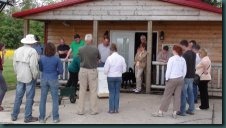
Here’s feedback from one of our recent students.
I was interested in learning to keep honeybees but didn't know where to start. I came across Long Lane Honey Bee Farms website and after gathering some information there I signed up for one of their beginners class. David and Sheri are both great people to deal with, they put on an excellent class which helped me get a better understanding of what was involved in keeping bees. From the class room to being exposed to hives I felt as if I had made a great choice in selecting to take their class. I purchased a hive and nuc which I picked up on class day and upon returning home had the confidence and knowledge on how to set everything up. Thanks Dave and Sheri for making my startup a smooth success story and I look forward to taking your more advanced classes in the future.
C. Anselment
Mt. Vernon IL
We regularly receive calls from customers of larger beekeeping companies asking us for vital information to help them identify problems with their bees and equipment. While we want all beekeepers to be successful, we have a strong commitment to provide excellent support to our customers, most of which are like friends and family to us. And there is something to be said about support and loyalty. When customers purchase their beekeeping equipment from us, it helps us stay in business :) So, I want to thank all of our 2010 customers for your loyalty and support. We appreciate it so much!
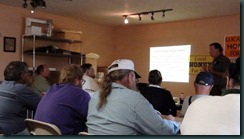
I realize that while many of you reading these lessons are currently keeping bees, still many of you are thinking about starting beekeeping in 2011! Good for you. Our classes are geared to help you get started or to be a refresher if you are already keeping bees. So check out our upcoming
classes for July & August.
We’ve uploaded many new beekeeping videos. Our recent videos show how bees can clean up old, moldy comb, how to sweep bees off a frame with flowers, a mite on a drone pupae, how we remove bees from homes and more!
Take a look now!
We’re not sure what your interest is in honey bees, but we are glad you stopped by for a minute to read what’s going on with bees.
One thing is certain. In my opinion, beekeeping is at its most challenging point in history which demands that beekeepers be as educated and equipped as possible. You don’t have to know it all, but at least take a class with us, walk in our bee yards, join us as we open up hives and let us show you hands on all about beekeeping. It’s worth the investment.
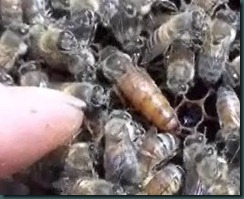
LESSON 74: Swarming & Superseding: Keeping A Hive Queenright
There’s an old saying that goes like this, “A swarm in May is worth a load of hay. A swarm in June is worth a silver spoon. A swarm in July isn’t worth a fly”.

Swarming is when a hive multiplies by over 1/2 of the colony leaving with the old queen, and a new queen takes over with the bees left behind.
Absconding is when all the bees leave, commonly seen when installing a new package of bees.
Are swarms worth retrieving? Some say no and some say yes. Some say no because of gas money and time spent chasing down swarms and retrieving them and you never know of the quality or the characteristics of the queen. Usually it is the old queen that leaves with the swarm, so you never know how old she is.

Some go after all swarms no matter what because they are trying to build up their hive numbers. I see nothing wrong with retrieving swarms and I usually use them as starter hives for queen grafts. And I replace the queen with one of our own queens that we raise. So I like swarms as a way to obtain bulk bees. I have a rule of thumb that I will not drive beyond 40 miles for a swarm for two reasons: 1) It isn’t worth the time and gas money and 2) Often it is gone by time you arrive which is a double waste of time and money.
A healthy hive will swarm as a way of multiplying, making another colony. Generally, swarming for us here in Illinois lasts about a month, usually the month of May.
Here are common reasons why colonies swarm:
1) Congestion in the hive
2) Low pheromones from the queen
3) Bad weather followed by good weather
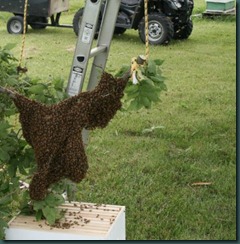
When a hive is congested (no more room for the queen to lay or the foragers to store incoming pollen and nectar) and the nurse bees are unemployed, swarming is triggered. Once triggered, it may take weeks for the colony to finally swarm. The queen is too heavy and must be slimmed down for flight. Replacement queen cells must be built and the queen will lay in the cells so the bees left behind will have a new queen. The queen will stop laying. Scout bees begin looking for a suitable new location. Finally, once the replacement queen cells are capped, the hive will swarm. A little over half of the hive leaves and the rest stay behind to await the emergence of the new queen from her cell.
Small swarms can occur with the emergence of these new virgin queens. These are called afterswarms.

As soon as the swarm leaves the hive they usually land quickly on a nearby tree. A good number of scout bees will each find a location. They return to the hive and dance with great excitement to win the vote, so their new location will be selected over and above the other scouts. This can take hours or days. Often when a swarm takes to the air a second time, they still may not have decided on one place and scouts will seek to win over the swarm as it is in the air.
Benefits Of Swarming
Since the Varroa Destructor mite wiped out the majority of feral hives, diversity in genetics are threatened. Thus, a swarm helps spread genetic diversity. And more swarms means a great number of colonies.
A Swarm Control Method?
When I began studying for the master beekeeping certification, I learned about the Demaree Method to prevent swarming. It frequently shows up on the tests and I’m glad I studied it, because it showed up on last year’s test. George Demaree was a beekeeper from Kentucky who came up with an effective method of swarm control which separates the queen from the brood. Examine all frames and destroy all queen cells. Place the queen below a queen excluder in the lower hive body and move all frames of uncapped brood to the upper hive body. The placement of sealed brood doesn’t matter and can be left in the lower or upper hive body.
Next, place an additional hive body full of drawn comb between the original hive bodies. full of empty combs between the original two brood chambers. In a week to ten days, you’ll need to destroy or harvest the queen cells that have been built in the upper hive bodies. Place a queen excluder on top of the bottom brood chamber before adding middle supers. In 7 to 10 days destroy any queen cells that have developed in the upper hive bodies.
The Demaree’s swarm control method came out in the last 1800s and is still an effective swarm control today.
Superseded Queens
It happens. Queens are replaced. We typically think that the old queen is just that, getting old, maybe unable to lay an acceptable brood pattern and the older bees have decided she needs replaced with some fresh blood. However, in recent years beekeepers throughout the US have seen an ever increasing occurrence of superseding.
We are left to wonder why. Some say the quality of queens are failing us. Others blame the weather, genetics, chemicals and on goes the list.
Sometimes I will observe a superseding queen cell in a hive with a very good laying queen. Every time I stop or prevent a superseding replacement, that hive never does well the following year and usually dies during the winter. I’ve learned to trust the bees when it comes to replacing queens. However, as a queen producer, I personally think the best practice is to replace the queen every year. Her pheromones are stronger, swarms are less and she lays best her first year.
We typically think of superseding as something as bad, but generally speaking it is good. Now, the hive will have a new queen. However, it does mean that the queen may perish while mating. About 4-6% of virgin queens do not make it back while on their mating flight. Then, it will be too late for the hive to raise a new queen because all larvae will be too old. In addition, you will also change the characteristic of your genetics as the new queen will mate with other drones.
Superseding cells are almost always found in the middle of the frame and only as one, not three or four.
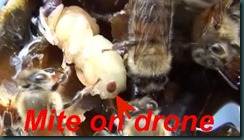
When your hive swarms or supersedes itself, one good thing is that it helps to break up the varroa mite’s own brood cycle. Mites reproduce in the sealed cells of bees, so when there is a break in the bee’s brood cycle due to a missing queen or a gap between queens, it reduces the mite’s reproductive cycle as well.
If you are not receiving these Lessons automatically, you can enter your email address below and have these sent FREE to your inbox.
Thank you so much for joining us for another lesson in beekeeping. We plan to produce shorter and more frequent lessons in the future. So stay tuned.
Here’s our contact info:
PHONE: 217-427-2678
EMAIL:
david@honeybeesonline.com ADDRESS: Long Lane Honey Bee Farms, 14556 N 1020E Rd, Fairmount, IL 61841
Until next time, remember to BEE-have yourself!
David & Sheri Burns
Long Lane Honey Bee Farms

 Here at Long Lane Honey Bee Farms we are in full queen production! Queens, queens, queens, everywhere there are queens in all stages. My youngest daughter Karee has work along side of me for 3 year now in our queen rearing operation and she’s a pro! All day long we are grafting, transferring cells, marking mated queens for sale, and dividing hives for more mating nucs. Karee knows the whole operation and is a great grafter too.
 Our bees help out a bunch with our own garden. Here’s mating nuc number 40 doing double duty. Producing queens and pollinating our gardens. We enjoy garden, chickens, bees and generally living out in the country! We are in our 6th year now in the country and it’s a hoot.
 GUESS THE PHOTO! Sheri took this picture of everything we made from our own property in these three containers. Anyone know what’s in the jars? The middle one is obvious, so good luck on the other two. You can click on the photo to enlarge it.
 When a hive makes a new queen, they do so from a fertile egg laid by a queen. They feed this young, three day old larva or younger, a special queen royal jelly and build out the queen cell perpendicular to the comb. It looks like a peanut shell. From the time the egg is laid until the queen emerges requires 16 days. Workers take 21 days to emerge and drones 24 days.
 The queen mates with many drones in order to increase the genetic mix in the hive for survival. During mating, the drone’s genitalia (shown in picture) breaks off and is left in the queen and can be seen upon the queen’s return to the hive. This is called the mating sign. However, since she mates with many drones, each drones removes the previous drone’s mating sign and then mates with the queen.


