
Hello from Long Lane Honey Bee Farms and welcome to another beekeeping lesson! We are David & Sheri Burns and we are passionate about helping people become beekeepers. Here at Long Lane Honey Bee Farms, we love keeping bees, even though it can be a real challenge at times.

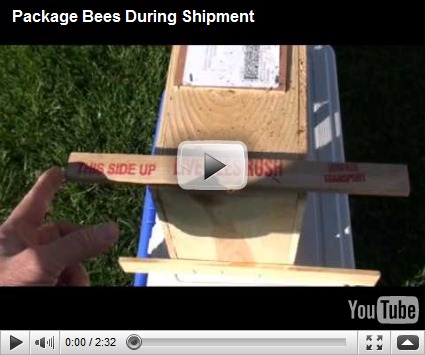
We can’t tell you how relieved we are that we got hundreds of packages shipped off! It took two postal trucks and 1 UPS trailer, but we did it!

Sheri and I babysat the UPS trailer until the driver hooked up to haul it away. Though it was a nice cool day, we hooked up a fan and blew air on the bees. We want our bees to reach the customer more than the customer does, so we went the extra mile. In fact, me and my daughter Karee
 missed a whole night’s sleep getting labels on and the boxes ready for shipment. Every year we tell ourselves we will never ship bees again, and we’ll only do local pick up. But we still ship year after year. It’s a bit treacherous shipping bees and so few of providers do it. Most prefer local pickup only but we realize so many live far way. We will ship if you also buy hives.
When I see pictures from our customers like young James full of excitement as a young beekeeper about to install his first package, it makes me want to ship bees again next year. Way to go James!
Enough about the past, let me tell you about what’s coming up soon, and then I’ll teach on how to build up a strong colony.
LESSON 73: HOW TO BUILD A STRONG COLONY
The success of your colony will depend mostly upon their overall strength. The stronger your hive is the less likely they will be to develop a disease or be overtaken by pests.
A new colony, whether it is a nuc or a package, can benefit from these 5 growth tips:
1) Feed the colony 1:1 sugar water & pollen patties.
2) Only give them more boxes of frames as they need.
3) Keep all frames tight together and keep the hive level.
4) Use beetle traps if you live in an area that has small hive beetles.
5) Every 14 days, inspect your hive and make sure there is a good brood pattern and that you can see eggs. If not, you must replace your queen immediately or the hive will not become strong and may even perish within 40 days. Let me give more details.
First, feed you hive. When they are new, they do not have any food inside the hive. They need pollen and honey. And most new colonies are placed on undrawn foundation, meaning they do not have any drawn out comb in which to place incoming nectar or for the queen to lay in. Feeding them 1:1 sugar water can assist the younger bees in producing wax and thus they will be able to draw out their combs faster. This is not essential because spring usually provides more than enough incoming nectar that feeding is not necessary. But, spring can also provide several days in a row of cool, rainy weather. Then, the bees can run out of food and fail to build comb. This is why many beekeepers experience a slow build up of their hives. Entrance feeders are what we recommend.
How long to feed? Anywhere from not at all to several weeks. Most people will feed their bees until they have down out comb in both deep hive bodies.
Division board or frame feeders are the second best feeders, pail and top feeders last. Top feeders have always been very problematic for beekeepers. They can crack, leak, mold and generally allow bees in the reservoir and die. We sell them though they are not our preferred type of feeder. You just can beat the long tested and used entrance feeder. So feed your bees.
Feed your bees pollen patties. They need pollen. There is always plenty of pollen in the spring. Last year some of our hives were pollen bound, meaning there was so much pollen in the comb that the queen ran out of room to lay. Again, if the weather is cool and rainy then they will lack pollen and not be able to build up their population as fast. So feed your bees pollen patties for about 1 month after installation. Remember, you usually do not have to, but if you really want to ensure they become strong, feed.
Secondly, keep your new colony tight. Do not give them too much space. For example, only give them 1 deep hive body to start with. If you give them two, it can discourage them from building comb. And, the extra space gives room for pests to hide and grow, pests like mice, small hive beetle and wax moths. But, if you keep the bees tight then they can better grow their hive and defend it against intruders. Wait until your deep hive body has 7 frames that are drawn out and full of bees then you can add the second hive body. Do the same before you place on the super above the second hive body too.
 I actually have a technique that works well for me. I install packages in a 5 frame nuc box, allow it to become completely filled, then transfer the frames over to a deep hive body. Bees work better when they are crowded. Will being crowded make them want to swarm? No, not a new set of bees. Bees are social insects which work better crowded. It is only when they become congested that they can swarm. Congested means they do not have any drawn comb for the queen to lay eggs in, or for the forages to bring in nectar or pollen. Congestion is not the same as being crowded. Crowd your new package but make sure they do not become congested.
 3) Keep your frames tight together and your hive level. Bees are sensitive in how they draw comb on frames. If you leave too much space between frames, they will draw out odd shaped columns on the frame or they will build out a comb without attaching it to the foundation. So keep all frames tight against each other. Keep the hive level. Bees build comb straight down so if it is tilting slightly to the right or left, straight down will mean the comb will be slightly off the frame.
4) Use some sort of beetle trap to prevent the spread of small hive beetle. The best trap we’ve seen and one that we sell is the Better Beetle Blaster. We sell it with a syringe so you can easily fill it with your own vegetable oil. Watch our video below on how to use this trap.

We are working on another fun-filled Studio Bee Live podcast, so keep an eye out.
 We have a new hive that we cannot keep in stock. It is a beautiful 8 Frame garden hive. We have these for sale now, so order yours today! Please allow 14 days for shipment. CLICK HERE FOR MORE INFORMATION ON OUR GARDEN HIVES.
 If you need beekeeping hives or other equipment, remember we always appreciate your business! Here’s how you can contact us:
WEBSITE: www.honeybeesonline.com
Email: david@honeybeesonline.com
Phone: 217-427-2678
